Finance plays a major role in the home-buying process. Before you take the leap into homeownership, it’s important to ask yourself key financial questions. Understanding your financial situation can help you make informed decisions. This list of ten necessary questions will guide you in assessing your readiness to buy your first home. Let’s explore what you need to consider to ensure a smooth buying experience.
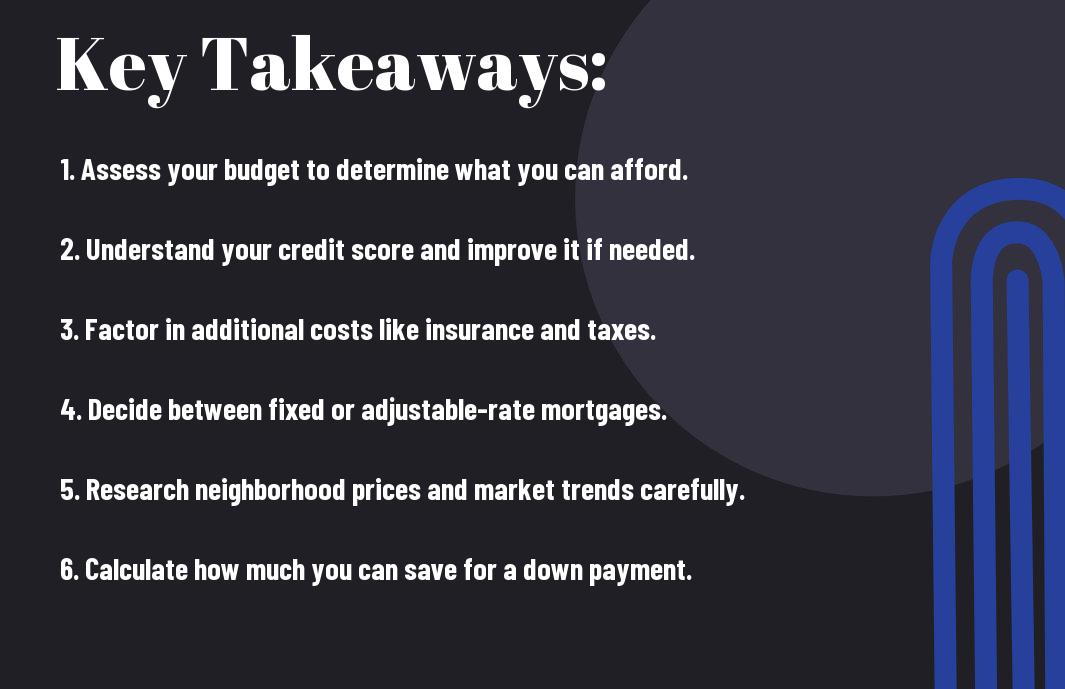
Key Takeaways:
- Know your budget: Determine how much you can afford for a down payment and monthly mortgage. This will help you find homes within your price range.
- Consider additional costs: Think about property taxes, insurance, and maintenance expenses that come with homeownership. These can add up quickly.
- Check your credit score: A higher credit score can lead to better mortgage rates. Make sure to review your credit before applying for a loan.
What is your budget?
For first-time homebuyers, setting a budget is a key step. Your budget will help you determine how much you can afford to spend on a home. To create a realistic budget, consider your income, expenses, and financial goals. It’s vital to account not just for the home purchase price, but also for additional costs like property taxes, insurance, and maintenance. Taking time to figure out your budget will give you clarity and confidence in your home-buying journey.
Consider all incomes
Assuming you have multiple streams of income, it’s important to factor them into your budget. This could include your primary job, side gigs, or rental income. By looking at all possible sources, you can get a clearer picture of what you can afford. Be honest about how steady these incomes are to avoid stretching your budget too thin.
Include savings and debts
Even if your income seems high, your existing debts can impact your budget. Debt obligations, such as student loans or credit card payments, reduce your disposable income. You should also include your savings as part of your financial plan. Having adequate savings can guide your decisions about down payments and closing costs, making your home-buying process smoother.
To accurately figure your budget, list all your debts and monthly payments, along with your savings. This will help you understand how much money you actually have for a mortgage. It’s a good idea to aim for a monthly payment that doesn’t exceed 28% of your gross monthly income. Balancing your income, debts, and savings will give you a better grasp of what you can safely invest in your new home.
How Much Is Your Down Payment?
You need to consider your down payment when buying your first home. This is the amount of money you pay upfront before securing a mortgage. A larger down payment can lead to better loan terms and lower monthly payments. It’s imperative to plan for this amount to ensure you can afford your future home. Research different loan options to see what down payment fits your budget best.
Minimum Percentage Needed
Needed for most conventional loans is a minimum down payment of 3% to 20%. Though some government-backed loans offer lower requirements, it’s important to know that a higher down payment often means better mortgage rates.
Additional Costs Involved
One important aspect of buying a home is the additional costs that come with it. These can include property taxes, homeowners insurance, and closing costs. Make sure you budget for these expenses when planning your finances.
You can also expect costs for home inspections, appraisals, and moving expenses. These costs can add up quickly, so it’s wise to set aside extra money for them. Being aware of all these expenses will help you avoid financial surprises and make your home buying experience smoother.

What Mortgage Can You Afford?
All homebuyers should consider how much mortgage they can afford. Your budget will play a big role in this decision. It’s important to assess your income, expenses, and savings. For more guidance, check out this helpful resource on 10 Questions to Ask Before Buying Your First Home.
Calculate Monthly Payments
If you want to know how much you can pay each month, start by calculating your potential mortgage payments. This includes principal, interest, property taxes, and insurance. Use an online mortgage calculator to help you find a number that works with your budget.
Get Pre-Approved
Calculate your budget by getting pre-approved for a mortgage. This process helps you understand how much a lender is willing to provide. It also gives you an estimate of your monthly payments. You’ll need to supply financial documents, like pay stubs and bank statements, for the lender to evaluate.
To make your offer more competitive, getting pre-approved is a smart move. This shows sellers you are serious and financially ready to buy a home. It can speed up the buying process and help you find homes within your price range.

What are closing costs?
Unlike the price of your new home, closing costs are the extra fees you must pay when finalizing your mortgage. These costs can include various items such as loan origination fees, title insurance, and attorney fees. Typically, closing costs range from 2% to 5% of the home’s purchase price. Being aware of these expenses is necessary as they can significantly impact your overall budget when buying a home.
Estimate total fees
For a clear understanding of what you will pay at closing, it’s important to estimate your total fees. This includes all expenses related to the home purchase, such as lender fees and other charges. Use a mortgage calculator or consult with your lender to get an accurate estimate that reflects your financial situation and the specific property.
Include inspections and appraisals
You must also consider inspections and appraisals as part of your closing costs. These processes help ensure the home is worth the price you’re paying and that it is in good condition. You want to ensure no hidden issues will surface after the purchase.
Total costs for inspections and appraisals can vary but are often necessary to protect your investment. Appraisals confirm that the home’s value matches your offer, while inspections check for issues like plumbing or structural damage. These steps provide peace of mind for you, ensuring that your new home is a sound investment.

What are ongoing costs?
After you decide to buy your first home, you need to think about ongoing costs. These are expenses you’ll pay every month or year, apart from your mortgage. Ongoing costs can add up, so it is necessary to budget for them. They can include property taxes, homeowners insurance, maintenance, and utilities. Knowing these costs helps you plan financially for your new home.
Property Taxes
Taxes on your property are usually based on the home’s value. This amount can vary by location, so it’s important to check local tax rates. Property taxes are typically paid yearly or added to your monthly mortgage payment. Make sure to factor this into your overall budget.
Homeowners Insurance
Ongoing homeowners insurance protects your property and belongings from damage or loss. This insurance covers events like theft, fire, or natural disasters. It’s important to compare policies to find the best coverage at the right price. You want to feel secure in your investment.
Plus, having adequate homeowners insurance can also be a requirement from your mortgage lender. It’s wise to review your policy regularly. As the value of your home changes, you may need to adjust your coverage. This way, you ensure you are always protected against potential risks.
Is the Location Right?
Despite your dream of owning a home, the location can make a big difference in your quality of life. A good location should meet your needs and suit your lifestyle. Look for an area with easy access to schools, shops, and parks. Also, consider the safety of the neighborhood. A good location not only enhances your living experience but can also increase your home’s value over time.
Research Neighborhoods
You should take the time to research neighborhoods before buying your home. Look into the local schools, safety statistics, and community amenities. Use online tools to read reviews and gather information from current residents. Understanding the neighborhood will help you decide if it fits your lifestyle and long-term goals.
Check Proximity to Work
Work location matters a lot when buying a home. You want to minimize your commute to save time and reduce stress. Short travel times mean more time for family, hobbies, or relaxation. It’s important to also think about future job changes. Choosing a home near public transport or major roads can keep your options open.
It can be beneficial to test your commute during peak hours. This way, you’ll know what to expect when you move in. If you drive, factor in parking availability. If you rely on public transit, check nearby bus or train routes. This research helps you pick a location that fits your daily life, making your home more enjoyable in the long run.
What is Your Future Plan?
To make a wise home-buying decision, you should think about your future plans. Consider where you see yourself in the next five to ten years. Are you planning to stay in the same job? Do you want to start a family? These factors can influence whether buying a home is the right move for you. For more details, check out 10 Things to Consider Before Buying Your First Home.
Long-term Stability
Assuming you desire long-term stability in your life, buying a home might be a good choice. A stable job and relationships can help you settle down in one area. This stability can lead to a stronger sense of community and better investment in your home. When you plan to stay put for a while, it usually makes sense to buy rather than rent.
Job Changes or Relocations
For many people, careers come with changes. You might get promotions or transfers that lead you to different cities. If you anticipate a job change or potential relocation in the near future, buying a home might not be the best option. Owning a house can tie you down, and selling a home can be time-consuming and costly. If you think you’ll be moving around, consider renting until your situation becomes clearer.
Changes in your job can significantly impact your living situation. If you receive an unexpected job offer in another city or state, your plans for homeownership might need to change. It’s important to be flexible and consider how such changes will affect your financial situation and living arrangements before making a final decision.
How is the housing market?
Not every housing market behaves the same way. It’s vital to understand the specific trends in your area before making a purchase. The housing market can vary in pricing, availability, and demand. Researching your local market gives you an idea of what to expect. This knowledge helps you make informed decisions as you navigate buying your first home.
Current market trends
Housing markets often show different trends based on location. You should look at factors like home prices, interest rates, and inventory levels. Stay updated on these aspects to see if it’s a good time for you to buy. Understanding these trends can help you spot the best opportunities in your area.
Potential for appreciation
If you buy a home in a growing area, there’s a good chance it will increase in value over time. This appreciation can be beneficial when you decide to sell later. It’s important to look at your community’s development plans and economic growth, as these factors can influence your home’s value. Paying attention to this potential can make your investment more rewarding in the long run.
Any increase in your home’s value can lead to significant financial benefits. If the area around your home improves, so does your property value. This can occur if new schools, parks, or shops open nearby. You might also benefit from overall growth in the housing market. Therefore, being aware of future developments can help you grow your investment wisely.
What are Maintenance Costs?
Your maintenance costs cover the necessary expenses to keep your home in good condition. These costs can include repairs, routine upkeep, and emergency fixes. Often, first-time homebuyers overlook these expenses. However, understanding them is vital for budgeting effectively. For more useful insights, check out the Top 10 Questions Every First-Time Home Buyer Should Ask.
Budget for Repairs
Now that you own a home, setting aside money for repairs is important. Unexpected issues may arise, such as a leaky roof or a broken furnace. Ideally, you should allocate 1-3% of your home’s value each year for repairs. This strategy will help you stay prepared for any situation that needs attention.
Routine Maintenance Expenses
The routine maintenance expenses ensure your home remains safe and functional. These costs include regular tasks like lawn care, cleaning gutters, or servicing HVAC systems. You should plan for these expenses, as neglecting them can lead to bigger issues down the line.
This means budgeting for these tasks is a smart move. For example, regular HVAC maintenance is inexpensive but can save you money on energy bills and repairs. Likewise, timely roof inspections can help you catch issues before they turn costly. By keeping up with routine maintenance, you protect your investment and maintain your home’s value.
Can You Handle Financial Stress?
Now that you’re considering buying a home, think about your ability to manage financial stress. Owning a home can come with unexpected costs, like repairs and maintenance. It’s important to evaluate your emotional and financial readiness for these challenges. If you often feel overwhelmed by money issues, it might be wise to take a step back before making such a big commitment.
Emergency Fund Status
An emergency fund is your safety net for unexpected expenses. Before buying a home, ensure you have enough savings set aside to cover at least three to six months of living expenses. This fund will help you deal with emergencies without adding pressure to your mortgage payments. Having this cushion can help you feel more secure in your new home.
Job Security and Stability
You’ll want to think about how stable your job is before making a home purchase. A steady income is vital to manage a mortgage and other home expenses. Check if your job is secure and whether your industry is growing. If you feel confident in your job, it will be easier to handle the responsibilities of homeownership.
For instance, if you work in a field with a steady demand, such as healthcare or technology, your job security can reassure you when making long-term financial decisions. On the other hand, if you’re in a gig economy or a job that frequently changes, it might be risky to take on a mortgage. Ensuring stable employment can make a big difference in your financial comfort and peace of mind when buying a home.
Conclusion
From above, you can see that answering these 10 financial questions is vital before buying your first home. These questions help you understand your budget, plan for hidden costs, and ensure you’re financially ready for homeownership. By carefully considering your finances, you can make informed decisions that will benefit you in the long run. Take your time, do your research, and seek advice if needed. Your goal is to find a home that fits both your dreams and your budget.
10 Financial Questions to Answer Before Buying Your First Home
Buying your first home is an exciting step. However, it’s important to prepare yourself before diving in. This blog will help you answer key financial questions that will guide you through the home buying process. Let’s explore these questions together!
1. What is my budget for a new home?
Setting a clear budget is the first step. Consider your monthly income, savings, and current expenses. This will help you understand how much you can afford.
– Calculate your savings: Include your down payment and other expenses like closing costs.
– Check your monthly expenses: Don’t forget about utilities, maintenance, and property tax.
2. How much can I afford for a down payment?
The down payment is a significant part of buying a home. Generally, it’s a percentage of the home’s price.
– Standard down payment: Many homes require around 20%.
– Lower options: Some loans allow for as little as 3-5% down.
Talk to a financial advisor to find the best option for you.
3. What are my monthly payment estimates?
Monthly payments usually include the mortgage, property taxes, and insurance. Knowing these costs can help you stay within budget.
– Mortgage calculator: Use online tools to estimate your payments.
– Consider interest rates: They can affect your monthly payment significantly.
4. Am I financially ready for home ownership?
Consider if you are ready for the extra responsibilities of owning a home.
– Stable income: Do you have a stable job with a steady income?
– Emergency fund: Make sure you have savings for unexpected expenses, like repairs or job loss.
5. What additional costs should I expect?
Buying a home involves more than just the price tag.
– Closing costs: These are fees to finalize the home purchase.
– Maintenance and repairs: Regular upkeep and emergency repairs can add up.
– Home insurance: This protects your investment and is usually required by lenders.
Consult with a real estate agent for more details on these costs.
Conclusion
Before buying your first home, take time to answer these financial questions. Understanding your budget, down payment, and additional costs helps you make informed decisions.
Key Takeaways:
– Set a clear budget based on your income and savings.
– Know how much you can afford for a down payment.
– Estimate your monthly payments, including all costs.
– Ensure you are financially ready for home ownership.
– Be aware of additional costs like closing fees and maintenance.
Planning carefully now can lead to a smoother home-buying experience. Good luck on your journey to home ownership!