Most people think of fine wine as just a drink, but it can be a smart financial investment. You may not realize that fine wine has the potential to grow in value over time, offering a unique way to diversify your portfolio. In this blog post, you’ll discover the benefits of investing in fine wine, how it works, and tips to get started. By the end, you will have a better understanding of how this investment can fit into your financial goals.
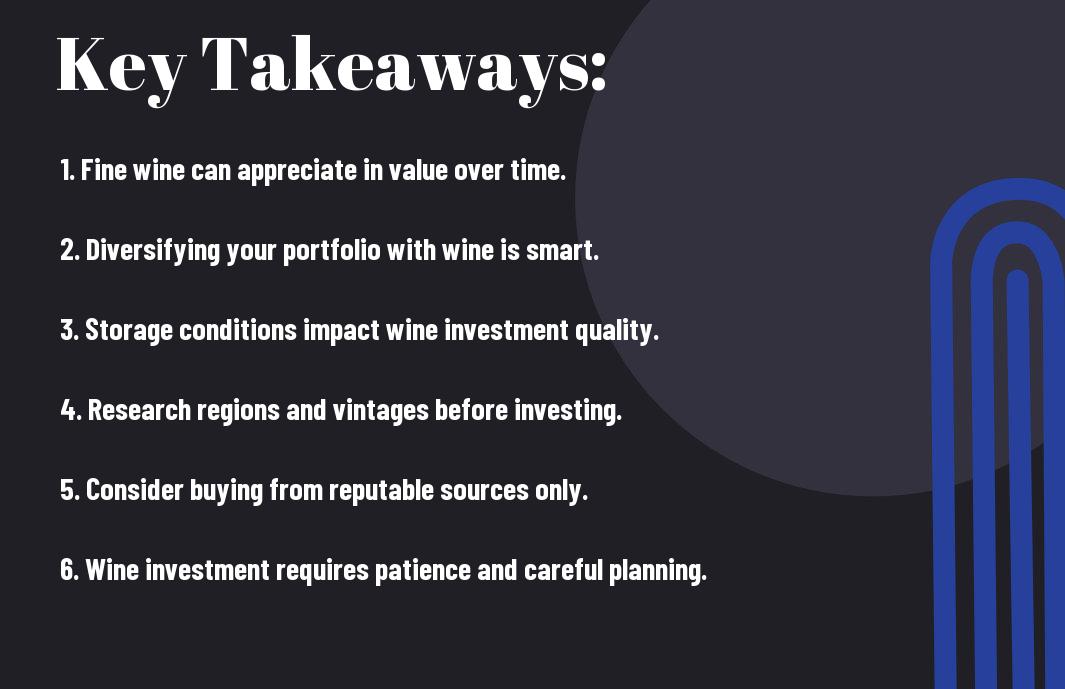
Key Takeaways:
- Fine wine can be a good investment. It often appreciates in value over time, especially if you choose rare and high-quality bottles.
- Storing wine properly is vital. The right temperature, humidity, and light conditions can help maintain its quality and value.
- Research is important. Look into different wine regions, vintages, and producers to make informed buying decisions.
What is Fine Wine Investment?
To understand fine wine investment, you need to know that it involves purchasing high-quality wines with the expectation that their value will increase over time. Many investors view fine wine as a unique asset class that can diversify their portfolios. This investment can be somewhat different from traditional stocks or bonds, as it requires knowledge about the wine market and careful selection of bottles.
Definition of Fine Wine
Among wine enthusiasts and investors, fine wine refers to premium wines made from high-quality grapes. These wines often come from renowned vineyards and are produced in limited quantities. They are usually aged to enhance their flavors, which contributes to their value over time.
Types of Fine Wines to Invest In
Wine comes in various types, each with unique characteristics that can affect their investment potential. When considering which fine wines to invest in, you might think about:
- Bordeaux
- Burgundy
- Champagne
- Italian Wines
- California Wines
The types of wine you choose can significantly impact your investment success.
| Type of Wine | Investment Potential |
|---|---|
| Bordeaux | High demand and potential for appreciation |
| Burgundy | Limited supply increases value |
| Champagne | Popular for celebrations; steady market |
| Italian Wines | Rising global interest boosts investment |
| California Wines | Strong domestic market; expanding internationally |
Investment in fine wines requires understanding the specific characteristics that can make certain wines more valuable than others. These characteristics include the region where the wine originates, the producer’s reputation, and the vintage year. Always stay informed about market trends and pricing to make sound decisions.
- Consider wines from reputable regions
- Look for balanced flavors with aging potential
- Research the winemaker’s reputation
- Pay attention to limited editions and unique varietals
- Stay updated on market trends
The choices you make today can lead to profitable returns in the future.
| Investment Strategy | Benefit |
|---|---|
| Start small and grow | Manage risk while learning |
| Diversify your wine collection | Spread risk across different wines |
| Invest in reputable brands | Higher likelihood of value increase |
| Monitor market trends | Stay informed to adapt strategies |
| Join wine investment groups | Gain insights and share knowledge |

The Financial Benefits of Investing in Fine Wine
If you’re looking for a unique way to grow your wealth, investing in fine wine can be a great option. This investment offers not only potential financial gains but also a chance to enjoy the art and science behind fine wines. With the right knowledge, you can make informed choices that lead to profitable returns.
Potential for High Returns
With fine wine, there is significant potential for high returns on your investment. Historically, select wines have appreciated in value over time, sometimes yielding returns that exceed 10% annually. As demand rises and supply decreases, the wines you choose can become even more valuable, making this investment appealing to many.
Portfolio Diversification
Along with the potential for high returns, fine wine can help you diversify your investment portfolio. By adding tangible assets like wine, you can reduce risk and improve overall stability. When stock markets face volatility, fine wine often retains its value, providing a safety net for your finances.
And diversification is about balance. When you mix fine wine with traditional assets, you create a more resilient investment strategy. Wine investments can behave differently than stocks or bonds, especially during market downturns. This unique quality helps to protect your overall portfolio from fluctuations, giving you greater peace of mind as an investor.

Risks Involved in Fine Wine Investment
Your journey in fine wine investment can be exciting, but it’s crucial to understand the risks involved. Markets can change quickly, affecting the value of your collection. Additionally, costs related to storage and insurance can add up. Knowing these risks will help you make informed decisions and protect your investment.
Market Volatility
About fine wine investments, market volatility is a significant factor. Prices can fluctuate based on trends, economic conditions, and consumer preferences. For instance, a specific vintage might soar in value one year and drop the next. Staying informed about market trends will help you navigate these ups and downs effectively.
Storage and Insurance Costs
Along with market risks, you need to consider storage and insurance costs. Properly storing wine is key to maintaining its value. You should invest in a temperature-controlled environment to prevent any damage. Insurance is also crucial to protect your investment from theft or accidents. These expenses might reduce your overall profit, so factor them into your planning.
Even when you account for the costs, appropriate storage and insurance can save you money in the long run. A wine cellar can cost around $1,000 to $5,000 to set up. Furthermore, wine insurance typically ranges from 1% to 2% of the wine’s value annually. By merging these costs with your investment, you can safeguard your collection while still enjoying potential profit.

How to Start Investing in Fine Wine
Unlike many other investment options, fine wine investing offers a unique blend of enjoyment and potential profit. To get started, educate yourself on the basics. A helpful resource is The ten things you need to know about wine investment. This guide will provide imperative insights to navigate the wine market confidently.
Selecting the Right Wine
Before you make a purchase, research which wines are in demand. Focus on brands, vintages, and regions known for exceptional quality. Look for wines that have a track record of appreciation over time. Great examples come from Bordeaux, Burgundy, and Napa Valley.
Finding Reputable Sellers
Above all, it’s important to buy from trustworthy sources. Check for sellers with strong reputations and positive reviews. A good seller will provide detailed information about the wine’s origin and storage conditions. This information is key to ensuring your investment is sound.
Selecting a reputable seller can significantly impact your wine investment’s success. Look for established retailers or auction houses that specialize in fine wines. Additionally, consider joining wine investment groups or forums, as these can offer recommendations and valuable insights from seasoned investors.
Understanding Wine Valuation
Despite the growing popularity of wine as an investment, understanding how to value fine wine can be tricky. Wine valuation is based on several factors, including brand, age, rarity, and condition. Knowing these aspects can help you make informed decisions when investing in fine wine.
Factors Influencing Wine Value
Wine value is affected by various elements. Some of the key factors include:
- Brand reputation
- Age and maturity
- Rarity and production size
- Condition of the wine
- Market demand
Knowing these factors will greatly assist you in identifying potential wine investments.
How to Assess Wine Quality
Quality is another important aspect when considering wine investments. You need to evaluate the wine’s characteristics to ensure its value and enjoyability.
With the right approach, assessing wine quality can be straightforward. Look for indicators such as color, aroma, and flavor profile. Additionally, consider consulting reviews and ratings from trusted wine experts. This will help you understand not only the wine’s current quality but also its potential for future appreciation. Making these assessments can guide you in choosing the best wines for your investment portfolio.
Tips for Successful Wine Investing
Many investors find success in the wine market by following these tips:
- Start small and learn as you go.
- Focus on wines with good ratings.
- Stay updated on market trends.
- Keep your wine stored properly.
- Join a wine investment community.
Perceiving these factors can help you make better choices. For more insights, check out Investing In Wine: Your Guide On Investing In Wine in 2022.
Research and Education
At the beginning of your investment journey, educating yourself about wine is key. Understanding different types of wine, regions, and vintages will help you make informed choices. Dive into online courses, wine tasting events, and reputable articles to build your knowledge base.
Building a Collection
Below are a few strategies for building your fine wine collection. When you start investing in wine, consider focusing on high-demand regions. Bordeaux and Burgundy wines, for instance, are often sought after. Paying attention to grape varieties and aging potential can also play a significant role in your collection’s value.
Building a diverse collection is vital for enhancing your investment. Aim to include wines from various regions, vintages, and price ranges. This strategy not only spreads your risk but also increases the chance of having sought-after bottles in your collection. As you expand, keep detailed records of each wine’s purchase date, price, and storage conditions to maintain transparency and value.
Conclusion
Summing up, investing in fine wine can be a rewarding choice for you. With the right knowledge and approach, you can grow your wealth significantly over time. Understanding market trends and product quality are key to making smart decisions. If you want to dive deeper into fine wine investments, check out this helpful resource on What Makes Fine Wine A Good Investment In 2025. This guide will give you valuable insights to enhance your investment strategy.
FAQ: The Financial Appeal of Fine Wine Investments – What You Need to Know
Q: What is fine wine investment?
A: Fine wine investment involves buying high-quality wines with the expectation that their value will increase over time. Investors look for wines that are rare, from trusted regions, and have a good reputation. The goal is to sell these wines for a profit in the future.
Q: Why should I consider investing in fine wine?
A: Investing in fine wine can be a smart choice for several reasons:
- Potential for high returns: Some fine wines can appreciate significantly in value.
- Portfolio diversification: Wine can be a unique addition to your investment portfolio, spreading your risk across different types of assets.
- Hedge against inflation: Fine wine often maintains its value over time, even when other markets are volatile.
Q: Is investing in fine wine risky?
A: Like any investment, fine wine carries some risks. These include:
- Market fluctuations: Wine prices can change based on demand and market trends.
- Storage conditions: Poor storage can damage wine and reduce its value.
- Fraud: The wine market can attract counterfeit products, so it’s important to buy from reputable sources.
Q: How do I choose the right wine for investment?
A: Selecting the right wine involves research and knowledge. Here are some tips:
- Focus on reputation: Opt for wines from recognized vineyards or regions.
- Consider ratings: Look for wines that have received high scores from wine experts.
- Check rarity: Limited production wines are often more desirable and valuable.
Q: How can I sell my fine wine when the time is right?
A: Selling your fine wine involves several steps:
- Know the market: Research current trends and prices for your wine.
- Utilize auction houses: Consider selling through reputable auction houses that specialize in fine wine.
- Sell to collectors: Build connections in the wine community to find buyers who appreciate fine wine.
Key Takeaways
Investing in fine wine can be a rewarding financial strategy if approached with care. Always research and consider the market before making decisions. Focus on buying quality wines and choose reputable sources for purchasing and selling. With patience and knowledge, fine wine can become both a passion and a profitable investment.