
Most people know that life can be unpredictable. That’s why creating an emergency fund is so important. An emergency fund is your safety net during tough times, like unexpected job loss or medical bills. In this guide, you’ll learn how to build a fund that can handle any crisis. For more tips, check out How to Build a Strong Emergency Fund: Tips for Weathering Financial Storms. Let’s get started!
Key Takeaways:
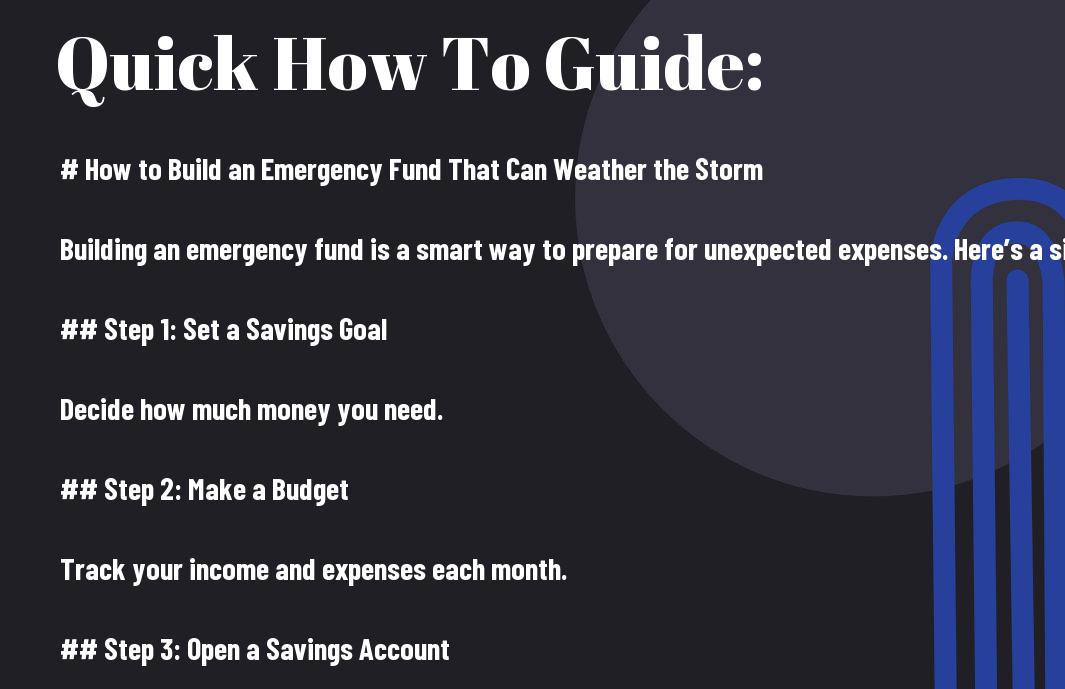
- Set a clear savings goal. Aim for three to six months’ worth of expenses to cover unexpected costs.
- Create a monthly budget. Track your income and expenses to find areas where you can save more effectively.
- Automate your savings. Set up automatic transfers to your emergency fund to make saving easier and more consistent.
Understanding Emergency Funds
A solid understanding of emergency funds is a key part of financial stability. These funds can help you manage unexpected expenses like medical bills, car repairs, or job loss. Building an emergency fund means preparing for those unexpected moments that can disrupt your normal routine. By having money set aside, you can face challenges with confidence and stability.
What is an Emergency Fund?
For many, an emergency fund is a savings account specifically set aside for unplanned expenses. This money is not for everyday expenses, but rather for unexpected situations that require immediate financial attention. Ideally, it should cover three to six months of your imperative living costs.
Why is an Emergency Fund Important?
For you, an emergency fund serves as a financial safety net. It provides peace of mind, knowing you have resources available during tough times. Instead of stressing over sudden costs, like car repairs or medical bills, you can focus on handling the situation effectively.
Another reason an emergency fund is vital is that it prevents you from going into debt. When unexpected costs arise, having savings means you won’t have to rely on credit cards or loans, which can create financial strain. With a healthy fund, you’ll be in a better position to navigate life’s challenges while keeping your long-term goals in sight.
How to Determine Your Target Amount
The first step to building an emergency fund is deciding how much money you need. A good target amount usually covers three to six months’ worth of living expenses. This ensures you can handle unexpected situations without stress. Assess your own financial situation and think about what feels safe and secure for you.
Assessing Monthly Expenses
Now, it’s time to take a close look at your monthly expenses. List everything you spend money on, including rent, utilities, groceries, and transportation. This gives you a clearer picture of how much you need each month. Once you have this total, multiply it by three or six, depending on your situation.
Factors to Consider for Your Goal
Some factors can help shape your emergency fund goal. Consider these points:
- Your job security and income stability
- Potential medical expenses or emergencies
- Family support responsibilities
Perceiving these elements can help you set a realistic amount for your fund.
Your personal situation is unique, so think about what else may affect your target. For example:
- Your current savings and financial health
- Whether you own a home or rent
- Possible risks in your area, like natural disasters
Perceiving these aspects lets you tailor your emergency fund to best fit your needs.

Tips for Building Your Emergency Fund
Despite life’s unpredictability, building an emergency fund is a simple yet effective way to secure your finances. Here are some tips to help you get started:
- Set a monthly savings goal.
- Cut back on unnecessary expenses.
- Use windfalls, like bonuses or tax refunds, to boost your fund.
- Keep your savings separate for easy tracking.
The sooner you start, the more prepared you will be for unexpected challenges.
Setting a Savings Schedule
Assuming you want to build your emergency fund effectively, setting a savings schedule is a great first step. Decide how much money you want to save each month and mark it on your calendar. Consistency is key. By having a set schedule, you’ll find it easier to make saving a habit.
Automating Your Savings
The easiest way to grow your emergency fund is to automate your savings. This means setting up your bank account to transfer money into your savings automatically. You can choose a specific day each month for this transfer. Automating removes the temptation to spend the money before you save it.
Setting up automatic transfers is simple. Most banks allow you to set up recurring deposits through their websites or mobile apps. Decide on the amount you want to save each month and schedule the transfer. This way, you won’t have to think about it. You can focus on other financial goals while your emergency fund grows steadily. Over time, you’ll be surprised at how quickly your savings can add up.

Choosing the Right Savings Account
For building an emergency fund, choosing the right savings account is vital. You want an account that protects your money while allowing it to grow. Look for options that offer easy access to your funds and minimal fees. The right savings account can help you reach your financial goals with less stress.
High-Interest Savings Accounts
Now, consider high-interest savings accounts. These accounts typically offer better interest rates than standard savings accounts. The higher rate means you’ll earn more on your balance over time. This can help your emergency fund grow faster and keep up with inflation.
Factors to Look for in an Account
One important step is to consider several factors when selecting your savings account. Look for features that suit your needs, such as:
- Interest rate
- Fees
- Minimum balance requirements
- Accessibility
This helps you find the best account to grow your savings effortlessly.
Factors like interest rates and fees can greatly affect your savings. Aim for accounts with low fees and no minimum balance. High-interest rates can help your fund grow, making it easier to reach those financial goals. Check online banks, as they often have lower fees and may offer better rates.
- Account type comparison
- Online vs. traditional banks
- Customer reviews
- Account features
This ensures you are making a wise choice for your emergency fund.
Ways to Boost Your Savings Efforts
After setting your savings goal, it’s time to explore ways to boost your savings efforts. Implementing simple strategies can help you save money faster. Start by analyzing your expenses and identifying areas where you can cut back. Even small changes can add up over time and make a significant difference in your emergency fund.
Cutting Unnecessary Expenses
You can save money by cutting unnecessary expenses from your budget. Review your monthly bills and see where you can reduce spending. This might mean dining out less or canceling subscriptions you don’t use. Even limiting impulse purchases can free up extra cash to put toward your savings. With consistency, small savings can quickly sum up.
Finding Additional Income Sources
Even with a stable income, finding additional sources of income can significantly enhance your savings plan. Look for freelance work or side gigs that match your skills and interests. Consider using platforms like Upwork or Etsy to launch a small business or sell your creations. This extra cash can rapidly boost your emergency fund, giving you more financial security.
Another way to find additional income sources is by exploring flexible job opportunities. You might turn hobbies like tutoring or babysitting into side jobs. Additionally, you can monetize skills like graphic design or writing through online platforms. With these efforts, you’ll have more funds to build that critical emergency fund. Empower yourself by taking these steps to secure your financial future.

Maintaining and Growing Your Fund
To build a strong emergency fund, you need to maintain and grow it over time. This means making regular contributions and reviewing your fund periodically. For helpful strategies, check out Creating an Emergency Fund to Help You Weather a Storm …
Regular Contributions
You should aim to contribute a set amount to your emergency fund each month. This creates a habit and helps your fund grow steadily. Even small contributions can add up over time.
Reviewing Your Fund Periodically
Fund growth depends on regular reviews to adjust your savings goals. Consider checking your fund every six months. If your financial situation changes, update your contributions as needed.
Periodically assessing your emergency fund allows you to stay on track. Look at your expenses and adjust your target amount if necessary. This will make sure your fund is ready to support you when unexpected situations arise.
Summing up
So, building an emergency fund is a smart way to protect yourself from unexpected financial challenges. Start by setting a savings goal that covers three to six months of your living expenses. Consistently save a portion of your income, even if it’s a small amount. Keep your fund in a separate, easily accessible account to avoid the temptation of spending it. By taking these steps, you can create a solid financial safety net that helps you feel more secure and prepared for whatever life throws your way.
FAQ
Q: What is an emergency fund?
A: An emergency fund is a savings account set aside for unexpected expenses. This could include medical bills, car repairs, or job loss. Having this fund helps you cover these costs without going into debt.
Q: How much should I save in my emergency fund?
A: A good rule of thumb is to save three to six months’ worth of living expenses. This means adding up your monthly bills—like rent, groceries, and utilities—and multiplying that by three or six. Start with a smaller goal and gradually build it up.
Q: Where should I keep my emergency fund?
A: Keep your emergency fund in a separate savings account. This should be easy to access but not too easy to touch. Many people choose a high-yield savings account because it can earn some interest while still being available when needed.
Q: How do I start building my emergency fund?
A: Begin by setting a monthly savings goal. You can start small, like saving $50 or $100 each month. Automate your savings by setting up a transfer from your checking account to your emergency fund. Gradually increase your contributions as you can.
Q: What if I need to use my emergency fund?
A: It’s okay to use your emergency fund when you truly need it. Just make sure to replenish it afterward. Once you use some of the money, focus on saving again until you reach your goal. Your fund is there specifically for tough times, so don’t hesitate to use it when needed.