With the prospect of a major job change on the horizon, you may feel excited yet anxious about your financial situation. Reducing your debt before making this switch can help ease your stress and set you up for success. This blog post will guide you through practical steps to decrease your debt, allowing you to focus on your new career opportunities without the burden of financial worries.

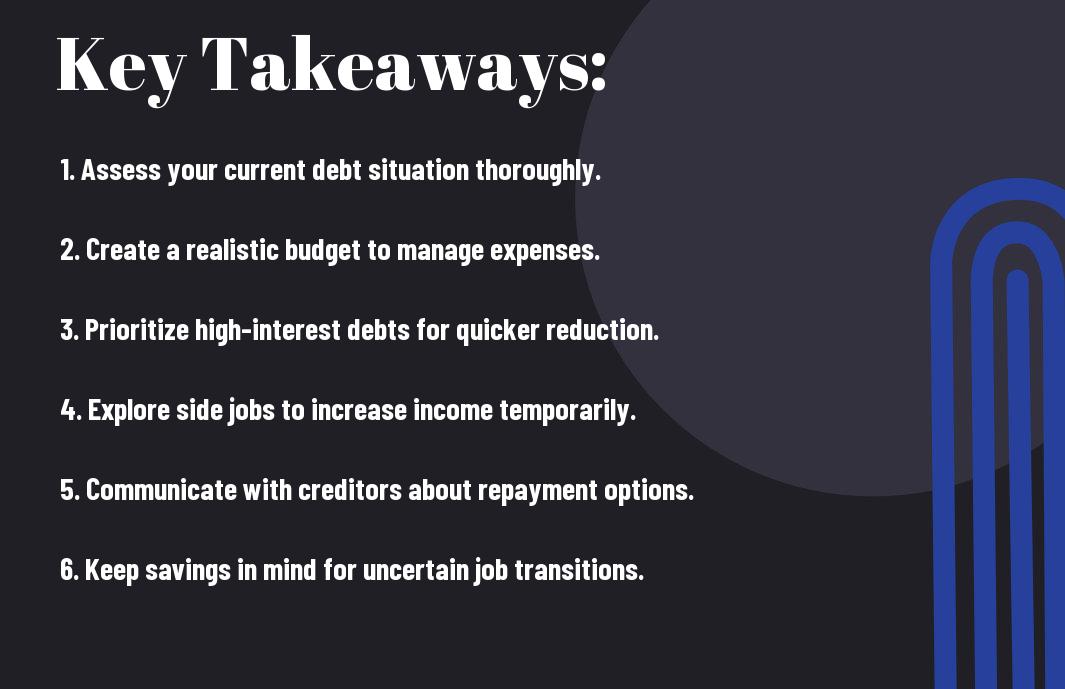
Key Takeaways:
- Assess your current debt situation before making any job moves. Create a list of all your debts and monthly payments to get a clear picture.
- Make a plan to reduce your debt. Consider strategies such as paying off high-interest debts first or consolidating loans for better rates.
- Build an emergency fund to cover unexpected expenses, especially if you change jobs. This safety net will help you manage your finances more comfortably during the transition.
Understanding Your Current Debt
Your current debt situation is one of the most important factors to examine before making a major job change. Knowing how much debt you have can help you make informed decisions about your financial future. Start by gathering all your debt information and understanding the impact it has on your budget. This knowledge can ease your stress and guide you in the right direction.
Types of Debt
Your debt can come in various forms. Understanding the type of debt you have can help you in managing your payments. Here are some common types of debt:
- Credit card debt
- Student loans
- Personal loans
- Auto loans
- Mortgages
Any type can influence your financial stability, so know them well.
| Type of Debt | Description |
| Credit Card Debt | Debt from unpaid credit card balances often comes with high interest rates. |
| Student Loans | Borrowed money for education, often with flexible repayment options. |
| Personal Loans | Unsecured loans for personal use, usually with fixed interest rates. |
| Auto Loans | Loans specifically for purchasing vehicles, secured by the vehicle itself. |
| Mortgages | Loans for buying property, typically with long repayment terms. |
Assessing Your Debt Situation
Any assessment of your debt must begin with a thorough understanding of what you owe. Create a list of all your debts, including the amount, interest rates, and minimum payments. This will give you a clearer picture of your financial situation.
And once you have that list, analyze it carefully. Look for high-interest debts that could be prioritized for repayment. Calculate your total monthly debt payments and compare that to your income. This can help you see how manageable your debt is. Consider making a plan to reduce high-interest debts first, while also ensuring you have enough set aside for living expenses. The more informed you are, the better decisions you can make before changing jobs.
Key Takeaways
- Know the types of debt you have.
- Assess your total debt and monthly payments.
- Prioritize high-interest debts.
- Create a budget that accommodates your debt repayments.
- Make informed decisions before changing your job.
The Impact of Debt on Job Changes
Even when considering a major job change, your debt can weigh heavily on your mind. It can affect your decisions and make you feel stuck. High debt levels might lead you to stay in a job you don’t like, just for the salary. This can limit your career growth. Understanding how debt plays a role in job transitions is important for making smart choices.
Stress and Job Performance
Among the many effects of debt, stress is a major concern. If you feel overwhelmed by financial issues, it can spill over into your job. Stress often leads to decreased focus and lower productivity. This means you might struggle to perform at your best, which could hurt your chances for advancement.
Financial Considerations
By evaluating your financial situation before changing jobs, you can avoid unnecessary risks. Knowing your debt level helps you make informed decisions. It’s important to ensure that a new job will provide enough income to manage your existing debts.
Also, think about benefits and job security. A higher-paying job may come with more responsibilities and stress. Make sure you account for these factors. Consider if the new role offers better benefits like health insurance or retirement plans. Understanding the full picture can help you find a job that not only pays well but also supports your financial wellbeing.

Creating a Debt Reduction Plan
Once again, it’s important to have a clear plan when it comes to reducing your debt before making a major job change. Start by assessing your current financial situation and identifying all your outstanding debts. Set realistic goals on how much you want to pay off each month. For more guidance, check out Preparing for a Career Change: Financial Steps to Take …. This will help you stay focused and organized throughout the process.
Budgeting for Your Debt
After you create your debt reduction plan, the next step is budgeting. Make a list of your monthly income and expenses. This will help you see how much you can allocate toward paying off your debt. Ensure you prioritize necessary expenses while finding areas where you can cut back. This balance will allow you to manage your debt more effectively.
Strategies for Paying Down Debt
After analyzing your budget, consider effective strategies to tackle your debt. One popular method is the snowball approach, where you pay off your smallest debts first while making minimum payments on larger ones. This can give you motivation as you see debts disappearing. Alternatively, the avalanche method focuses on paying off debts with the highest interest rates first, saving you money over time.
Hence, it’s wise to customize your strategies based on your personal situation. You may also want to explore debt consolidation to combine multiple debts into one payment with a lower interest rate. This can simplify your finances. Lastly, consider reaching out to a financial advisor for tailored advice. Following these steps will help you navigate your debt more effectively as you prepare for your job change.
Prioritizing Debt Before a Job Change
Many people overlook the importance of reducing debt before making a major job change. Taking the time to prioritize your financial situation can lead to a smoother transition. It’s wise to explore How to Financially Prepare for a Job Transition and understand how to manage your debts. This planning will help you embrace new opportunities without the stress of financial burdens.
Determining Which Debts to Pay First
Prioritizing your debts is vital. Focus on high-interest debts like credit cards first. These can grow quickly and become a bigger problem if not managed. Once those are tackled, shift your attention to lower-interest loans. This strategy maximizes your savings and reduces stress.
Setting Realistic Goals
Against the backdrop of a job change, it’s important to set achievable financial goals. Balancing your work transition while managing debt requires clear, realistic targets. Start by assessing how much you can afford to pay off each month without stretching your budget too thin.
But crafting these goals isn’t just about numbers. Think about the timeline and what you can realistically achieve in each phase. Whether it’s paying down a specific amount each month or eliminating a debt by a certain date, having a plan keeps you focused and motivated during your job change.
Building an Emergency Fund
Keep in mind that having an emergency fund is imperative when considering a major job change. This fund acts as a safety net, helping you cover unexpected expenses like medical bills or car repairs. It can also provide peace of mind during your job transition. Having some savings can reduce your stress as you focus on finding the right position.
Importance of Savings
Around 60% of Americans do not have enough savings to cover a $1,000 emergency. This statistic highlights the need for a financial cushion. Savings can help you handle sudden costs without going into debt. If you are changing jobs, having savings allows you to be more selective in your choices without the pressure of financial strain.
How Much to Save
About three to six months of living expenses is a good goal for your emergency fund. This amount ensures you can manage your everyday costs while you transition to a new job. Begin by calculating your monthly expenses, then multiply this number to find your target savings amount.
Savings should cover your necessary bills, such as rent, utilities, groceries, and transportation. For example, if your monthly expenses total $2,000, aim to save between $6,000 and $12,000. This range gives you the flexibility to focus on securing a job that suits your career goals without the stress of financial worries.

Preparing for the Job Change
Not every job change is the same. You need a solid plan before making such a big decision. Take steps to ease your transition. Understand your financial situation and outline your debts. This knowledge will help you craft a budget that fits your new job. A careful approach can make your change smoother and less stressful.
Researching New Opportunities
To find the right job for you, start by exploring different industries. Look for roles that match your skills and interests. Utilize job search engines and company websites to gather information. Aim to understand the job market and salary expectations in your field. This research will empower you to make informed decisions.
Networking Tips
With a strong network, you can discover hidden job opportunities. Build meaningful connections with professionals in your desired field. Here are some tips to enhance your networking skills:
- Attend industry-specific events.
- Join online professional groups.
- Engage with contacts on social media.
- Reach out for informational interviews.
Recognizing the value of these relationships can open doors to potential jobs.
At every networking event, be prepared to introduce yourself and discuss your goals. A well-crafted elevator pitch can leave a lasting impression. Consider these additional tips to make your networking efforts effective:
- Follow up with new contacts after meeting.
- Offer help or resources to others in your network.
- Stay updated on industry trends and news.
- Share valuable content with your connections.
Recognizing the importance of giving back can strengthen your relationships and enhance your job search.
Final Words
To wrap up, reducing debt before making a major job change can provide you with financial peace of mind. It allows you to focus on your new role without the stress of overwhelming payments. Start by creating a budget to track your expenses and prioritize paying off high-interest debts. Consider consolidating loans or negotiating with creditors for better terms. By taking these steps, you can ease your financial burden and embrace your new job opportunity with confidence.
FAQ: Reducing Debt Before Making a Major Job Change
Q: Why is it important to reduce debt before changing jobs?
A: Reducing debt before making a job change is important because it helps you gain financial stability. A lower debt load can reduce stress, making it easier to focus on your new job. It also gives you more flexibility in case the new job has a different salary or benefits structure. Less debt means you can take more financial risks, like pursuing a passion project or a lower-paying job that you love.
Q: What are some effective strategies to reduce debt?
A: There are several effective strategies to reduce debt:
- Create a budget: Track your spending and find areas to cut back.
- Prioritize debts: Focus on paying off high-interest debts first.
- Make extra payments: Try to pay more than the minimum required on your debts.
- Consider debt consolidation: This means combining multiple debts into one loan, often at a lower interest rate.
- Seek professional advice: Financial advisors can provide tailored advice based on your situation.
Q: How long does it usually take to reduce debt significantly?
A: The time it takes to reduce debt significantly varies based on your income, expenses, and the total amount of debt you have. Many people see improvements in a few months if they stick to a budget and make extra payments. However, it can take years to pay off larger debts like student loans or mortgages. Setting realistic goals can help you stay motivated throughout the process.
Q: What if I can’t pay off all my debt before the job change?
A: If you can’t pay off all your debt before changing jobs, don’t panic. You can still make a job switch. Focus on managing your debt while exploring new opportunities. Keep communication open with your new employer about your financial situation if needed. It’s also a good idea to create a plan for how you will manage your debt alongside your new job responsibilities.
Q: How can reducing debt impact my new job or career path?
A: Reducing debt can positively impact your new job. When you focus less on financial stress, you can concentrate more on your performance and growth. It can also allow you to take a job that you’re passionate about, even if it pays less. Employers may notice your improved financial responsibility, which can add to your professional credibility.
Key Takeaways
Reducing debt before making a major job change offers many benefits. It provides financial stability, less stress, and more freedom in your career choices. Focus on budgeting, prioritizing debts, and seeking advice when needed. Even if you can’t eliminate all debt, managing it effectively can still set you up for success in your new role.