

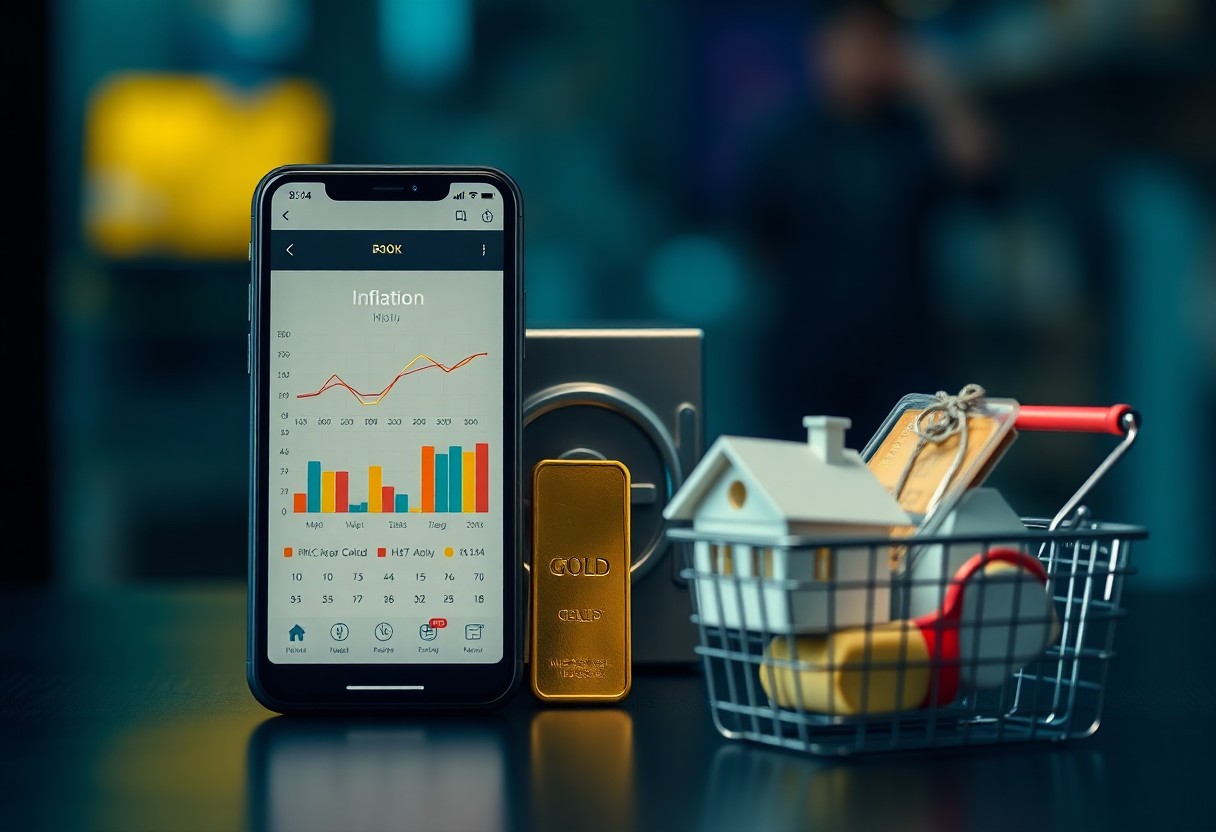
Most inflation describes the general rise in prices that gradually reduces what your money buys; you need to understand its causes, measure its impact on your budget and investments, and adopt strategies-such as seeking higher-yield investments, diversifying assets, and adjusting spending-to preserve your purchasing power over time.
Key Takeaways:
- Inflation is a sustained rise in overall prices that erodes cash value; monitor CPI, core inflation, and real returns to gauge its effect on purchasing power.
- Protect purchasing power by allocating to assets that tend to outpace inflation – diversified equities, inflation‑protected bonds (TIPS), real estate, and select commodities – and rebalance periodically.
- Practical steps: increase savings rate, pursue income growth, use high‑yield or inflation‑linked accounts for short‑term cash, maintain an emergency fund, and adjust budgeting for rising costs.
What is Inflation?
Definition and Overview
You track inflation using measures like the Consumer Price Index (CPI) and the Personal Consumption Expenditures (PCE) price index; central banks typically target about 2% inflation. Headline CPI in the US peaked at 9.1% in June 2022 before moderating to the mid-single digits in 2023 as policy tightened. If inflation outpaces your wage growth, your real purchasing power falls, so compare nominal changes to inflation-adjusted returns.
Types of Inflation
Different drivers create distinct inflation patterns: demand-pull happens when aggregate demand exceeds supply, cost-push follows commodity or input shocks, built-in inflation comes from wage-price feedback, hyperinflation reflects monetary collapse, and stagflation mixes high inflation with weak growth as in the 1970s. You must identify the dominant driver because policy tools-rate hikes, supply interventions, fiscal adjustments-vary in effectiveness and timing.
- Demand-pull: strong consumer spending after stimulus can create shortages and price jumps.
- Cost-push: input shocks like 2022 energy price spikes raise production costs across sectors.
- Built-in: a wage-price spiral embeds higher labor costs into persistent inflation.
- Stagflation: the 1970s showed slow growth with double-digit inflation and rising unemployment.
- Any policy you choose should target the primary driver to protect your real income.
| Headline CPI | Measures overall consumer price changes; useful for cost-of-living comparisons |
| Core CPI | Excludes food and energy to show underlying trends policymakers watch |
| PCE Deflator | Fed-preferred gauge; broader weighting than CPI and captures service prices |
| Producer Price Index (PPI) | Tracks wholesale prices and often signals consumer price moves |
| Wage Growth | Average earnings increases; sustained rises can perpetuate inflation |
When you drill into types, policy choices and timing change: demand-pull is often best addressed by interest-rate increases-the Fed raised the federal funds rate from near zero to about 5% in 2022-2023-while cost-push calls for supply remedies like releasing reserves or reducing tariffs. Built-in inflation requires wage and productivity alignment, and hyperinflation needs rapid monetary stabilization and fiscal reform to restore trust in the currency.
- Diversify assets: include TIPS, high-quality equities, and real assets to offset different inflation paths.
- Index your income where possible: negotiate wage or rent adjustments tied to a reliable inflation measure.
- Lock borrowing costs: fixing mortgage or loan rates can protect you from future rate shocks.
- Hedge selectively with short-duration inflation-linked securities, commodities, or real estate exposure.
- Any strategy you implement should prioritize preserving real returns while keeping adequate liquidity.
| Demand-pull | Occurs when demand outstrips supply; example: post-stimulus shortages that drive prices up |
| Cost-push | Triggered by rising input costs such as oil or food that raise overall prices |
| Built-in (wage-price) | Wage increases feed into prices and expectations, sustaining inflation |
| Hyperinflation | Extremely rapid inflation (e.g., Zimbabwe 2008) often above 50% per month |
| Stagflation | High inflation combined with stagnant growth and high unemployment, as seen in the 1970s |
Causes of Inflation
Inflation often springs from mismatches between demand and supply, rising input costs, or shifts in expectations; you can trace these forces in episodes like 1970s double-digit inflation and the 2022 surge. For a concise examination of mechanics and historical examples, see Inflation: Prices on the Rise.
Demand-Pull Inflation
When your economy faces excess demand-driven by fiscal stimulus, loose monetary policy, or rapid income gains-businesses raise prices because production can’t scale fast enough; for example, strong post‑pandemic demand helped push U.S. CPI to 9.1% in June 2022 amid large fiscal transfers and labor shortages.
Cost-Push Inflation
Rising input costs-like oil shocks, commodity spikes, or wage increases-force firms to pass higher expenses to you in the form of higher consumer prices; classic oil embargoes in the 1970s and pandemic-related supply disruptions in 2020-21 illustrate how supply constraints lift inflation even without strong demand.
Cost‑push dynamics often begin in a specific sector (energy, food, components) and spread via supply chains and wage demands; you’ll see firms initially absorb margins, then raise prices as shocks persist, which can trigger wage‑price spirals and leave policymakers choosing between tighter policy to tame inflation and softer policy to support employment.
Measuring Inflation
When assessing inflation you rely mostly on two official measures published monthly by the Bureau of Labor Statistics: the Consumer Price Index and the Producer Price Index. CPI reflects price changes faced by urban consumers and is the Fed’s preferred gauge for its 2% inflation target, while PPI tracks prices received by producers at three stages-crude, intermediate, and finished-giving you forward-looking signals about cost pressures that may hit retail prices in the months ahead.
Consumer Price Index (CPI)
The CPI measures monthly price changes for a fixed basket of goods and services consumed by urban households; core CPI strips out volatile food and energy to reveal underlying trends. You can dissect CPI by categories-housing, transportation, food, medical-to see which sectors drive inflation, and policymakers watch year-over-year CPI to decide if wages and benefits are keeping pace with the inflation rate.
Producer Price Index (PPI)
PPI reports price changes at the producer level across three stages-crude materials, intermediate goods, and finished goods-and is also published monthly by the BLS. When input costs rise, PPI often moves ahead of consumer prices, so you can use it to anticipate margin pressure for firms and potential pass-through to your grocery or energy bills.
For deeper use, monitor commodity-specific PPI series-energy, metals, agricultural inputs-because sharp moves there tend to flow through supply chains; the 2021-22 energy spike, for example, preceded noticeable increases in transportation and food costs. You should compare PPI trends with producer margins and freight or inventory indices to estimate how much of input inflation businesses will absorb versus pass on to your final prices.

The Impact of Inflation on Purchasing Power
If inflation averages 5% annually, your dollar buys roughly 78% of the same goods after five years; that math and practical implications are discussed in Understanding Inflation: When Money Loses Its Power, which shows how persistent inflation quietly reduces your real wealth over time.
Real vs. Nominal Values
Distinguish nominal and real figures: a 3% nominal wage raise with 2% inflation gives you about 1% real income growth, so you can actually buy more only if real is positive. Use the CPI or GDP deflator to convert nominal amounts into real terms when you evaluate pay, returns, or budgets.
Effects on Consumers and Businesses
Consumers face rising everyday costs-if inflation hits 6%, a $1,000 monthly grocery budget requires $1,060 next year to buy the same basket-while businesses contend with higher input prices, inventory repricing, and squeezed margins that force pricing, wage, and sourcing decisions.
For instance, if nominal interest rates are 2% and inflation is 3%, your savings suffer a −1% real return, so you effectively lose purchasing power; small manufacturers paying 10% more for steel but unable to raise prices see gross margins shrink, and you can respond by using TIPS, indexed contracts, futures hedges, or price-escalation clauses to protect margins and purchasing power.
Strategies to Protect Against Inflation
Diversify into assets that have historically outpaced inflation: U.S. stocks (roughly 7% real annual return long-term), TIPS (adjust principal to CPI since 1997), commodities like gold and energy, and income-producing real assets such as REITs or farmland. You should also use cash-management tactics-short-term CD ladders, high-yield savings, and I Bonds-to lock in higher yields while keeping liquidity. Targeting a mix of growth and inflation-linked income helps preserve purchasing power during both moderate and high inflation episodes.
Investments for Inflation Hedge
Use TIPS for direct CPI protection, I Bonds for retail investors (you can buy up to $10,000 electronically plus a $5,000 paper bond via tax refund), and commodity exposure for raw-material inflation. Dividend growers and value stocks often keep pace with consumer-price rises, while diversified REITs provide rental-income inflation linkage; U.S. REITs historically yield about 3-5% in dividends. Balance these with equities for long-term growth to offset multi-year inflation shocks.
Budgeting and Saving Techniques
Keep a 3-6 month emergency fund in liquid accounts, then ladder excess cash into short-term CDs or I Bonds to capture higher yields while preserving access. You should focus on paying down variable-rate debt-credit cards often charge 15%+ APR-which erodes your budget faster than inflation lowers it. Track spending by category monthly, cut recurring discretionary costs, and increase automatic transfers to investment accounts as wage increases outpace inflation.
If you hold $20,000 in a checking account yielding 0.1% while inflation runs 4%, your buying power falls roughly $780 after one year; moving $10,000 into a 12-month CD at 3% and $5,000 into an I Bond can cut that loss substantially. You should also renegotiate bills (save $300-500 annually by switching providers), use zero-based budgeting to assign every dollar, and review subscriptions quarterly to free up funds for inflation-resistant investments.

Historical Context of Inflation
From Weimar Germany’s 1923 hyperinflation to the U.S. stagflation of the 1970s and the pandemic surge in 2021-22, inflation has shifted purchasing power sharply; for example, U.S. CPI hit about 14.8% in 1980 and 9.1% in June 2022. You saw policy responses vary-from price controls and wage freezes to aggressive rate hikes-and their outcomes illustrate how monetary, fiscal, and supply shocks interact to change real incomes and asset values.
Major Inflationary Periods
During 1923 in Germany, monthly prices doubled repeatedly, eroding savings, while Argentina experienced chronic annual rates in the tens of percent across the 1980s-2000s; the 1973-81 oil shocks pushed U.S. inflation into double digits, and the 2021-22 global rebound plus supply constraints produced rapid CPI gains. You need to study each episode’s drivers-oil, war, money supply, or supply chain-to gauge likely future risks.
Lessons Learned from the Past
You benefit from three consistent takeaways: central-bank credibility matters, as seen after inflation targeting cut volatility in the 1990s; real assets and inflation-indexed bonds can protect purchasing power; and aggressive monetary tightening, while effective at lowering inflation, often triggers recessions. Use instruments like TIPS (introduced in the U.S. in 1997) and diversified real-asset exposure when you plan for inflationary scenarios.
For example, Paul Volcker’s Fed raised the federal funds rate toward 20% in 1981 to break entrenched inflation, which brought CPI down from roughly 14% in 1980 to under 4% by the mid-1980s but caused a sharp recession and higher unemployment; conversely, inflation targeting in economies like New Zealand and the UK in the 1990s reduced inflation volatility without repeated policy shocks. You should weigh the trade-off between protecting real returns via assets such as gold, real estate, and TIPS-gold surged to about $850/oz in 1980-against liquidity needs and the potential for short-term losses during policy-driven disinflation.
Summing up
Now you understand inflation’s effects on prices and returns; use that knowledge to protect your purchasing power: track inflation, diversify into real assets and inflation-protected securities, invest for growth, keep an emergency fund, adjust budgets and wages, and update skills to preserve income value over time.
FAQ
Q: What is inflation and how does it reduce my purchasing power?
A: Inflation is the sustained rise in the general price level of goods and services, usually measured by indices such as the CPI or PCE. When prices rise, each unit of currency buys fewer goods and services, so nominal cash balances and fixed nominal incomes lose real value. Causes include demand outpacing supply, rising production costs, and expansionary monetary policy. The effect on purchasing power can be quantified: real value ≈ nominal value / (1 + inflation rate)^years. Even modest inflation compounds over time, eroding savings, diminishing the real return on fixed-income investments, and reducing living standards if incomes do not keep pace.
Q: Which investments tend to preserve purchasing power over the long run?
A: Historically, equities have offered returns above inflation over long horizons because companies can raise prices and earnings over time. Inflation-protected securities (e.g., TIPS in the U.S., inflation-linked bonds elsewhere) adjust principal or interest with inflation. Real assets such as real estate, certain commodities, and infrastructure often appreciate with or hedge against higher prices. Floating-rate instruments and short-duration bonds reduce interest-rate sensitivity. Diversifying across these asset classes, using tax-advantaged accounts to shelter gains, and keeping an allocation aligned with your time horizon and risk tolerance helps maintain real wealth.
Q: What practical steps can I take now to protect my purchasing power?
A: Reassess your emergency fund size and keep it liquid but avoid holding excessive cash long term; allocate new savings toward assets that historically beat inflation (stocks, TIPS, real assets). Use short-term bond ladders or floating-rate products to limit rate sensitivity and consider I Bonds or local equivalents where available and limits permit. Hedge income risk by negotiating cost-of-living adjustments, diversifying income sources, or upskilling to increase wage growth. Reduce high-cost liabilities, lock favorable fixed rates if refinancing makes sense, and trim fees and taxes that eat real returns. Rebalance periodically, monitor inflation indicators, and align choices with your investment horizon and liquidity needs; consult a financial advisor for personalized implementation.


