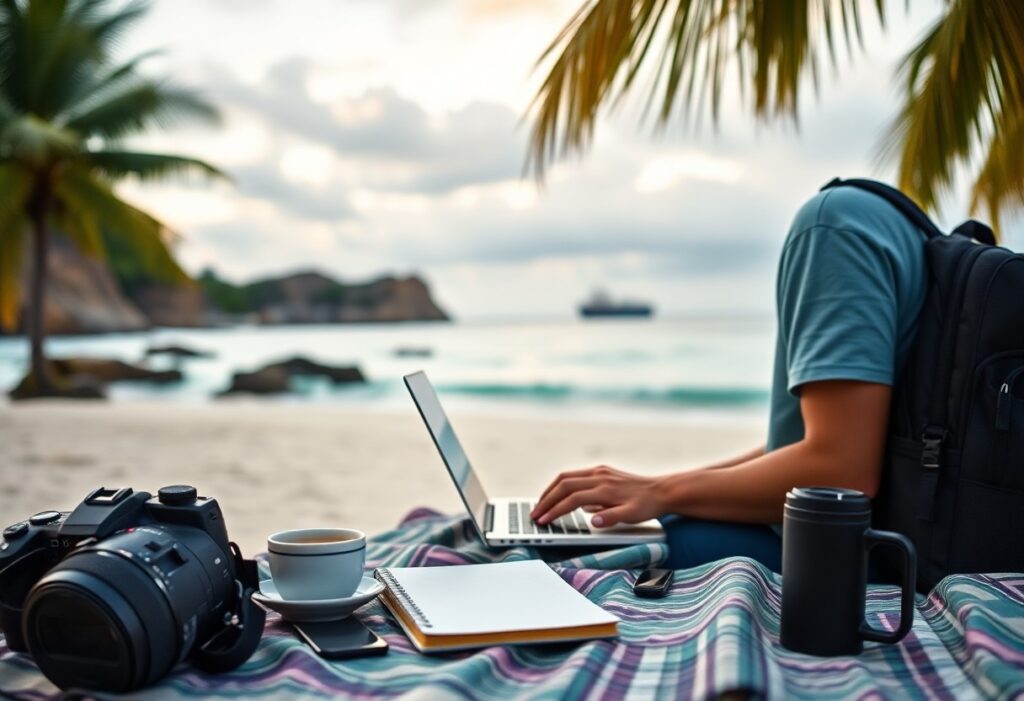
Most digital nomads face unique financial challenges as they travel the world while working remotely. In this guide, you’ll discover necessary financial planning tips tailored specifically for your lifestyle. From budgeting and saving to managing taxes and investments, you’ll learn how to secure your financial future while enjoying the freedom of being a nomad. Follow these simple steps to take control of your finances and travel with confidence.

Key Takeaways:
- Create a budget to track your income and expenses while traveling.
- Set up an emergency fund to cover unexpected costs.
- Learn about local taxes and financial regulations in each country you visit.
Understanding Financial Planning
As a digital nomad, understanding financial planning is imperative for maintaining your lifestyle while traveling. This knowledge helps you manage your money wisely, ensuring you always have what you need for adventures and daily expenses. Learning about budgeting, savings, and investments can keep you financially stable, even when living in different countries. With a solid financial plan, you can focus more on exploring and less on financial worries.
What is Financial Planning?
Little is it known that financial planning is the process of setting goals, creating a budget, and managing your finances effectively. It involves assessing your current financial situation and making a plan to help you achieve your objectives. This includes saving for emergencies, planning for retirement, and managing debts. Overall, financial planning helps you make informed decisions about your money.
Why is it Important for Digital Nomads?
Assuming you roam from city to city, financial planning becomes vital for your success. With income that may vary depending on projects or clients, having a financial plan helps you create a budget that fits your lifestyle. This way, you can enjoy your travels without the stress of running out of money. Whether it’s renting an apartment, paying for food, or buying tickets for activities, staying organized with your finances lets you travel freely.
Important factors to consider as a digital nomad include currency fluctuations, healthcare costs abroad, and potential income taxes in different countries. By actively managing your finances, you can ensure a comfortable lifestyle while exploring the world. Moreover, having a plan can help you handle emergencies or unexpected expenses. Overall, financial planning allows you to travel more confidently and securely.

Types of Financial Plans
One of the first steps in financial planning is understanding the different types of financial plans. Each plan serves a purpose that fits your lifestyle as a digital nomad. Here’s a simplified breakdown:
| Type of Financial Plan | Description |
| Short-Term Financial Plans | Focus on immediate financial needs and goals. |
| Long-Term Financial Plans | Aim for financial stability years down the line. |
| Emergency Fund Plans | Set aside savings for unexpected expenses. |
| Investment Plans | Strategize for growing wealth over time. |
| Retirement Plans | Prepare financially for your retirement years. |
Knowing the types of financial plans can help you tailor your strategies effectively. For more details, check out A Complete Guide to Money Management for Digital Nomads.
Short-term Financial Plans
On your journey as a digital nomad, short-term financial plans are vital. These plans help you manage cash flow and cover immediate expenses, like accommodation and travel costs. Setting aside a budget for daily needs ensures you can enjoy your lifestyle without worrying about finances.
Long-term Financial Plans
Financial planning for the long term is about where you want to be years from now. This type of plan focuses on savings, investments, and future goals. It usually covers anything from retirement funds to major purchases. Having a long-term strategy gives you direction and peace of mind.
This type of planning often includes setting specific goals, like buying a home or traveling extensively. It may involve investing in stocks, bonds, or real estate to build your wealth over time. Aim for a balanced portfolio that suits your risk tolerance and goals. By making informed choices now, you can create a secure future for yourself as you travel the world.
Step-by-Step Guide to Financial Planning
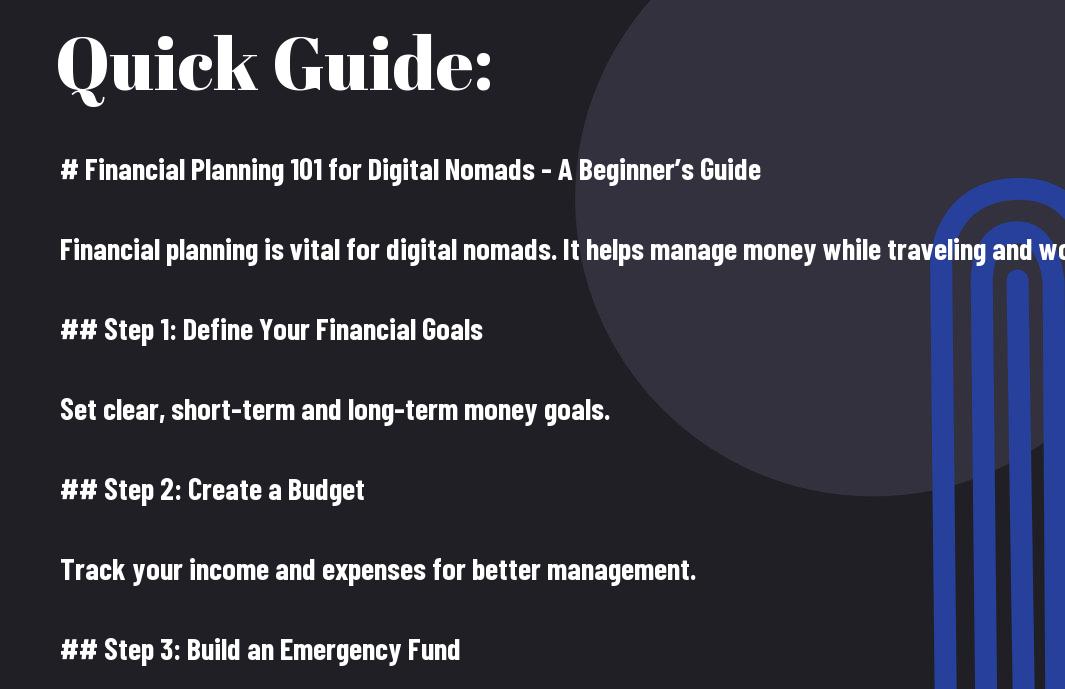
Now, let’s explore a step-by-step guide that will help you manage your finances effectively as a digital nomad. Following these steps can simplify the planning process and ensure you stay on track. Check out the table below for a brief overview.
| Step | Description |
|---|---|
| 1. Assess Your Current Financial Situation | Understand your income, expenses, and savings. |
| 2. Set Financial Goals | Outline what you want to achieve financially. |
| 3. Create a Budget | Plan how to allocate your money. |
Assessing Your Current Financial Situation
Your first step in financial planning is to assess your current financial situation. Start by listing all your sources of income and monthly expenses. Include everything from rent to groceries. By knowing your financial status, you will have a clearer picture of where you stand, helping you make informed choices.
Setting Financial Goals
Step-by-step, it’s time to set your financial goals. What do you want to achieve? This could be saving for travel, retirement, or paying off debt. Establishing clear goals gives you direction and something to work toward. Write your goals down and keep them visible, which helps maintain your focus.
The more specific your goals are, the better. For example, instead of saying, “I want to save money,” say, “I want to save $5,000 for a trip by next summer.” Specific goals help create a roadmap for your financial planning. Break big goals into smaller milestones, making them easier to achieve.
Creating a Budget
One key part of financial planning is creating a budget. A budget helps you control your spending and saves money for your goals. Start by reviewing your income and expenses from your earlier assessment. Decide how much you want to spend on each category, like housing, food, and leisure.
Assessing your monthly expenses regularly will help you adjust your budget as needed. If you notice you’re spending more than planned in one area, you can cut back in another. This way, you remain aligned with your financial goals, ensuring that your budget works for you as a digital nomad.

Key Factors to Consider
Not every digital nomad’s journey is the same. To secure your financial future, it’s important to focus on key factors. Here are some considerations:
- Income sources and stability
- Living expenses in your chosen locations
- Healthcare and insurance
- Tax obligations
- Emergency fund planning
The right planning can help you enjoy your adventures stress-free.
Income Variability
There’s no one-size-fits-all when it comes to income for digital nomads. Your earnings may fluctuate based on client demands, project availability, or seasonality. Some months you might make a lot, while others may be lean. This variability requires you to create a flexible financial plan that accounts for such ups and downs.
Living Expenses Abroad
Variability in living expenses is something every digital nomad should consider. Costs can differ greatly depending on where you are. Some cities are affordable, while others can be quite expensive. Understanding the cost of living in your destination is key to maintaining a balanced budget.
Factors that influence living expenses include housing, food, transportation, and daily activities. For example, cities in Southeast Asia may offer lower costs compared to urban centers in Europe. Utilizing resources like cost of living calculators can help you plan effectively and ensure your budget aligns with your lifestyle.
Pros and Cons of Digital Nomad Financial Planning
Unlike traditional jobs, being a digital nomad brings unique challenges to financial planning. It’s necessary to weigh the positives and negatives. Understanding these can help you make better choices for your financial future. Here’s a quick look:
| Pros | Cons |
|---|---|
| Greater freedom and flexibility | Income instability |
| Opportunity to explore new cultures | Complex tax situations |
| Lower living costs in some countries | Difficulties in maintaining savings |
| Access to diverse income streams | Challenges in finding reliable banking |
| Potential for a better work-life balance | Difficulty in budgeting for travel |
Advantages of Being Financially Prepared
If you take the time to plan your finances, you can enjoy peace of mind while traveling. Being financially prepared allows you to handle unexpected expenses and make the most of your adventures. You can spend less time worrying and more time exploring. Financial security also opens up opportunities for experiences you might not be able to afford otherwise.
Challenges and Risks
On the other hand, financial planning as a digital nomad comes with specific challenges. You might face unstable income streams that can make budgeting tough. Financial systems vary by country, adding another layer of complexity. These factors can make it hard to stay on top of your financial goals while enjoying your nomadic lifestyle.
Challenges arise from not consistently having a regular paycheck. You may have to adapt to fluctuating currencies and different tax laws. Managing finances while moving can create stress. Also, without a stable bank network, accessing your funds might become inconvenient. Preparing for these risks is necessary, so you can keep enjoying your journey without financial worries.
Tips for Effective Financial Management
After becoming a digital nomad, managing your finances is key to enjoying your lifestyle. Follow these tips to keep your finances on track:
- Set clear financial goals.
- Create a monthly budget and stick to it.
- Track your expenses regularly.
- Save for emergencies and future travels.
- Review your budget and adjust as needed.
This approach helps you build a stronger financial foundation while living abroad.
Tools and Apps for Budgeting
Budgeting is important for staying in control of your finances as a digital nomad. Various tools and apps can help you monitor spending and save money. Some popular options include Mint, YNAB (You Need a Budget), and PocketGuard. These apps make it easy to track your income and expenses by letting you categorize your transactions. This way, you can easily spot areas where you can cut back.
Finding Reliable Financial Advice
An important step in financial planning is finding reliable financial advice. Connecting with financial advisors who understand the unique needs of digital nomads can greatly benefit you.
Finding trustworthy financial guidance can feel overwhelming but is important for your success. Look for certified financial planners who specialize in working with expats or nomads. You can also explore online forums and community groups. These resources offer insights from fellow travelers and experts. Additionally, consider checking reviews and testimonials to ensure you select reliable sources for your financial advice.
Summing up
Considering all points, effective financial planning is vital for your success as a digital nomad. By budgeting wisely, understanding tax implications, and choosing the right financial tools, you can manage your finances better while enjoying your travels. Explore more about Mastering Finances as a Digital Nomad to enhance your skills and make informed decisions. With the right approach, you can travel freely while keeping your financial goals on track.
FAQ about Financial Planning 101 for Digital Nomads – A Beginner’s Guide
Q: What is financial planning for digital nomads?
A: Financial planning for digital nomads involves organizing your money to support a flexible lifestyle. It includes budgeting, saving, investing, and managing expenses while traveling or living in different countries. This plan helps you maintain stability while enjoying your adventures.
Q: Why do digital nomads need a financial plan?
A: Digital nomads need a financial plan to balance work and travel. It helps them track income and expenses, avoid debt, and save for future goals. A good financial plan provides peace of mind, allowing nomads to focus on their work and experiences without worrying about money.
Q: What are some basic budgeting tips for digital nomads?
A: Here are some simple budgeting tips for digital nomads:
- Create a monthly budget: List all your income and expenses. This helps you see where your money goes.
- Track your spending: Use apps or spreadsheets to monitor daily expenses. This keeps you accountable.
- Set aside savings: Aim to save at least 20% of your income for emergencies and future travel.
- Prioritize crucial expenses: Focus on necessary costs like housing, food, and transportation before spending on luxury items.
Q: How can digital nomads save money while traveling?
A: There are many ways digital nomads can save money while traveling:
- Choose budget accommodations: Consider hostels, guesthouses, or house-sitting to reduce lodging costs.
- Cook your meals: Grocery shopping and cooking can save you a lot compared to eating out.
- Use public transportation: It’s usually cheaper and a great way to explore local areas.
- Look for discounts: Take advantage of student and local discounts wherever you go.
Q: What tools can help digital nomads manage their finances?
A: Several tools can help digital nomads manage their finances effectively:
- Budgeting Apps: Apps like Mint or YNAB (You Need A Budget) help track income and expenses.
- Expense Trackers: Tools like Expensify can simplify tracking business-related expenses.
- Investment Platforms: Sites like Robinhood or Acorns make it easy to invest your savings.
- Currency Converters: Apps like XE Currency can help you understand exchange rates in different countries.
Key Takeaways
Financial planning is vital for digital nomads. By budgeting, tracking expenses, and saving wisely, you can ensure a stable financial future while enjoying your travels. Use available tools to help manage your finances easily. Happy travels!