Job changes are a common occurrence in today’s workforce, whether it be due to seeking advancement opportunities, pursuing a better work-life balance, or simply adapting to changing industry trends. In these transitions, individuals often experience significant shifts in their financial situations, requiring them to reevaluate their budgeting, saving, and investment strategies. In this blog post, we will probe into real-life scenarios of individuals undergoing job changes and the valuable financial lessons they have learned along the way.
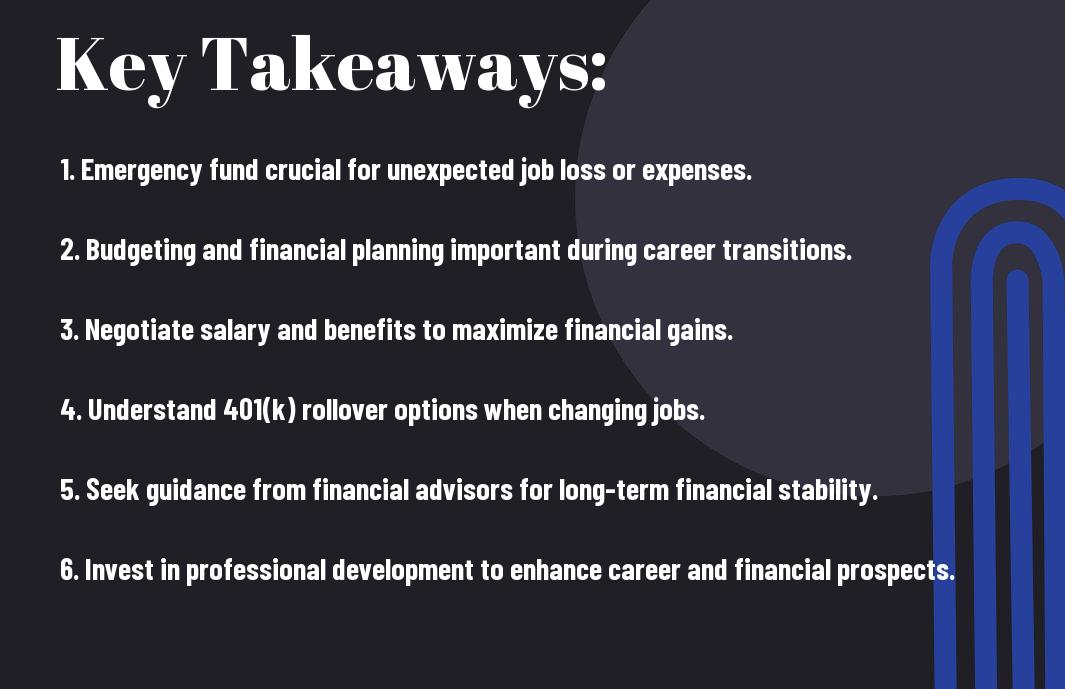
Key Takeaways:
- Emergency Fund: Having an emergency fund in place is crucial when undergoing a job change. It provides a financial cushion to cover expenses during the transition period.
- Severance Package: Understanding the details of your severance package is vital. It can impact your financial stability and provide temporary support until you find a new job.
- Cost of Living Adjustments: Evaluating the cost of living in a new location is important when considering job changes. It helps in making informed decisions about salary negotiations and budgeting adjustments.
- Retirement Savings: Continuously contributing to retirement accounts, even during a job change, is vital for long-term financial security. It ensures that you are not missing out on potential growth and savings opportunities.
- Professional Development: Investing in professional development and skill-building can increase your market value. It opens up new opportunities for career growth and potentially higher income levels in the future.
Preparing for the Transition
Saving for the Unexpected
You never know when a job change might come knocking on your door, and having a financial safety net can make all the difference during this transition. Unexpected expenses like healthcare costs, moving fees, or a gap in income can quickly add up and impact your financial stability. It’s crucial to have an emergency fund that can cover at least three to six months’ worth of living expenses to help you weather any unforeseen financial storms during a career transition.
Strategies for Budgeting During Job Searches
Transitioning between jobs can often mean a period of uncertainty and potential financial strain. This is where effective budgeting strategies come into play. When you’re actively searching for a new job, it’s important to track your expenses closely, cut back on non-important spending, and prioritize important bills and payments. Consider creating a detailed budget that accounts for your new income level or potential loss of income during the job search phase. Being proactive in managing your finances can help alleviate some of the financial stress that comes with a job change.
Navigating the Financial Ups and Downs
Managing Income Disruption
One of the biggest financial challenges during a job change is managing income disruption. According to a recent study, 57% of individuals experience a decrease in income after changing jobs. This can lead to financial stress and uncertainty, especially if it takes time to secure a new position.
It is crucial to have a financial cushion or emergency fund to cover expenses during a job transition. By creating a budget and reducing non-vital expenses, individuals can weather the income disruption more effectively and avoid accumulating debt.
Benefits Negotiation and Transition
Downsizing or changing jobs often means navigating new benefit packages, including health insurance, retirement plans, and other perks. It is vital to carefully evaluate these benefits and negotiate effectively to ensure a smooth transition. A recent survey found that 46% of individuals regretted not negotiating their benefits package when changing jobs.
Another important aspect of benefits negotiation is understanding the impact on long-term financial goals. For example, opting for a higher salary but lesser retirement contributions may have repercussions on retirement savings. It is crucial to weigh these factors carefully and make informed decisions.

The Role of Emergency Funds
Once again, we are reminded of the importance of having a solid emergency fund in place when undergoing a job change. This financial cushion can provide peace of mind and stability during times of uncertainty, helping individuals navigate through the transition with greater confidence and security.
Real-life Examples of Emergency Fund Utility
Examples abound of how emergency funds have been a saving grace for individuals going through job changes. Take the case of Sarah, who unexpectedly lost her job due to company downsizing. Thanks to her well-funded emergency fund, she was able to cover her living expenses while searching for a new job without having to dip into her savings or incur debt.
Guidelines for Emergency Fund Size and Management
An emergency fund should ideally cover three to six months’ worth of living expenses to provide a sufficient safety net during job transitions. Understanding the importance of accessibility and liquidity, it’s recommended to keep emergency funds in a high-yield savings account or a money market fund that allows easy access in times of need. A disciplined approach to regularly contributing to and maintaining the fund ensures financial resilience during unforeseen circumstances.
Redefining Financial Priorities
Many individuals who undergo job changes often find themselves navigating unfamiliar financial territories. In a compelling article titled The 5 Big Things I Learned After Leaving Money Magazine, the author shares insights gained from their own career transition experience.
Adjusting to New Salary Structures
Structures of new job positions often come with varying salary levels, impacting overall financial stability. It’s crucial for individuals to assess and adapt to these changes, ensuring that their budget aligns with their current income. This adjustment period may require cutting back on expenses or exploring additional income sources to maintain financial well-being.
Re-evaluating Savings and Investment Plans
Redefining savings and investment plans becomes necessary when transitioning between jobs. Individuals may need to reassess their risk tolerance, long-term financial goals, and retirement plans to align with their new career path. By seeking professional financial advice and exploring diversified investment options, individuals can optimize their financial strategies for sustained growth and stability.
Plans to enhance savings, emergency funds, and investment portfolios play a significant role in securing a solid financial future. It’s important to regularly review and adjust these plans to accommodate changing circumstances and ensure financial resilience in the face of career transitions.
Debt Management In Times Of Change
Maintaining Credit Health Amidst Unemployment
Times of career transitions, such as job changes or periods of unemployment, can bring challenges in managing debt and maintaining credit health. In a study conducted by the Consumer Financial Protection Bureau, it was found that about 43% of those who experienced a job loss in the past year reported that they were unable to pay for at least one basic need like food, rent, or utilities. These financial strains can have a direct impact on credit health.
Refinancing and Consolidation Stories
Credit management during job changes can involve considering options like refinancing and debt consolidation to alleviate financial burdens. One such story comes from Sarah, who successfully refinanced her student loans during a career transition to a higher-paying job. By doing so, she was able to lower her monthly payments and interest rate, ultimately saving her thousands of dollars in the long run.
Plus, consolidation of multiple debts into a single loan can simplify payments and potentially reduce interest rates, making it easier for individuals to manage their debts effectively during times of change.

Insights from Successful Job Transitions
Smart Financial Moves After Landing a New Job
Unlike changing jobs due to unforeseen circumstances, those who have successfully transitioned to a new job have learned valuable financial lessons along the way. One key insight is the importance of making smart financial moves once you land a new job. This includes reassessing your budget, setting new financial goals, and possibly increasing your savings rate or investment contributions.
Long-term Financial Planning Post-Transition
Moves from a career transition can also involve long-term financial planning to secure your financial future. This includes updating your retirement savings strategy, considering alternative income streams, and possibly seeking professional financial advice to ensure your financial plan aligns with your new career trajectory and goals.
To further enhance your long-term financial planning post-transition, consider evaluating your insurance coverage, setting up an emergency fund, and reviewing your estate planning documents. By taking these steps, you can better prepare for any future job changes or unexpected financial challenges that may arise.

Leveraging New Opportunities
Now, when launching on a new career path, it is crucial to leverage the opportunities that come your way. For valuable insights on navigating a career change, check out Lessons Learned from a Career Change by Buck Francis.
Investing in Career Development
With job changes often come opportunities for personal and professional growth. Investing in career development through further education, training programs, or certifications can enhance your skill set and make you more competitive in the job market. By allocating resources towards continuous learning, individuals can adapt to industry changes and position themselves for long-term success.
Maximizing Employer Benefits and Retirement Plans
One crucial financial lesson during a career transition is to maximize employer benefits and retirement plans. Take the time to understand the benefits offered by your new employer, such as health insurance, retirement savings plans, and other perks. By enrolling in these programs and taking full advantage of employer contributions, you can secure your financial future and make the most of the benefits provided to you.
Leveraging your employer’s offerings not only provides financial security but also demonstrates a proactive approach to managing your finances during job transitions. By actively participating in employer-sponsored initiatives, you can build a strong financial foundation for the future.
Conclusion
Considering all points, it is evident that job changes can have a significant impact on an individual’s financial situation. The stories shared by individuals undergoing career transitions highlight the importance of financial preparedness, adaptability, and resilience during times of change. From setting up emergency funds to reevaluating spending habits and seeking out opportunities for personal and professional growth, these real-life scenarios provide valuable insights into the financial lessons that can be learned from job changes.
Ultimately, navigating a job change requires careful planning, open communication with loved ones, and a willingness to explore new financial strategies. By taking proactive steps to safeguard their financial well-being, individuals can weather the uncertainties of career transitions and emerge stronger and more financially savvy in the long run. The lessons learned from these real-life stories serve as a reminder that with the right mindset and approach, a job change can be a catalyst for positive financial growth and development.