Relationships can be complicated, especially when it comes to finances. You might not realize it, but financial abuse can hide beneath the surface in your relationship. It’s important to recognize the signs early. This helps you protect yourself and seek help if needed. If you’re unsure about the signs, check out these 10 Signs of Financial Abuse in Marriage for more insights. Let’s probe the key warning signs to be aware of.
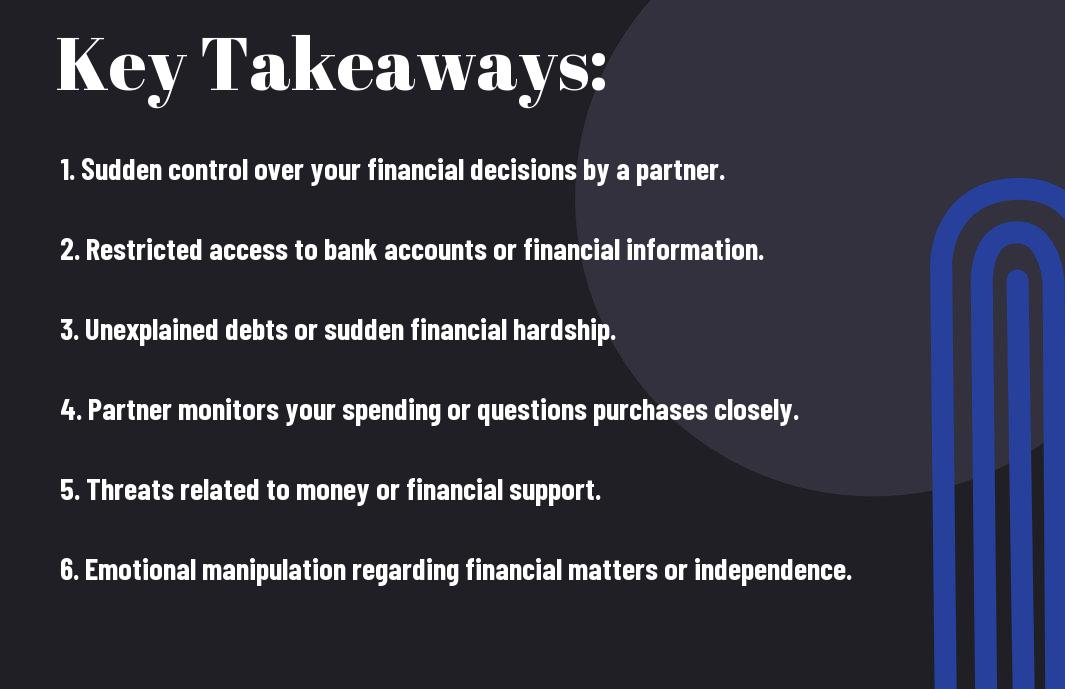
Key Takeaways:
- Financial abuse often involves one partner controlling the other’s money, which can include limiting access to funds or using guilt to manipulate spending.
- Look for signs like secretive spending, reluctance to discuss finances, or one partner making all financial decisions without input from the other.
- Open communication is key. Discuss financial matters regularly to strengthen your relationship and address any signs of financial abuse early on.
Unexplained Financial Losses
The presence of unexplained financial losses can be a major red flag in your relationship. If you notice a pattern of your savings disappearing without a clear explanation, it’s time to take a closer look. This might happen through small, regular withdrawals or larger, one-time expenses that you weren’t aware of. Trust your instincts—if something feels off, it likely is.
Missing Money
Financial losses often come in the form of missing money from your accounts. You might find transactions you did not authorize or funds that are suddenly absent. This behavior can signal that someone else is controlling your finances without your consent, which is a key sign of financial abuse.
Unexpected Bills
Some bills may arrive unexpectedly, leaving you puzzled. These could include payments for services or debts you didn’t know existed. They can add unnecessary stress to your financial situation.
Unexpected bills can also indicate that your partner is hiding financial decisions from you. You may find bills for items you never discussed or expenses that seem inflated. This behavior is concerning and suggests a lack of transparency in your finances. If you’re seeing these surprises regularly, it’s important to communicate with your partner and seek clarity on where your money is going.
Controlling Spending Habits
One sign of financial abuse is when your partner tries to control your spending habits. They may monitor what you buy or criticize your purchases. This behavior can make you feel guilty about your choices. If you notice these signs, it’s important to seek help. You can learn more about what to watch for in relationships by visiting 6 Signs You Might Be a Victim of Financial Abuse ….
Isolating Bank Accounts
There’s a serious red flag when your partner insists on having separate bank accounts. If they discourage you from sharing financial information or refuse to let you see account details, it can signify control. This action limits your financial visibility and independence.
Limiting Access to Funds
Now, when your partner limits your access to funds, it can be a common tactic of financial abuse. They might control the money you can spend or refuse to give you cash for basic needs. This lack of access prevents you from making your own financial choices. You should feel secure in managing your money, not dependent on someone else.
The goal of limiting access to funds is often control. Your partner may want to make you feel trapped or powerless. This behavior can create anxiety about money and your independence. If you find yourself in this situation, consider reaching out for support to regain your financial freedom.
Excessive Scrutiny of Expenses
Many people in healthy relationships feel comfortable discussing finances openly. However, if your partner is overly focused on tracking your expenses, it can be a red flag. Excessive scrutiny of expenses often goes beyond normal budgeting. It may indicate a controlling dynamic where your financial freedom is restricted. If you sense this happening, pay attention to how it makes you feel and how it affects your daily life.
Constant Questioning
Excessive questioning about your spending habits can be a form of control. Instead of sharing financial decisions equally, your partner might ask you where every dollar goes. This constant questioning can create anxiety and pressure, forcing you to justify small purchases.
Monitoring Every Purchase
An unhealthy focus on every transaction is another warning sign of financial abuse. Your partner may demand you show receipts or provide a detailed list of what you buy. This obsessive monitoring can limit your independence and make you feel guilty about spending money.
You can identify this behavior by observing how it affects your choices. If you find yourself hiding purchases or feeling anxious about buying simple items, this is a concern. Healthy relationships involve trust and shared responsibility in finances. If you feel like your every purchase is under a microscope, it may be time to seek help or reassess the relationship.
Manipulation of Financial Decisions
All financial decisions in a relationship should be made together. However, if your partner constantly pressures you to agree with their choices, you may be experiencing manipulation. This control can lead to one person making all the financial decisions while the other feels left out. It can create a sense of insecurity and dependency, making you question your judgment. Recognizing this pattern early can help you regain control over your finances and your relationship.
Coercing Financial Choices
If you find that your partner is often pushing you to make specific financial choices, it’s a sign of coercion. They may insist on spending money in ways that suit their interests rather than considering your opinions. This pressure can leave you feeling trapped and unable to express your own desires about money management.
Ignoring Personal Preferences
For a healthy financial relationship, both partners’ opinions should matter. When one partner ignores the other’s preferences, it leads to resentment and mistrust. This behavior may manifest in various ways, such as dismissing your views on budgeting or investments. It can make you feel undervalued and less important in your relationship. If you notice this happening, it’s important to address it directly. Clear communication about your financial values may help both partners understand each other better and work toward a more balanced dynamic.
Coercing your financial choices can severely impact your sense of autonomy. It’s common for financial abusers to disregard your preferences completely. They may purchase items without asking or not consult you before making major investments. This pattern diminishes your ability to make your own financial decisions, leaving you feeling powerless. If this resonates with you, consider discussing your feelings with someone you trust. Sharing your experiences can help you clarify your needs and take steps toward reclaiming control over your financial decisions.

Withholding Financial Information
Unlike a healthy relationship where both partners share information, withholding financial details can signal control. If your partner keeps financial information hidden, it can create distrust and confusion. You may feel unsure about your financial situation or unable to make informed decisions. This behavior restricts your independence and can lead to further financial abuse.
Keeping Financial Records Secret
Financial records should be transparent in a trusting relationship. If your partner keeps these records secret, it can create an unhealthy power dynamic. You may be left in the dark about debts, accounts, or household expenses, which can harm your financial security.
Avoiding Discussions About Money
With an open dialogue, finances can be managed together. However, if your partner avoids money discussions, it may indicate financial manipulation. This avoidance can leave you feeling anxious or uncertain about your financial future.
Keeping discussions about money off-limits can lead to serious issues in your relationship. It often prevents you from fully understanding your financial situation. You might miss important information about bills, savings, or debts. If your partner dismisses your concerns or changes the subject when finances arise, it can create imbalance and increase the risk of financial abuse. Open communication is key to staying informed and feeling secure.
Creating Debt Without Consent
For many, financial abuse can manifest through creating debt without your knowledge. This occurs when a partner takes out loans, opens credit cards, or makes large purchases in your name without asking for your consent. These actions can lead to serious financial issues for you. It’s vital to recognize these signs early to protect your financial well-being.
Stacking Up Joint Bills
Little by little, your partner may add joint bills that you never agreed to. This can include expenses like subscriptions, loans, or services that you didn’t discuss beforehand. As these costs accumulate, you may feel the weight of financial strain without even realizing how it happened.
Signing Without Permission
You might find that your partner has signed documents in your name without telling you. This could be for loans, mortgages, or even leases. It’s important to know that they cannot legally sign on your behalf unless you have given explicit permission.
To safeguard yourself, always review documents before being signed. If you discover that your partner has signed your name without consent, act quickly. Contact the institution involved to dispute the charges or agreements. Taking these steps will help you regain control and protect your credit. Always ensure you know what financial commitments are being made in your name.

Threats Regarding Finances
Now, it’s important to recognize threats related to money as a significant warning sign of financial abuse. If your partner makes threats regarding your financial stability, it may indicate a controlling behavior. This can include threats to cut off your access to money or to ruin your credit score. Understanding these threats helps you see the larger picture of manipulation and control in your relationship.
Intimidation Over Payments
Any time someone uses intimidation to force you to make payments, it’s a cause for concern. This can happen when your partner pressures you to pay for their debts or bills. They may use threats or coercive language to make you feel obligated. This behavior can leave you feeling scared and helpless when it comes to your finances.
Using Money as Leverage
There’s a dangerous tactic where your partner uses money to control or manipulate you. This might look like them saying they will only help you if you do something for them first. It creates an unhealthy balance in the relationship, making you feel trapped. Money should support your independence, not hold you back.
For instance, they may offer to pay for something you need, but only if you agree to a condition that makes you uncomfortable. This manipulation can make you feel like you owe them something, which is not a healthy part of any relationship. You deserve a partner who fosters your autonomy and does not use finances as a tool for control.
Inducing Guilt About Spending
Despite your best efforts to manage your finances, a partner who induces guilt about spending can create significant emotional stress. They may criticize your purchases, making you feel bad for enjoying small treats or important items. This guilt can manipulate you into limiting your expenses, potentially affecting your overall happiness and financial wellbeing. It’s important to recognize this pattern, as it can lead to a cycle of control and dependency.
Shaming Personal Purchases
While you may enjoy shopping for yourself, a partner who shames your personal purchases could be engaging in harmful behavior. They may mock or belittle you for spending money on clothes or hobbies. This shaming can diminish your self-esteem and make you hesitant to buy things you need or want. A healthy relationship allows you to make choices without fear of judgment.
Blaming Financial Problems
Any time financial challenges arise, you might notice that your partner blames you for the issues. This blame can feel overwhelming and unjustified, especially if you have done nothing wrong. They may point fingers or use financial difficulties as a reason for controlling your spending. This behavior often creates a power imbalance and leads to emotional distress.
Blaming you for financial problems is a serious red flag. It can make you feel responsible for challenges out of your control. You might find yourself apologizing for situations that are not solely your fault. This constant blame can create anxiety surrounding money and erode your confidence. It’s important to recognize that both partners share financial responsibility in a relationship. Healthy discussions about finances should involve teamwork, rather than assigning blame.

Lack of Financial Transparency
Your partner should openly discuss finances with you. If they avoid sharing details about income or expenses, it may be a sign of financial abuse. Transparency is key to a healthy relationship. When you both understand where your money is going, you build trust and security. If this doesn’t happen, be alert to the possible implications for your financial well-being.
Not Sharing Income Details
Clearly, when your partner doesn’t disclose how much they earn, it raises red flags. This secrecy can lead to control over shared finances. You have the right to know about the sources of your household income. Open conversations about money foster honesty and trust in a relationship.
Hiding Debts or Assets
Sharing financial responsibilities includes being open about debts and assets. The lack of disclosure about these matters can put you at risk. If your partner hides significant debts or valuable possessions, it may indicate they want to manipulate your financial situation. This behavior can lead to instability and stress in your relationship.
The truth about your partner’s debts and assets is vital for financial security. If they are not honest with you, it can affect your future together. Understanding both your financial situations can help create a plan that benefits both of you. Financial abuse often thrives in silence, so it’s necessary to speak up if you notice signs of hiding information.
Fear of Financial Independence
Once again, you may notice a growing fear of becoming financially independent in your relationship. This fear often stems from manipulation or control by your partner. They could make you feel that you cannot handle your finances without their help. This can limit your ability to make your own choices, increasing anxiety about money and independence.
Discouraging Self-Sufficiency
To recognize financial abuse, watch for signs that your partner discourages your self-sufficiency. They may downplay your abilities to earn or manage money, insisting that you rely on them instead. This can keep you from developing important life skills and feeling confident in your financial decisions.
Non-Support for Career Choices
Career choices play a vital role in your financial independence. If your partner does not support your career ambitions, it can become a major red flag. They might criticize your job, suggest you take a lower-paying position, or even discourage you from pursuing education or training. This lack of support can hinder your growth and limit your freedom.
Fear of pursuing your career goals may arise when your partner dismisses your ambitions. They might make you feel guilty for wanting to advance or imply that your job is not important. This behavior can keep you from achieving the financial independence you deserve, trapping you in a cycle of reliance on them. Always trust your instincts and believe in your potential to achieve your goals.
Conclusion
Upon reflecting, it’s vital to recognize the signs of financial abuse in relationships. By being aware of issues like controlling spending, limited access to bank accounts, or constant criticism of your financial choices, you can protect yourself. Trust your instincts if something feels off. Take the steps necessary to ensure your financial well-being and seek help if needed. Your financial independence matters, and understanding these warning signs can empower you to make informed decisions in your relationship.
10 Warning Signs of Financial Abuse in Relationships
Financial abuse is a serious issue that many people may not recognize. It involves one partner controlling the other’s financial resources. This can create a power imbalance in the relationship. Here, we will look at the warning signs of financial abuse, helping you to understand and identify if you or someone you know may be affected.
1. One Partner Controls All Money
If one person is solely in charge of all the finances, this can be a sign of financial abuse. It may seem convenient, but it can lead to a lack of financial freedom for the other partner.
2. Limited Access to Joint Accounts
When one partner does not allow access to joint accounts, it can show a controlling behavior. Both partners should have access to shared finances.
3. Unexplained Withdrawals
If you notice money missing from accounts without a clear reason, this can indicate financial abuse. Keep an eye on your bank statements and ask questions when needed.
4. Constantly Justifying Spending
If one partner feels the need to justify every purchase, it could signal control. Financially abusive partners often make their partners feel guilty about spending money.
5. Monitoring Expenses
A partner who watches every penny you spend might be trying to control you. Healthy relationships allow for open discussions about money without fear of judgment.
6. Withholding Money for Basic Needs
If one partner refuses to give the other enough money for daily needs, it is a serious warning sign. Everyone deserves to have access to necessary funds for living.
7. Forcing Change of Income
Sometimes, one partner may pressure the other to change jobs or quit working altogether. This can cut off financial independence.
8. Lack of Financial Awareness
If you do not know anything about your shared finances, it’s time to take a closer look. Every partner should be aware and involved in their financial situation.
9. Threats Regarding Money
Threatening to take away financial support or making threats about money can be a form of psychological control.
10. Isolation from Financial Resources
When one partner goes out of their way to isolate the other from family or friends who may help with finances, it’s a dangerous sign. Healthy relationships foster outside support, not isolation.
FAQ
Q: What is financial abuse?
A: Financial abuse occurs when one partner controls the other’s financial resources. It can include withholding money, monitoring spending, or limiting access to accounts.
Q: How can I identify if I am being financially abused?
A: Look for signs like limited access to money, unexplained withdrawals, or constant justification for spending. If you feel unsure or controlled regarding finances, consider seeking help.
Q: What should I do if I suspect financial abuse in a relationship?
A: Seek advice from a trusted friend or financial advisor. Document any signs of abuse and consider speaking to a counselor or support group to understand your options.
Q: Can financial abuse happen in healthy relationships?
A: Financial abuse is not a trait of healthy relationships. While some financial disagreements can occur, both partners should agree on their financial situation openly and equally.
Q: Where can I find help for financial abuse?
A: Many organizations offer support for those facing financial abuse. Look for local shelters, hotlines, or counseling services that specialize in relationship abuse.
Key Takeaways
– Be aware of the signs of financial abuse, as they can be subtle.
– Communicate openly about finances within your relationship.
– Seek support if you suspect financial abuse for yourself or someone else.
– Knowledge is power—understand your financial situation and rights.
Taking action against financial abuse is important for maintaining your independence and well-being. Always prioritize your safety and seek help when needed.