Financial abuse can quietly undermine your relationship, putting you in a position of vulnerability. You might feel confused or trapped without even realizing what’s happening. In this guide, you will learn how to spot the signs of financial abuse in your marriage or partnership. By understanding these indicators, you can take steps to protect yourself and regain control over your finances. Let’s explore the key aspects together.
Key Takeaways:
- Watch for controlling behavior around finances, such as one partner making all the financial decisions without input from the other.
- Be alert to signs of manipulation, like using money as a way to control or punish the other partner.
- Seek help if you notice patterns that make you feel anxious or trapped regarding money in your relationship.
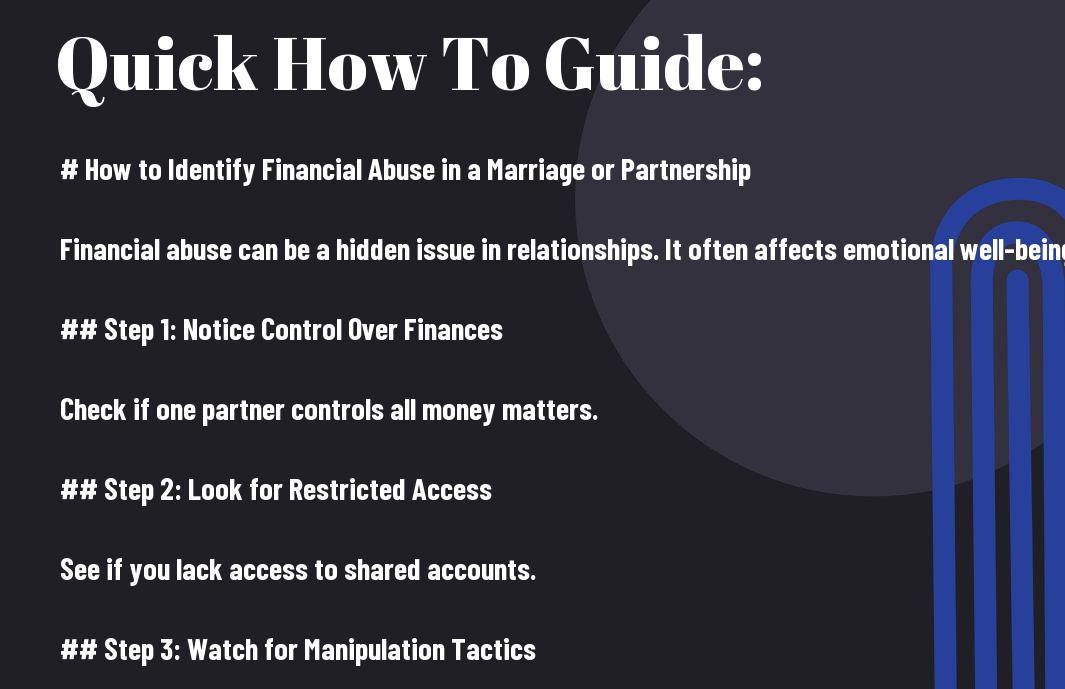
What is Financial Abuse?
The term financial abuse refers to a partner exerting control over your finances in a way that limits your access to money or financial resources. This type of abuse can take different forms, including restricting your income, monitoring spending, or making financial decisions without your input. It may also involve using your money without your permission or forcing you to account for every penny you spend.
Definition of Financial Abuse
Little is known about financial abuse, yet it plays a significant role in abusive relationships. It occurs when one partner manipulates the financial situation to gain power and control over the other. This can include direct actions, such as preventing you from working or managing your income, as well as indirect tactics, like creating debt in your name.
Common Signs of Financial Abuse
There’s a range of signs that may indicate financial abuse in your relationship. You might notice that your partner frequently checks or controls your spending, prevents you from having a bank account, or refuses to let you know about household bills. These actions can leave you feeling helpless and confused about your financial status.
Financial abuse can manifest in various ways. For instance, you may find that your partner insists on managing all the money and keeps you in the dark about your household finances. You might also notice that they question your spending habits excessively, or they might limit your access to cash. In serious cases, they may take your salary or savings without your consent. If you feel trapped in this situation, it’s important to recognize these signs and seek help.

How to Identify Financial Abuse
Assuming you are in a marriage or partnership, it’s important to recognize potential signs of financial abuse. This type of abuse often hides behind everyday activities, making it difficult to detect. Financial abuse can take many forms, from controlling access to funds to limiting your career opportunities. By being aware of the behaviors and patterns in your relationship, you can better protect yourself and gain clarity about your situation.
Key Factors to Observe
If you suspect financial abuse, there are key factors you should observe in your relationship. Look for signs that might indicate a pattern of control or manipulation around finances:
- Your partner controls all financial decisions.
- You are given an allowance and must ask for money.
- Your partner hides financial information from you.
- You fear discussing money matters.
Any of these factors may suggest financial abuse is occurring in your partnership.
How to Spot Red Flags
For those navigating a relationship, it’s vital to be on the lookout for red flags that could indicate financial abuse. These signs often signal a need for deeper investigation into the dynamics of your relationship. Look for behaviors that make you feel uneasy about your financial independence.
The warning signs can include your partner discouraging you from working or pursuing education, frequent arguments about money, or making major financial decisions without your input. Additionally, if your partner becomes angry or defensive when you discuss finances, this could further indicate financial abuse. Being aware of these red flags can help you confront the reality of your situation and seek help if needed.

Tips for Recognizing Financial Control
Once again, identifying financial control in a relationship can be challenging. Pay attention to these signs:
- Your partner restricts access to joint funds.
- You are not allowed to make financial decisions independently.
- Your partner constantly monitors your spending.
- You feel guilty about spending money, even on imperatives.
Knowing these signs can help you recognize if you are experiencing financial control. For more insights, check out the 5 Common Signs of Financial Abuse.
Examining Spending Patterns
The way money is spent in a relationship can reveal important truths about financial control. Look for patterns where your partner controls nearly all expenditures. If spending is always criticized, or if you are forced to justify even small purchases, these may be red flags. You need to evaluate whether your financial choices are being taken away from you.
Understanding Financial Isolation
Examining financial isolation involves looking at how much control your partner has over your financial resources and interactions. This often means they limit your access to shared funds, preventing you from seeing friends or family without their supervision. This behavior causes a sense of loneliness and dependence, making it hard for you to seek help or support.
Control over your financial resources can create a barrier to leaving a situation. You might find yourself feeling trapped, as your ability to access money is restricted. Without stable financial independence, your choices become limited, making it challenging to seek assistance or escape a harmful relationship. Be aware of these isolating tactics; they are often part of a broader pattern of control.

Steps to Take if You Suspect Financial Abuse
Your journey to addressing financial abuse begins with careful consideration and action. It’s important to stay calm and focus on gathering information. Look for signs and patterns in your partner’s behavior. Protect your finances by keeping track of your expenses and savings. Develop a plan to enhance your financial stability. Seeking help is vital, so act early to safeguard your well-being.
Gathering Evidence
An effective way to address financial abuse is to collect evidence. Start by documenting all financial transactions and communications about money. Keep copies of bank statements, bills, and any financial agreements. This information can be helpful if you decide to speak with a professional or seek legal assistance.
Seeking Support and Resources
Suspect you may be experiencing financial abuse? Reach out for support and find resources tailored to your situation. Many organizations offer guidance, from domestic violence hotlines to community financial advisors. Talking to trusted friends or family can also help clarify your experiences and options. You’re not alone in this process, and addressing these issues can start a path to recovery.
Abuse of any kind can take a serious toll on your mental and emotional well-being. You deserve to feel safe and secure in your financial life. Make sure to reach out to local shelters, hotlines, or support groups that specialize in financial abuse. These resources can provide you with legal assistance, counseling, and education about your rights. Knowing that help is available can give you the strength to take the next steps toward a healthier financial future.
Protecting Yourself Financially
Despite the challenges that financial abuse presents, you can take important steps to protect yourself. Educate yourself about How to Identify Financial Abuse in a Relationship and understand the signs. Open your own bank account and keep track of your finances regularly. It is important to maintain some level of independence, so document everything and seek help if needed.
Creating a Financial Plan
One way to safeguard your finances is by creating a solid financial plan. Start by listing all your income sources and expenses. This can help you see where your money goes each month. Consider setting aside a portion of your income as savings. This way, you can prepare for any unexpected changes in your situation.
Building a Safety Net
With a safety net, you can feel more secure about your financial future. This means having enough money saved up to cover emergencies or unexpected situations. Having at least three to six months’ worth of expenses saved can provide you with peace of mind. You can achieve this by putting aside small amounts regularly until you reach your goal.
To build your safety net effectively, consider setting up an automatic transfer to your savings account every month. This ensures that you are consistently saving without having to think about it. Be mindful of your spending, and try to cut unnecessary expenses. Use budgeting tools or apps to keep track of your progress and make adjustments as needed. Keep in mind, even small savings can add up over time and give you the financial security you deserve.
Where to Get Help
Now, if you or someone you know is experiencing financial abuse in a marriage or partnership, seeking help is the right step. It is important to reach out to support organizations that specialize in this type of abuse. They can provide assistance, guidance, and resources to help you regain control over your finances and your life.
Support Organizations and Hotlines
Help is available through various support organizations and hotlines. These resources can connect you with people who understand your situation. Many organizations offer confidential support, including advice and emotional assistance. National and local hotlines can direct you to services in your area.
Legal Resources for Victims
Any victim of financial abuse should be aware of legal resources available to them. Legal aid organizations can provide free or low-cost legal advice. They assist with safety planning, document preparation, and understanding your options. Knowing your rights is important in moving toward recovery.
Organizations that focus on helping victims of financial abuse often have networks of legal experts. They can offer advice on restraining orders, filing joint accounts, and property rights. Engaging with professionals in these organizations may help you navigate your specific challenges. This support is necessary in empowering you to take the next steps toward financial independence.
Final Words
Considering all points, recognizing financial abuse in your marriage or partnership is crucial for your well-being. You should look for signs like controlling spending, lack of access to shared funds, or being pressured to account for every penny. Stay alert to behaviors that limit your financial independence, as these are red flags. If you’re uncertain about your situation, you can find helpful information at I’m not sure if my relationship is healthy. Taking action today can lead you to a healthier future.
FAQ: How to Identify Financial Abuse in a Marriage or Partnership
Q: What is financial abuse in a marriage or partnership?
A: Financial abuse occurs when one partner controls the financial resources of the other. This can include preventing someone from accessing money, restricting their spending, or using their partner’s money without permission. It often leads to emotional and psychological harm.
Q: What are common signs of financial abuse?
A: Some common signs of financial abuse include:
- One partner has full control over all financial decisions.
- The other partner is not allowed to have their own bank account.
- One partner uses the other’s money without asking.
- There is constant monitoring of spending habits.
- The victim feels guilty about spending money.
Q: How can I tell if I am experiencing financial abuse?
A: To identify if you are facing financial abuse, ask yourself the following questions:
- Do I feel afraid to spend money without permission?
- Does my partner frequently criticize my financial choices?
- Am I kept in the dark about our financial situation?
- Can I access my own money when I need it?
If you answer “yes” to many of these questions, it may indicate financial abuse.
Q: Who can I talk to if I suspect financial abuse?
A: If you suspect financial abuse, it’s important to talk to a trusted friend or family member. You can also reach out to financial advisors or counselors who specialize in abuse cases. They can provide support and advice on how to handle the situation.
Q: What steps should I take if I identify financial abuse?
A: If you identify financial abuse, take the following steps:
- Document everything: Keep records of finances, including bank statements and receipts.
- Seek support: Talk to friends, family, or a professional who can help.
- Establish a budget: Start managing your own finances whenever possible.
- Consider your safety: Create a plan to leave if you feel physically or emotionally unsafe.
Taking these steps can empower you to regain control of your finances.
Key Takeaways
- Financial abuse is controlling behavior regarding finances in a relationship.
- Signs include controlling spending, restricting access to funds, and emotional manipulation.
- Discuss your concerns with trusted individuals and professionals for support.
- Document your finances and consider your safety when planning your next steps.
Understanding and addressing financial abuse is important in reclaiming your financial independence and emotional well-being.