
With so many options available, choosing the right life insurance can feel overwhelming. You want a policy that fits your needs and provides financial security for your loved ones. This guide will break down the main types of life insurance, helping you understand the differences and benefits. By knowing what options are out there, you can make an informed decision that works for you and your family’s future.
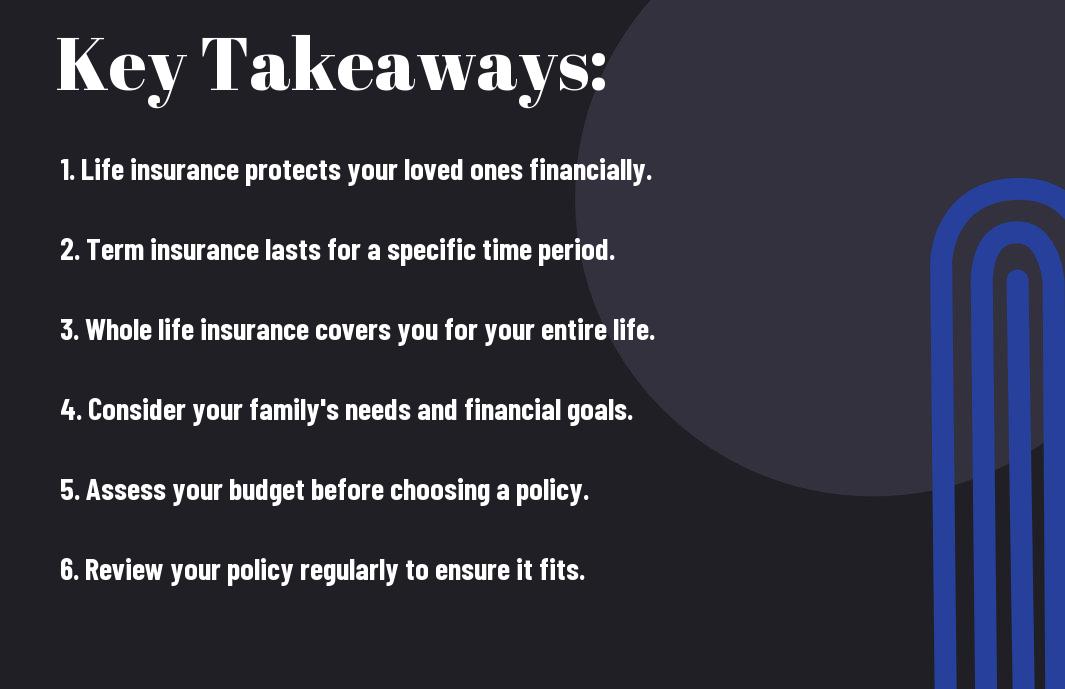
Key Takeaways:
- Understand the two main types of life insurance: term life and whole life. Term life covers you for a specific time, while whole life provides coverage for your entire life.
- Evaluate your personal needs. Consider factors like your financial situation, dependents, and long-term goals to choose the right policy.
- Consult with a licensed agent or financial advisor. They can provide valuable insights and help you make an informed decision tailored to your unique circumstances.
What is Life Insurance?
While planning for your future, it’s imperative to understand life insurance. This type of insurance provides financial support to your loved ones when you’re no longer around. It helps secure their financial well-being during difficult times.
Definition
Behind life insurance is a simple concept: it’s a contract between you and an insurance company. You pay regular premiums, and in return, the company agrees to pay a specific amount of money to your beneficiaries upon your death.
Purpose of Life Insurance
Among its main purposes, life insurance safeguards your family’s financial future. It helps cover expenses such as mortgage payments, education costs, and daily living expenses, ensuring your loved ones remain secure even after you are gone.
Due to the financial challenges that can arise after losing a loved one, life insurance becomes vital. It acts as a safety net, financially supporting your family during a tough period. By having life insurance, you offer peace of mind, knowing that your loved ones can maintain their lifestyle and meet their needs. Research shows that many families struggle with expenses in the absence of a breadwinner; life insurance can help ease that burden.
Types of Life Insurance
The world of life insurance offers various options to meet your needs. Understanding these types can help you make a better choice. Here are the main types of life insurance:
- Term Life Insurance
- Whole Life Insurance
- Universal Life Insurance
- Variable Life Insurance
- Burial Insurance
This information can guide you in choosing based on what fits your financial goals. For more details, visit What Type of Life Insurance Is Right for You?.
| Type | Description |
| Term Life Insurance | Provides coverage for a specific period. |
| Whole Life Insurance | Offers lifelong coverage with a savings component. |
| Universal Life Insurance | Flexible policy with adjustable premiums. |
| Variable Life Insurance | Includes investment options with cash value. |
| Burial Insurance | Covers funeral and burial costs. |
Term Life Insurance
Insurance provides coverage for a set period, like 10, 20, or 30 years. It is typically more affordable than permanent insurance. You pay regular premiums, and if you pass away during this time, your beneficiaries receive the death benefit. This option is great if you want financial protection for your family while raising children or paying off a mortgage.
Whole Life Insurance
Before choosing life insurance, understand that whole life insurance offers lifelong protection. You pay fixed premiums, and it builds cash value over time. This cash value can be borrowed against or withdrawn. With whole life insurance, you can ensure your loved ones are financially secure no matter when you pass away.
Insurance allows you to save money and provides peace of mind. The cash value grows at a guaranteed rate. Whole life policies also have a death benefit that remains consistent over your lifetime. This makes it an attractive choice for long-term financial planning.

Factors to Consider When Choosing Life Insurance
Keep in mind several important factors when selecting life insurance. Each aspect affects your policy choices and can make a significant difference in your coverage. Here are some key points to consider:
- Your current financial situation
- Your family’s needs
- Your age and health
- Your future financial goals
- The type of policy that fits your lifestyle
After evaluating these factors, you can make a more informed decision about which life insurance is right for you.
Age and Health
Beside financial factors, your age and health play a vital role in choosing life insurance. Generally, younger and healthier individuals receive better rates. If you smoke or have pre-existing conditions, this may affect your premiums significantly. Your health status is often assessed during the underwriting process, so it’s wise to be honest about your health when applying for coverage.
Financial Goals
Any financial goals you have will impact your life insurance needs. Think about what you want to achieve. Are you planning for your children’s college education? Do you want to leave a financial legacy for your loved ones? Your objectives will help determine the right amount of coverage to secure your family’s future.
Goals can help you decide not only how much insurance you need but also the type of policy that fits. For instance, if you aim to cover specific debts or provide for your children, term life insurance may suit you best. On the other hand, if you want something that builds cash value over time, a whole life policy might be a good choice. Always align your insurance decisions with your long-term financial plans for the best protection.

The Benefits of Life Insurance
Now, life insurance offers many advantages that can significantly improve your financial situation and provide security for your loved ones. It can help cover debts, pay for education, and replace lost income, making it an necessary part of financial planning. Whether you are thinking about your future or budgeting for your family’s needs, life insurance is a valuable tool that offers peace of mind during uncertain times.
Financial Security
Between unexpected events and long-term financial goals, having life insurance can be a safety net for you and your family. It ensures that your loved ones can maintain their quality of life, even if you’re not there to support them. This financial cushion can cover necessary expenses like mortgage payments, children’s education, and daily living costs, giving you confidence that your family’s future is protected.
Peace of Mind
Along with financial security, life insurance provides peace of mind. Knowing that your family will be taken care of if something happens to you is comforting. It helps you focus on your daily life and enjoy the present without constant worry about what could go wrong.
Also, the emotional benefits of life insurance are significant. You can feel confident that your loved ones will not face financial hardship if you pass away unexpectedly. This assurance allows you to spend more time with your family and invest in your interests. Life insurance can be a proactive step to protect your family’s future, giving you the freedom to live your life fully.
How to Purchase Life Insurance
Despite the many options available, purchasing life insurance can feel overwhelming. Start by understanding your needs and the types of policies that suit you best. You should research various companies and compare their offerings. Getting advice from a financial advisor can also help you make a well-informed decision.
Assessing Your Needs
Before you buy life insurance, take time to assess your needs. Consider your financial responsibilities, such as debts, mortgage, and dependent expenses. Think about how much coverage you would need to support your loved ones in case something happens to you.
Comparing Policies
About comparing policies is crucial to find the best fit for you. Look for differences in coverage, premiums, and terms. A simple table can help you organize this information easily.
Comparison of Life Insurance Policies
| Policy Type | Key Features |
|---|---|
| Term Life Insurance | Lower premiums, fixed term, no cash value |
| Whole Life Insurance | Lifetime coverage, fixed premiums, cash value buildup |
| Universal Life Insurance | Flexible premiums, cash value with investment options |
In fact, each type of policy offers different benefits. Understanding what each type includes will help you to choose wisely. You may prefer term life insurance for its affordability, or whole life for its cash value feature. Use this information to evaluate which policy aligns with your goals.
Detailed Features of Life Insurance Policies
| Feature | Description |
|---|---|
| Premium Costs | The amount you pay for your coverage, varies by policy type. |
| Coverage Amount | The total amount your beneficiaries receive upon your death. |
| Cash Value | Available with whole and universal life policies, accumulates over time. |

Common Misconceptions About Life Insurance
For many people, life insurance seems confusing and full of myths. They often think they don’t need it or that it’s too costly. However, understanding the facts can help you make better decisions. If you’re looking for clear information, check out Life Insurance 101 – Life Happens. You’ll find valuable insights to guide you through the options and eliminate doubts.
It’s Only for the Elderly
Below the misconception persists that life insurance is only for older individuals. In reality, people of all ages can benefit from life insurance. Whether you’re starting a family, buying a home, or just planning for the future, having a policy can provide peace of mind. The earlier you invest in life insurance, the more options you can explore as you age.
It’s Too Expensive
Any common belief is that life insurance costs too much. While some policies can be pricey, many are quite affordable. The cost of your policy depends on factors like age, health, and the type of coverage you choose. You might be surprised to learn that basic term life insurance can be less expensive than your monthly coffee habit.
Even if you think life insurance is beyond your budget, you should consider shopping around. Various providers offer different rates, and you may find a policy that fits your financial situation. Start by getting quotes and comparing plans. There are many affordable options, ensuring that you can find the right protection for you and your loved ones without breaking the bank.
To wrap up
From above, understanding the different types of life insurance helps you make the best choice for your needs. Whether you prefer term life or whole life insurance, consider your financial goals, family situation, and budget. It’s important to explore your options fully. For more detailed guidance, check out Life Insurance 101: What Type of Policy Is Right for You?, so you can feel confident in your decision.
FAQ on Life Insurance 101 – Which Type Is Right for You?
Q: What is life insurance?
A: Life insurance is a contract between you and an insurance company. In this contract, you pay regular premiums. In return, the company pays a sum of money to your beneficiaries after you pass away. This money can help cover expenses like funeral costs, debts, and living expenses for your family.
Q: What are the main types of life insurance?
A: There are two main types of life insurance: term life insurance and permanent life insurance.
- Term Life Insurance: This type lasts for a specific period, like 10, 20, or 30 years. If you pass away during this time, your beneficiaries receive the payout.
- Permanet Life Insurance: This type covers you for your whole life. It also builds cash value over time, which you can borrow against or cash out.
Q: How do I choose the right type of life insurance for me?
A: Choosing the right type depends on your needs and goals. Consider the following:
- Your age and health condition.
- Your financial responsibilities, like children or loans.
- Your budget for premium payments.
Term insurance is often cheaper and great for temporary needs, while permanent insurance is better for lifelong coverage.
Q: How much life insurance do I need?
A: The amount of life insurance depends on your situation. A common rule is to have coverage equal to 10 to 15 times your annual income. Other factors include:
- Your debts, like a mortgage or student loans.
- Your children’s future education costs.
- Any other financial obligations that may affect your family.
Q: Can I change my life insurance later?
A: Yes, you can usually make changes to your policy. You might increase coverage, switch from term to permanent, or add riders for extra benefits. It’s smart to review your policy regularly, especially after major life events like marriage or having a child.
Key Takeaways
Life insurance is an necessary tool for financial security. Understanding the types available can help you make the best choice for your needs. Regularly review your policy to ensure it meets your changing life circumstances.