Just like any adventure, budgeting is vital for your journey as a digital nomad. Knowing how to manage your finances can ensure you enjoy your travels without stress. In this guide, you will discover practical tips on how to create and stick to a budget, plan for expenses, and save money while exploring new places. With the right strategies, you can make the most of your nomadic lifestyle!
Key Takeaways:
- Understand your expenses before you travel. Create a clear budget that includes accommodation, food, transportation, and activities.
- Use online tools and apps to track your spending in real-time. This helps you stay on top of your finances while exploring new places.
- Plan for emergencies by setting aside an extra fund. Life can be unpredictable, so having a financial cushion can ease stress during your travels.
Understanding Digital Nomads
Your journey as a digital nomad begins with understanding what it means. Digital nomads are individuals who leverage technology to work remotely while traveling the world. They often blend work and adventure, leading a lifestyle that allows them to explore new places without being tied to a single location. This flexibility offers unique opportunities for both personal growth and professional development.
Types of Digital Nomads
You can identify various types of digital nomads based on their working styles and travel preferences. Here are a few common categories you might relate to:
- Freelancers: Independent workers who take on projects from different clients.
- Remote Employees: Full-time workers for companies that allow remote work.
- Entrepreneurs: Business owners who manage companies from anywhere.
- Content Creators: Individuals who produce videos, blogs, or other media online.
- Travel Influencers: Social media users who share their travel experiences to engage audiences.
After identifying your type, you can create a budget that fits your lifestyle.
Pros and Cons of the Lifestyle
Pros and Cons of the Lifestyle
Pros of being a digital nomad include the freedom to travel and explore new cultures. However, there are also some challenges. Here’s a breakdown:
| Pros | Cons |
|---|---|
| Flexible schedule | Unstable income |
| Travel to exciting destinations | Loneliness and isolation |
| Personal growth opportunities | Finding reliable Wi-Fi can be tough |
| Broaden your network | Time zone challenges |
| Work from anywhere | Health insurance issues |
A digital nomad lifestyle offers a blend of excitement and challenges. You get the chance to meet new people and enjoy different cultures as you travel. However, the lack of stability can sometimes lead to financial stress or feelings of isolation. Weighing these pros and cons is necessary for making the right choices during your journey. Being prepared will lead to a more satisfying experience.

Budgeting Basics
If you are planning to become a digital nomad, understanding budgeting basics is vital. A well-thought-out budget helps you manage your finances while exploring new places. It allows you to enjoy your adventures without stressing about money. Start by tracking your income and expenses, and create a plan that fits your lifestyle and goals.
Key Factors to Consider
Even if you think budgeting is simple, there are key factors to consider. Be aware of the following:
- Your income sources
- Your regular expenses
- The cost of living in different locations
- Your personal spending habits
Recognizing these factors can help you create a more effective budget.
Setting Your Monthly Budget
Budgeting is about knowing how to allocate your money each month. Start by listing all your expected income and expenses. This includes rent, food, internet, and travel costs. Then, compare your income with your expenses to see if you have a surplus or deficit.
This process will help you adjust your spending habits if necessary. Aim to save a percentage of your income every month. This might be 20% or more, depending on your goals. Use budgeting tools or apps to track your expenses effectively. Keeping a close eye on your finances makes it easier to stick to your budget while enjoying your digital nomad lifestyle.
Step-by-Step Budgeting Guide
Unlike traditional budgeting methods, a digital nomad budget needs to be flexible and adaptable. Here’s a simple step-by-step guide to help you create a budget that suits your traveling lifestyle.
| Step | Description |
|---|---|
| 1. Estimate Your Income | Identify how much money you’ll earn while traveling. |
| 2. List Your Expenses | Write down all potential costs, such as housing, food, and activities. |
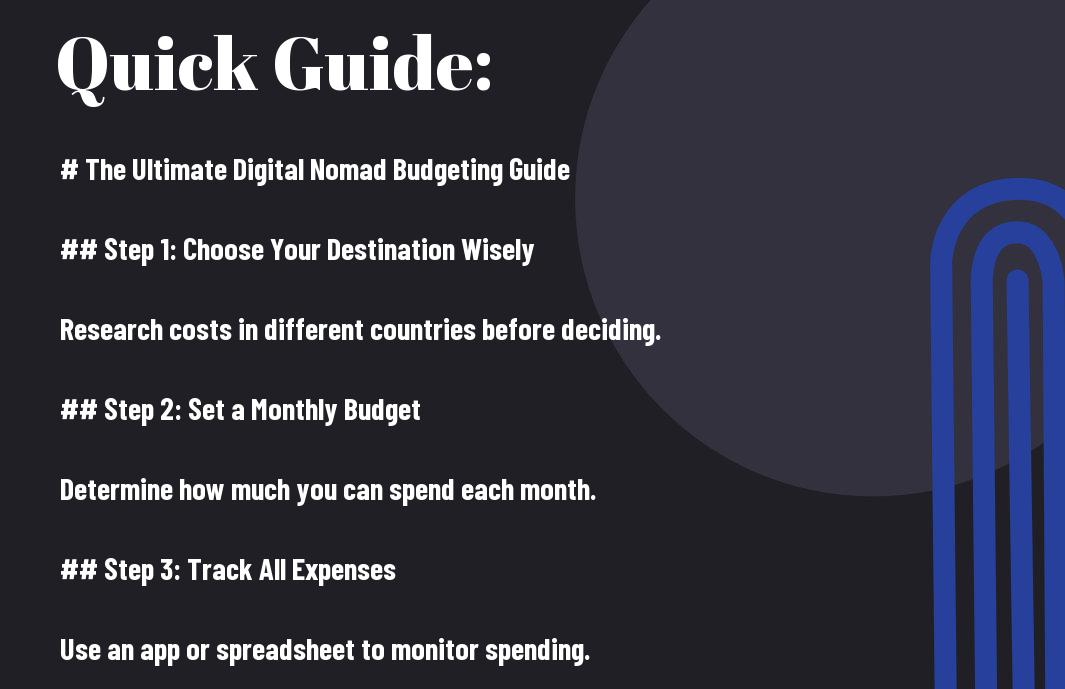
| 3. Track Your Spending | Use apps or spreadsheets to monitor your expenses regularly. |
| 4. Adjust as Needed | Make changes to your budget when spending trends emerge. |
Tracking Expenses
On your journey as a digital nomad, tracking your expenses is vital to staying within your budget. Use apps like Mint or PocketGuard to log your spending. These tools can help you see where your money goes and identify areas to save. By keeping a close eye on your expenses, you can adjust your habits when needed and ensure you’re living within your means while enjoying your travels.
Adjusting Your Budget
If your spending starts to exceed your income, it’s time to adjust your budget. Look at your tracked expenses to find areas where you can cut back. This might mean limiting dining out or exploring free local attractions instead of paid ones. Your budget should reflect your lifestyle and help ensure you can travel without financial stress.
The ideal budget isn’t set in stone. It should evolve with your experiences and circumstances. By staying flexible, you can make adjustments that account for unexpected costs or changes in your income. Pay attention to your spending habits and make updates based on what works for you. This way, you can maintain a balanced budget, travel stress-free, and enjoy your time as a digital nomad.

Tips for Saving Money
After you start your journey as a digital nomad, saving money becomes imperative. Here are some smart ways to stick to your budget:
- Create a detailed monthly budget.
- Cook meals instead of eating out.
- Look for discounts and deals.
- Use free public Wi-Fi whenever possible.
- Limit unnecessary expenses.
Perceiving these habits will help you manage your finances better while enjoying your travels.
Affordable Accommodation Options
For many digital nomads, finding affordable places to stay can make a big difference in your budget. Consider hostels, shared apartments, or homestays. Many options are available on platforms like Airbnb or Couchsurfing, which can help you save money while connecting with locals.
Finding Cheap Transportation
Options for getting around can significantly affect your travel costs. Use public transportation, walk, or rent a bike to explore your new city. Consider platforms that offer ride-sharing services for longer distances at lower prices.
Plus, research routes before traveling. Booking transportation in advance can save you money. Additionally, look for local apps that provide discounts on rides or even consider joining groups for group rates. The more aware you are of your options, the easier it will be for you to save on transportation while traveling.
Income Strategies for Nomads
For digital nomads, having a flexible income stream is vital for a sustainable lifestyle. You can explore various income strategies, such as freelancing or remote jobs, to find what suits you best. To learn more about managing your finances effectively while traveling, check out The ultimate financial guide for digital nomads – Blog – Xolo.
Freelancing Opportunities
There’s a wide range of freelancing opportunities available for you as a digital nomad. You can offer services in writing, graphic design, web development, or social media management. Platforms like Upwork and Fiverr make it easy to connect with clients seeking your skills. Additionally, these platforms allow you to set your rates and work on projects that inspire you.
Remote Job Options
Now, remote job options are becoming increasingly popular, allowing you to work from anywhere in the world. Many companies hire remote employees in various fields, such as tech, customer service, and marketing. Websites like Remote.co and We Work Remotely list job openings you can apply for, giving you the freedom to choose where and how you work.
Opportunities continue to grow in the remote job market as more companies embrace flexible work arrangements. You can find full-time or part-time jobs that fit your skills and interests. By applying to remote positions, you gain a stable income while enjoying the freedom to explore new places and cultures.
Essential Tools and Resources
Despite the challenges of managing finances on the road, having the right tools can make budgeting as a digital nomad much easier. You can explore Your Complete Guide to Budgeting as a Digital Nomad to find advice tailored to your lifestyle. These tools will help you track your spending and maintain control over your money, no matter where you are in the world.
Budgeting Apps
With a variety of budgeting apps available, you can easily monitor your income and expenses on the go. These apps offer user-friendly interfaces that help you set budgets, categorize expenses, and analyze your spending patterns. Popular options like Mint and YNAB (You Need a Budget) give you a clear view of your financial situation and assist you in making informed decisions.
Financial Planning Websites
Clearly, financial planning websites can provide you with valuable resources and guidance. Websites like NerdWallet and Investopedia offer articles and tools that simplify complex financial topics. Here, you can learn about budgeting strategies, investment options, and even find recommendations for saving money while traveling.
Another great benefit of using financial planning websites is their ability to connect you with experts. Many sites offer forums or Q&A sections where you can ask questions and get advice from experienced financial professionals. This can enhance your understanding of budgeting and help you develop a more effective financial strategy as you navigate the challenges of being a digital nomad.
Summing up
Now that you have your ultimate digital nomad budgeting guide, you can start planning your travels with confidence. By understanding your income, setting a clear budget, and considering location costs, you can enjoy your journey without financial stress. Use this guide to track your expenses and make adjustments as needed. With the right planning, you can create unforgettable experiences while staying within your financial limits.
FAQ: The Ultimate Digital Nomad Budgeting Guide
Q: What is a digital nomad?
A: A digital nomad is someone who works remotely while traveling. They can work from anywhere in the world, as long as they have a laptop and an internet connection. This lifestyle allows individuals to explore new places while earning a living.
Q: Why is budgeting important for digital nomads?
A: Budgeting is vital for digital nomads to manage their finances effectively. With varying costs of living in different countries, a clear budget helps them know how much they can spend without running out of money. It also allows them to plan for unexpected expenses, such as medical bills or travel delays.
Q: How can I create a budget as a digital nomad?
A: To create a budget, follow these steps:
- Calculate your monthly income from remote work.
- List your fixed expenses like housing, internet, and insurance.
- Estimate variable costs such as food, entertainment, and transportation.
- Set aside money for emergencies or savings.
- Review and adjust your budget monthly to stay on track.
Q: What tools can help with budgeting as a digital nomad?
A: There are several tools and apps available to help digital nomads budget effectively. Some popular options include:
- Mint: It tracks expenses and helps create a budget.
- YNAB (You Need a Budget): This app helps you plan every dollar.
- Google Sheets: A customizable option for those who prefer spreadsheets.
Q: What are some tips for saving money while traveling as a digital nomad?
A: Here are some tips to save money:
- Choose budget-friendly accommodations, like hostels or Airbnb.
- Cook your meals instead of dining out.
- Use public transportation instead of taxis.
- Look for free or low-cost activities and events.
- Stay in one place longer to save on transportation costs.