Most side hustlers feel overwhelmed when tax season arrives. Keeping track of your income and expenses can be challenging, but it’s important for managing your finances. This ultimate tax checklist will guide you through the necessary steps to prepare your taxes, helping you stay organized and compliant. You’ll learn how to track your earnings, gather important documents, and maximize your deductions, ensuring that you make the most of your side hustle while meeting your tax obligations.
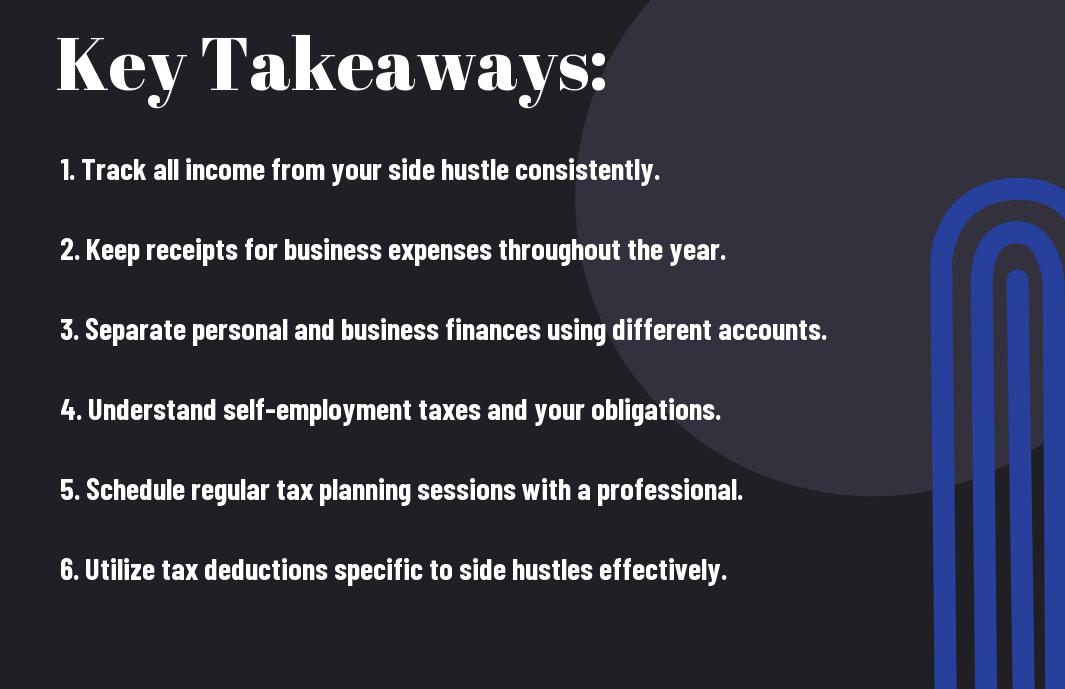
Key Takeaways:
- Keep organized records of all your income and expenses. This will help you file your taxes accurately.
- Understand the different tax deductions available for side hustlers, such as home office expenses and supplies.
- Set aside a percentage of your earnings for taxes to avoid any surprises when it’s time to pay.

Understanding Your Side Hustle Income
A side hustle can add exciting opportunities for earning money. However, understanding your income is vital for staying compliant with tax regulations. Make sure to check out the 2024-2025 Tax Preparation Checklist – TurboTax – Intuit for helpful tips. Knowing how much money you make means you can properly report it come tax time.
Types of Income Generating Side Hustles
Side hustles can take many forms. Here are some common types:
- Freelancing (writing, graphic design, etc.)
- Online selling (e.g., Etsy, eBay)
- Rideshare driving (Uber, Lyft)
- Dog walking or pet sitting
- Online tutoring or teaching
The variety allows you to choose what fits your skills and interests best.
| Type of Side Hustle | Potential Income |
|---|---|
| Freelancing | $20-$100 per hour |
| Online Selling | Varies greatly |
| Rideshare Driving | $15-$25 per hour |
| Dog Walking | $15-$30 per walk |
| Online Tutoring | $20-$50 per hour |
How to Record Your Income
Along with knowing what types of side hustles exist, it’s important to track your income accurately. This includes logging money received from clients or customers. Use a simple spreadsheet or an app to keep everything organized.
Your income recording should include the date, amount, and source of each payment. Taking the time to keep accurate records makes tax filing easier and helps you understand your earnings. Set aside some time each week to update your records, so you never miss a payment. This habit will keep you prepared and stress-free when tax season arrives.
Key Takeaways
- Understand the different types of side hustles.
- Keep clear records of all income.
- Stay informed on tax preparation guidelines.
Expenses You Can Deduct
While running a side hustle, it’s important to understand which expenses you can deduct on your taxes. These deductions can lower your taxable income, ultimately saving you money. Common expenses include supplies, specific tools, and even home office costs. By keeping track of these items, you’ll make tax time less stressful and more beneficial for your finances.
Common Deductible Expenses
By knowing common deductible expenses, you can take full advantage of tax benefits. Some typical examples include costs for materials you need to create your product, software subscriptions related to your business, and mileage for driving to meet clients. Make sure you keep all receipts and documents for accurate reporting.
Tracking Your Expenses
Deductible expenses are only valuable if you track them properly. Utilize budgeting apps or spreadsheets to organize your spending. This will make it easier to calculate deductions at tax time and ensure you do not miss out on savings.
Plus, tracking your expenses regularly helps you see how much you are actually spending on your side hustle. It can provide insights into areas where you can save. Whether you do this weekly or monthly, having a clear record will simplify your tax preparation and give you peace of mind. Stay organized, and you’ll always be ready for tax season!

Choosing the Right Business Structure
All side hustlers must consider their business structure. This choice can impact your taxes, personal liability, and management. Understanding your options helps you make a smart decision. The two most common structures are sole proprietorships and Limited Liability Companies (LLCs). Each has its advantages and disadvantages, so you need to find the best fit for your side hustle.
Sole Proprietorship vs. LLC
Below, you’ll find a brief comparison of sole proprietorships and LLCs. A sole proprietorship is the simplest and least expensive to set up. You alone own the business, and your income is taxed on your personal tax return. An LLC offers more protection for your personal assets but comes with additional setup costs and paperwork. Weigh these factors when deciding the structure for your side hustle.
Tax Implications of Each Structure
By understanding the tax implications of each structure, you can save money and avoid surprises. A sole proprietorship allows you to report business income on your personal tax return. However, you are personally liable for any debts or legal issues. LLCs, on the other hand, protect your personal assets and may offer tax benefits like pass-through taxation. This means you’ll only pay taxes on the income once, avoiding double taxation.
Choosing the right structure for your side hustle impacts how you file taxes. If your business earns more than expected, an LLC may offer better long-term benefits. Additionally, it can help you secure funding and build credibility. Evaluate your personal situation, income levels, and future goals to choose wisely.
Understanding Self-Employment Taxes
Now that you’re submerging into the world of side hustles, it’s important to understand self-employment taxes. These taxes cover Social Security and Medicare for anyone who works for themselves. This means that, unlike traditional employees, you’ll need to take a closer look at your earnings. To keep your tax process smooth, you can check out How To Create A Tax Prep Checklist For Stress-Free Filing. Knowing this will help you stay organized and ready for tax season.
What Are Self-Employment Taxes?
Behind every side hustle, there are self-employment taxes that you need to consider. These taxes apply when your net earnings from self-employment are $400 or more. They combine both the employer and employee portions of Social Security and Medicare taxes. In other words, as a self-employed individual, you are responsible for paying both sides of these contributions.
How to Calculate Your Self-Employment Tax
On your journey as a side hustler, calculating your self-employment tax is crucial. You will use your net income from self-employment to determine your taxes. This often involves filling out Schedule SE (Form 1040) when you file your taxes each year. Your self-employment tax rate is usually 15.3%, which consists of 12.4% for Social Security and 2.9% for Medicare.
Even so, understanding the calculation process can help you plan effectively. First, subtract your business expenses from your total income to find your net profit. Then, apply the self-employment tax rate to this amount. If your net earnings exceed a certain threshold, you may be subject to an additional Medicare tax. Keep good records to make this process much easier!
Estimated Taxes
Once again, handling taxes might feel overwhelming, especially if you’re a side hustler. However, estimated taxes are an important part of managing your income efficiently. Since you don’t have taxes automatically taken out of your side job earnings, you need to stay on top of your estimated tax payments to avoid penalties. Let’s break it down together!
What Are Estimated Taxes?
Among the many tax responsibilities you have, estimated taxes are payments you make to cover income tax for income not subject to withholding. This includes earnings from freelancing, consulting, or any other side gigs. Generally, if you owe $1,000 or more in taxes for the year, you need to pay estimated taxes. This helps you avoid a large tax bill at the end of the year.
How to Make Estimated Tax Payments
Against the stress of tax season, making estimated tax payments can help simplify your financial planning. You can pay these taxes quarterly, based on your expected income. This means you’ll need to estimate your yearly income and calculate your tax liability. Being proactive about these payments can prevent penalties and make tax time much easier.
Make sure to set aside a portion of your earnings for estimated taxes regularly. You can use the IRS Form 1040-ES to help you calculate how much you owe. Payments can be made online, by phone, or through the mail. Choosing the method that works best for you will keep you organized. Additionally, staying on schedule and marking your calendar with due dates can help you avoid falling behind. Keep track of your income and expenses throughout the year, so when it’s time to make payments, you know exactly where you stand.

Keeping Accurate Records
Despite the chaos that often comes with juggling a side hustle, keeping accurate records is imperative. Good record-keeping helps you know how much money you’re making and spending. It also makes filing your taxes easier and keeps you prepared in case of an audit. When you have everything organized, you can focus more on growing your business instead of stressing about finances.
Importance of Record Keeping
To effectively manage your side hustle, maintaining accurate records is vital. It helps you track your income and expenses, giving you a clear picture of your financial situation. This information can also help you identify which parts of your hustle are most profitable. By staying organized, you can make informed decisions and improve your chances of success.
Tools and Methods for Record Keeping
Below are some effective tools and methods for record-keeping that can simplify your life as a side hustler. Many software options can help you track your finances easily. You can use spreadsheets, mobile apps, or even a dedicated bookkeeping tool. Each method offers different benefits, so choose one that suits your style and needs.
With many options available, you can find the right tools for your record-keeping needs. For example, programs like QuickBooks or FreshBooks are popular for managing small business finances. You can also consider using Google Sheets for a customizable solution. Mobile apps like Expensify make tracking expenses effortless on the go. Make sure you regularly update your records, so you always have the latest information at your fingertips.
Conclusion
From above, you now have a handy tax checklist tailored for your side hustle. By staying organized with your income, expenses, and important tax documents, you can simplify the tax process. This will help you maximize your deductions and ensure you’re compliant with tax regulations. Use this checklist to prepare for tax season and focus more on growing your side business. With the right information and tools, you can make tax time a breeze and keep more of your hard-earned money.
FAQ: The Ultimate Tax Checklist for Side Hustlers
Q: What is a side hustle, and why do I need a tax checklist for it?
A: A side hustle is a way to make money outside of your main job. It could be anything from freelancing to selling handmade crafts. A tax checklist helps you keep track of your income and expenses. This makes it easier to file your taxes and ensures you don’t miss any important deductions.
Q: What documents do I need to prepare for my taxes?
A: You will need several documents, including:
- Records of all your income from the side hustle.
- Receipts for all business expenses, such as supplies and equipment.
- Bank statements that show your earnings.
- Any 1099 forms from clients or companies that paid you.
- Previous tax returns for reference.
Having these documents ready will make your tax filing much smoother.
Q: How do I track my side hustle income and expenses?
A: You can track your income and expenses in several ways:
- Use accounting software or apps designed for small businesses.
- Keep a simple spreadsheet with separate columns for income and expenses.
- Organize receipts in a folder or use a digital scanning app to save them.
This way, you’ll have clear records when tax season arrives.
Q: Are there specific tax deductions for side hustlers I should know about?
A: Yes, side hustlers can claim various deductions, such as:
- Home office expenses if you work from home.
- Supplies and equipment necessary for your hustle.
- Business-related travel costs.
- Marketing expenses, like website fees or ads.
- Professional services, such as accounting fees.
These deductions can lower your taxable income, saving you money on taxes.
Q: What should I do if I owe taxes from my side hustle?
A: If you owe taxes, here are some steps to take:
- Calculate how much you owe and see if you can pay it all at once.
- If you can’t pay the full amount, consider setting up a payment plan with the IRS.
- Make sure to stay on top of your payments to avoid penalties.
Seeking guidance from a tax professional can also help you navigate your options.
Key Takeaways
By using this tax checklist, you can be more organized and less stressed about tax season. Keep all your documents in order, track your income and expenses, and look for potential deductions. If you owe taxes, don’t panic; explore your payment options or consult a tax expert. Being proactive will lead to a smoother experience for your side hustle and your taxes.