You might be considering student loan forgiveness plans as a way to lighten your financial load. These programs offer relief to borrowers, but they come with both benefits and drawbacks. In this blog post, we will explore what student loan forgiveness plans entail, how they can help you, and what challenges they may present. By understanding these options, you can make an informed decision about your financial future.
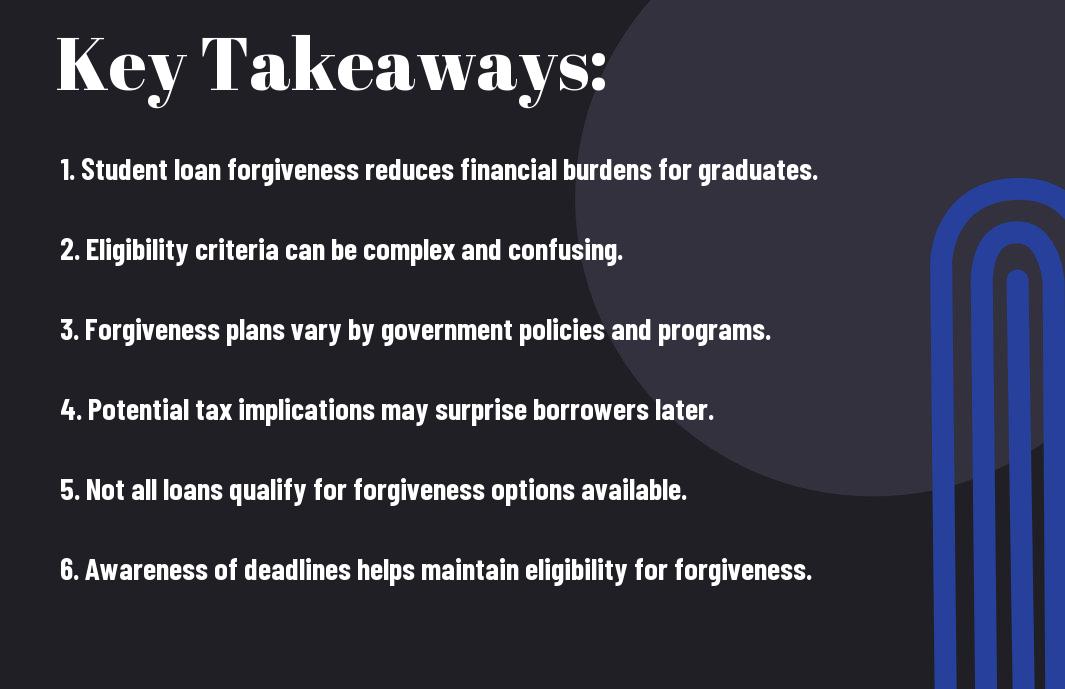
Key Takeaways:
- Student loan forgiveness can ease financial burdens for borrowers, making it easier for them to pursue careers, save money, and invest in their futures.
- Eligibility for student loan forgiveness varies by program, so it’s important to understand the requirements before applying.
- Some critics argue that forgiveness plans may strain government budgets and can lead to a sense of unfairness among those who have already repaid their loans.

What is Student Loan Forgiveness?
All around the country, many students find themselves with piles of debt after college. They often wonder if there’s a way to get some relief. Student loan forgiveness is one option that allows borrowers to reduce or eliminate their student debt. This program offers different plans that can lighten the financial burden for eligible individuals.
Definition and Purpose
Purpose of student loan forgiveness is to help borrowers who face financial challenges in repaying their loans. It aims to provide a path to financial freedom by canceling part or all of your student debt. This support can make a significant difference in your life, allowing you to focus on other important goals.
Types of Forgiveness Plans
Before diving deeper, understanding the different types of forgiveness plans available is necessary. Here are some common options:
- Public Service Loan Forgiveness (PSLF)
- Teacher Loan Forgiveness
- Income-Driven Repayment (IDR) Forgiveness
- Federal Family Education Loan (FFEL) Forgiveness
- State-Specific Forgiveness Programs
Knowing your options can help you choose the best plan for your situation.
| Type of Forgiveness Plan | Description |
|---|---|
| Public Service Loan Forgiveness | For those working in public service jobs, it forgives remaining debt after 120 payments. |
| Teacher Loan Forgiveness | For teachers who work in low-income schools and meet other criteria, offering up to $17,500 forgiveness. |
| Income-Driven Repayment Forgiveness | Loans can be forgiven after 20-25 years of qualifying payments. |
| FFEL Forgiveness | Offers options for borrowers of previous federal loans to seek forgiveness. |
| State-Specific Programs | Various states offer their own loan forgiveness programs targeting specific professions. |
Plus, each plan has its own eligibility requirements and rules. You should explore what fits your career and financial situation best. Consider these options:
- How long do you plan to stay in your profession?
- What types of repayment options have you already chosen?
- Are you working in a field that qualifies for special programs?
- Do you meet income criteria for specific forgiveness plans?
- What documentation will you need to apply?
Knowing the details can guide you to make informed decisions that might help ease your financial load.
Pros of Student Loan Forgiveness
Assuming you are a borrower, student loan forgiveness offers many advantages. It can relieve you of the burden of debt, allowing you to focus on your future without the constant stress of monthly payments. This relief can lead to greater financial stability and give you more freedom to pursue your dreams, whether that’s buying a home, starting a business, or saving for retirement.
Financial Relief for Borrowers
Forgiveness can significantly lighten your financial load. Without the weight of student loans, you can redirect your money toward crucial expenses or investments. Reducing or eliminating your debt can also open doors for better job opportunities since more employers recognize the stress student debt can bring. This shift allows you to plan for a brighter financial future.
Economic Benefits for Society
Below are some important economic benefits that come from student loan forgiveness. When you experience financial relief, it leads to increased spending power. This can stimulate the economy as you will likely spend more on goods, services, and housing. The overall result can create job growth and a stronger economy, benefiting everyone in the community.
Understanding these economic benefits helps you see the bigger picture. When many borrowers are relieved of their debt, they are more likely to invest in their local areas, leading to thriving businesses and better job opportunities. This ripple effect not only benefits you but also enhances the economic health of society as a whole. With more disposable income, communities can improve infrastructure, education, and healthcare, creating a vibrant and supportive environment.

Cons of Student Loan Forgiveness
To weigh the full impact of student loan forgiveness plans, it’s important to consider some of the drawbacks. One major concern is that these programs may not provide equal benefits to all borrowers. This can lead to debates about fairness and whether such policies should be implemented at all.
Cost to Taxpayers
Against student loan forgiveness is the financial burden it places on taxpayers. According to recent estimates, forgiving student loans could cost the government hundreds of billions of dollars. This money often comes from taxpayers like you, raising concerns about how this financial responsibility is shared. Many worry that this could lead to higher taxes or cuts in other vital services.
Potential Inequities
For student loan forgiveness, one issue is how it may benefit certain groups more than others. Some borrowers who graduate from graduate programs may receive larger benefits compared to those who attend community colleges or who did not attend college at all.
Inequities in student loan forgiveness plans can create feelings of unfairness among the population. For example, someone who chose a skill-based career may not benefit as much as someone who took on larger loans for a four-year degree. This could lead to divisions and perceptions that some individuals are more deserving of financial relief than others, which complicates discussions about educational access and equity.
Eligibility Criteria for Forgiveness Plans
All student loan forgiveness plans have specific eligibility requirements that you must meet. These criteria can vary based on the type of forgiveness program you are considering. For a detailed overview of how these plans work, you can check the Student Loan Debt | Pros, Cons, Debate, Arguments …. Understanding these requirements can help you assess your options effectively.
Federal vs. Private Loans
Below, you will find that federal loans typically have more forgiveness options compared to private loans. Federal student loans are backed by the government, which offers various forgiveness programs. On the other hand, private loans have stricter terms and usually lack forgiveness opportunities.
Specific Requirements
With forgiveness plans, you often need to meet certain criteria like the type of loan, repayment plan, and your employment status. Each program has distinct rules about how long you need to make payments and under what conditions you can qualify for forgiveness.
And, it is crucial to know that many forgiveness programs require you to work in certain fields, such as public service or education. You might need to be on an income-driven repayment plan for a set number of years. Staying informed about these requirements will increase your chances of qualifying for forgiveness and help you manage your student loan payments more effectively.

Alternatives to Student Loan Forgiveness
After considering student loan forgiveness, you might want to explore other options. Various programs can help reduce your financial burden. For more details about different approaches to relief, check out Student Loan Forgiveness: Programs for Relief. It’s important to find the best plan that works for your situation.
Income-Driven Repayment Plans
Income-driven repayment plans (IDR) adjust your monthly payments based on your income. These plans can significantly lower your payments and stretch your loan term. After 20 to 25 years of qualifying payments, your remaining balance may be forgiven. This option is designed to make student loan payments more manageable for you.
Other Financial Aid Options
The search for financial support doesn’t end with forgiveness. You can explore scholarships, grants, and work-study programs. These options can help cover your education costs without adding debt.
Forgiveness programs often focus on certain careers or public service roles. However, scholarships and grants can be available to all students, regardless of their profession. Many organizations offer funds based on merit, need, or specific criteria. Additionally, federal work-study jobs allow you to earn money while attending school. Being proactive about these alternatives can lead to significant savings and reduce your overall debt burden.
The Future of Student Loan Forgiveness
Now, the future of student loan forgiveness remains uncertain but hopeful. Various plans are in discussion, and many lawmakers recognize the need for student relief. As society evolves, new solutions might emerge to better address your financial needs. Stay informed as these developments could significantly impact your life and finances. Keep an eye on policy updates to see how they could affect your student loans.
Recent Legislative Changes
Legislative changes are reshaping the landscape of student loan forgiveness. Recently, several proposals have gained traction in Congress. These changes aim to simplify the application process and expand forgiveness eligibility. By learning about these updates, you can better understand how they may affect your student loans and repayment options.
Ongoing Debates and Considerations
Among the ongoing debates surrounding student loan forgiveness, key concerns include fairness and funding. Many people worry about who should benefit from these plans. Should forgiveness apply only to low-income borrowers, or should everyone with student loans qualify? These discussions affect how policies will be shaped in the future.
With various opinions on the matter, it’s imperative to consider the implications of student loan forgiveness. Some argue that forgiving loans might strain public resources. Others believe it could stimulate the economy by allowing you to invest in your future. As debates continue, stay engaged and informed about how these discussions shape your financial landscape.
Final Words
Considering all points, student loan forgiveness plans can offer significant relief to you, helping to ease your financial burden. However, you should also weigh the potential downsides, such as tax implications and reliance on government policies. It’s crucial to evaluate your individual situation and make informed choices. By knowing both the benefits and drawbacks, you can better navigate your financial future and make decisions that work best for you.
FAQ
Q: What is student loan forgiveness?
A: Student loan forgiveness is a program that allows borrowers to have some or all of their educational debt cancelled. This can happen under certain conditions, such as working in public service, making consistent payments, or enrolling in specific repayment plans.
Q: What are the pros of student loan forgiveness plans?
A: Some benefits of student loan forgiveness include:
- Less financial stress: Borrowers may feel relieved from a heavy debt burden.
- Increased spending power: With loans forgiven, it’s easier to save money or spend on other needs.
- Public service incentives: Many programs encourage graduates to work in jobs that serve the community.
- Possible tax benefits: In some cases, forgiven loans may not be taxed as income.
Q: What are the cons of student loan forgiveness plans?
A: On the other hand, there are some downsides to consider:
- Complex eligibility: Not everyone qualifies, and understanding the requirements can be difficult.
- Potential tax liabilities: In some cases, forgiven loans can be taxed, leading to unexpected bills.
- Future borrowing limitations: Relying on loan forgiveness might discourage borrowers from making financial plans.
- Increased debt for others: Some argue that forgiveness can lead to higher costs for future students.
Q: Who qualifies for student loan forgiveness?
A: Eligibility varies based on the program. Common factors include:
- Job type: Many forgiveness plans benefit those in public service or non-profit jobs.
- Loan types: Federal loans are more likely to qualify than private loans.
- Payment history: Most plans require consistent payments over a certain period, often 20 or 25 years.
Q: How can I apply for student loan forgiveness?
A: To apply, follow these steps:
- Research: Identify which forgiveness program fits your situation.
- Gather documents: Have your loan information and employment records ready.
- Submit your application: Many programs allow online applications, but ensure all details are correct.
- Stay updated: Monitor your application status and respond to any requests for more information.
Q: Is student loan forgiveness worth it?
A: This depends on individual circumstances. If you qualify, it can relieve a lot of financial pressure. However, consider the potential downsides before deciding. It might be wise to talk to a financial advisor for personalized advice.