

Over time, you may have heard a lot about insurance, but do you fully understand what it is and why it’s important? Insurance is a way to protect yourself and your assets from unexpected events that could result in financial loss. This blog post will explore the basics of insurance, the different types available, and why having coverage can give you peace of mind in uncertain situations.

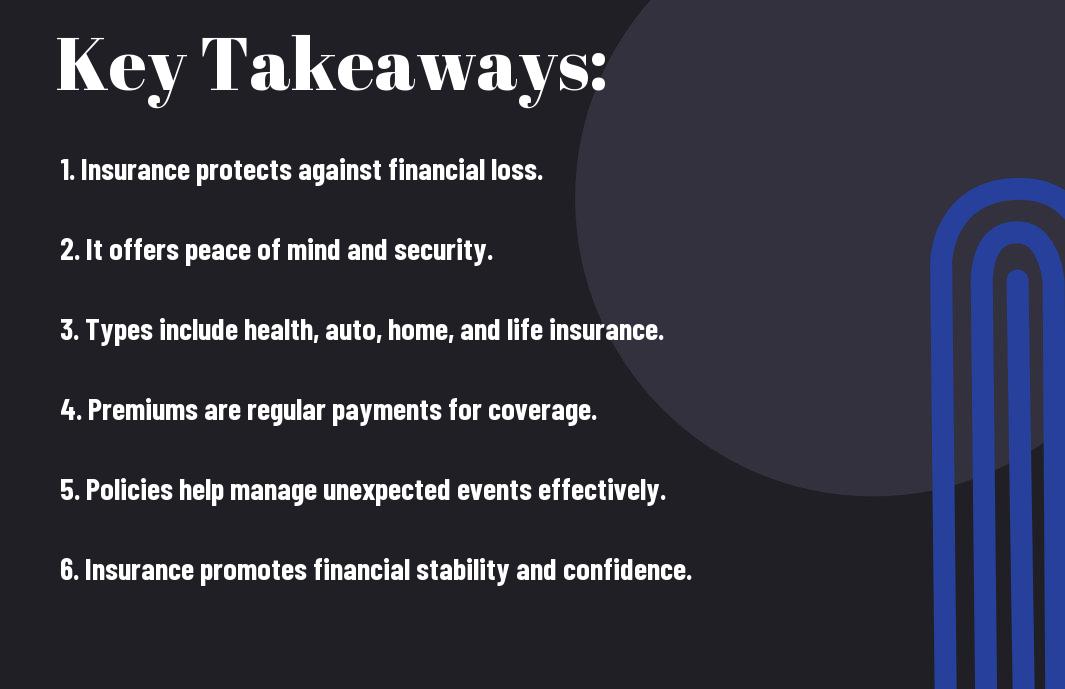
Key Takeaways:
- Insurance is a financial tool that protects you from unexpected events. It helps cover costs related to accidents, health issues, and property damage.
- Having insurance can provide peace of mind. It ensures you are prepared for emergencies and reduces financial stress.
- Different types of insurance, like health, auto, and home insurance, serve specific needs. Choosing the right insurance can save you money and provide better security.
What Is Insurance?
Before submerging into the details, it’s important to understand what insurance is all about. Insurance is a financial product that provides protection against financial loss. You pay a small fee, called a premium, to the insurance company. In return, they promise to help cover costs if something bad happens, like an accident or damage to your property. This safety net helps you manage risks in your daily life.
Definition of Insurance
On a basic level, insurance is an agreement between you and an insurance company. You pay them money regularly, and they agree to pay for specific losses you might face. This agreement protects you from unexpected financial burdens. Simply put, it gives you peace of mind when the unexpected happens.
Types of Insurance
Around the world, you can find various types of insurance tailored to different needs. Each type offers unique benefits and coverage options. Here are some key types of insurance to consider:
| Type of Insurance | Description |
| Health Insurance | Covers medical expenses and health care costs. |
| Auto Insurance | Protects you against losses from a car accident. |
| Homeowners Insurance | Covers your home and belongings in case of damage or theft. |
| Life Insurance | Provides financial support to your loved ones after you pass away. |
| Travel Insurance | Covers trip cancellations and medical emergencies while traveling. |
The right type of insurance can help protect your finances against specific risks. It’s necessary to assess your needs and choose accordingly.
But understanding the various types of insurance can help you make informed decisions. You might want different types based on your lifestyle and circumstances. Here’s a closer look at some types:
| Type | Key Feature |
| Disability Insurance | Provides income if you can’t work due to injury or illness. |
| Renters Insurance | Covers personal property in a rented apartment or home. |
| Pet Insurance | Covers veterinary expenses for your pets. |
| Umbrella Insurance | Offers additional liability coverage beyond other policies. |
| Long-term Care Insurance | Covers services needed for chronic illnesses or disabilities. |
The variety of insurance types enables you to find the right coverage that meets your needs. Make sure to explore different options and choose wisely.
How Insurance Works
One of the main purposes of insurance is to protect you from financial loss. When you purchase an insurance policy, you pay a fee called a premium. This fee helps create a pool of money that the insurance company uses to cover claims made by policyholders like you. If something unexpected happens, such as an accident or a natural disaster, you can file a claim to receive compensation. This way, insurance provides peace of mind while helping you manage the risks in your life.
Premiums and Deductibles
On every insurance policy, you find two important terms: premiums and deductibles. Your premium is the amount you pay regularly, like monthly or yearly, to keep your insurance active. A deductible, on the other hand, is the amount you must pay out of pocket before your insurance kicks in. For example, if you have a $500 deductible and file a claim for $2,000, you will pay the first $500, and the insurance will cover the remaining $1,500.
Claims Process
Across the insurance world, the claims process is how you request money from your insurer after an incident. You begin by reporting the event, such as a car accident or damage to your home. Once you submit your claim, the insurance company investigates to confirm the details. After this, they decide how much they will pay you based on your policy terms.
Considering the claims process can seem complicated, it is imperative to follow the right steps. First, gather all necessary documents, like photos or police reports, to support your claim. Then, contact your insurance company promptly to report the incident. Be clear and concise in your communication. The faster you provide the required information, the quicker the company can process your claim. This ensures you receive the help you need when you need it most.

Why Insurance Matters
Now, understanding why insurance matters can help you make informed decisions about your finances. Insurance offers a safety net against unexpected events, like accidents or health issues. Without it, these incidents can lead to significant financial burdens. By protecting yourself and your assets, you can focus more on living your life and achieving your goals.
Financial Protection
At its core, insurance provides financial protection when you need it most. It helps cover costs that can arise from accidents, illnesses, or damages to your property. This protection can save you from significant losses, ensuring you can afford care, repairs, or replacements without draining your savings.
Peace of Mind
For many people, having insurance means peace of mind. You can go about your daily life knowing that you have a safety net. This sense of security can reduce stress and anxiety about potential financial hardships. When you know you are covered, you can enjoy life more fully without worrying about what might happen.
To add more to this, peace of mind is about feeling safe and secure in your choices. Whether you are driving a car, owning a home, or managing your health, having insurance can make a big difference. It allows you to take risks and pursue opportunities without fear of unexpected costs. Knowing you have financial support lets you focus on what matters most, whether that’s your career, family, or hobbies.

Common Types of Insurance
All types of insurance help protect you from unexpected events. These are some common types:
- Health Insurance
- Auto Insurance
- Homeowners Insurance
- Life Insurance
- Disability Insurance
Assume that you choose the right coverage for your needs. It can save you money and provide peace of mind.
| Type of Insurance | Description |
|---|---|
| Health Insurance | Covers medical expenses and doctors’ visits. |
| Auto Insurance | Protects you and your vehicle from accidents. |
| Homeowners Insurance | Protects your home and belongings. |
| Life Insurance | Provides financial support to your beneficiaries. |
| Disability Insurance | Helps provide income if you can’t work. |
Health Insurance
Beside looking after your health, health insurance covers medical costs. It usually pays for doctor visits, hospital stays, and prescription medicines. With health insurance, you can focus on getting better without worrying about bills.
Auto Insurance
Among the various types, auto insurance is important for car owners. It covers damages if you have an accident or your vehicle gets stolen.
Indeed, auto insurance also helps with medical expenses after an accident. Many states require you to have at least liability coverage. This safeguards you from paying hefty sums for damages to others or their property. With the right policy, you can drive with confidence, knowing you are protected in case of an incident.
Choosing the Right Insurance
For anyone looking to protect their financial future, choosing the right insurance is important. You need a policy that fits your unique situation. You can learn more about different types of insurance options to make an informed decision.
Assessing Your Needs
For the best insurance experience, start by assessing your needs. Think about your lifestyle, your assets, and any risks you may face. Consider factors such as:
- Your health status
- Your home value
- Your vehicle’s age
- Your financial situation
Comparing Policies
The next step involves comparing different policies. This helps you find coverage that meets your needs at a good price. Create a comparison table to visualize the options.
Comparison of Key Insurance Features
| Feature | Policy A vs. Policy B |
|---|---|
| Premium Cost | Policy A: $100/month Policy B: $120/month |
| Deductible | Policy A: $500 Policy B: $300 |
| Coverage Limit | Policy A: $50,000 Policy B: $75,000 |
For instance, if you’re deciding between two auto insurance policies, think about the coverage limits and deductibles. Look at how much you’ll pay each month and what is covered in each policy. Making a chart like the one above can help clarify which policy gives you the best overall protection for your budget.
The Role of Insurance in Society
After careful consideration, you will find that insurance plays an important role in society. It provides a safety net, helping individuals and businesses manage risks effectively. Insurance ensures that when unexpected events occur, like accidents or natural disasters, you are not left to face the financial burden alone. For more insights, check out this resource on Understanding Your Insurance Policy.
Risk Management
To manage risk effectively, insurance allows you to transfer potential financial losses to an insurance company. By paying a premium, you can protect yourself against unforeseen events, like theft or health issues. This peace of mind helps you focus on your daily activities without the constant worry of what could go wrong.
Economic Stability
Against sudden losses, insurance contributes to economic stability. It helps individuals and businesses recover quickly from unexpected events, promoting overall financial health in society. This stability is vital for sustainable growth and development.
Due to the support insurance provides, communities can bounce back faster after crises. For instance, when businesses are insured, they can reopen quickly after disasters. This fast recovery creates jobs and stimulates the economy. Moreover, when people feel financially secure, they tend to spend more, further boosting the economic cycle. Thus, insurance is not just a tool for you; it is a key player in supporting society’s financial well-being.
To wrap up
To wrap up, insurance is a way to protect you from financial loss. It gives you peace of mind knowing that you are covered in emergencies or unexpected events. Understanding insurance helps you make better choices for your financial future. By choosing the right policies, you ensure that you and your loved ones are safe from unforeseen risks. Always read the terms carefully and consult with professionals if needed. Taking these steps can make a positive difference in your life.
What Is Insurance and Why Does It Matter?
Insurance is a topic that many people hear about but may not fully understand. In this blog post, we will explore what insurance is and why it is important. We will use the E-E-A-T framework to ensure you get the best information.
### What is Insurance?
Insurance is a contract between you and an insurance company. You pay a certain amount of money, called a premium, and in return, the company agrees to help you if something goes wrong. This could be a car accident, health issue, or damage to your property.
### Why Does Insurance Matter?
1. Protection Against Loss
Insurance provides a safety net. If you face unexpected expenses, insurance helps cover those costs. For example, if you get into a car accident, your auto insurance can pay for repairs and medical bills.
2. Peace of Mind
Knowing you have insurance can reduce anxiety. You can feel secure knowing that you will have support if something bad happens.
3. Legal Requirements
In many places, having certain types of insurance is not just smart; it’s the law. For instance, most states require drivers to have car insurance.
4. Financial Stability
Insurance can prevent financial strain. Without it, a significant expense could lead to debt and other financial challenges.
5. Health Coverage
Health insurance is necessary for accessing medical care. It helps cover doctors’ visits, medications, and hospital stays. Without it, medical bills can add up quickly.
### FAQ about Insurance
Q: What types of insurance are there?
A: There are many types of insurance. Common types include auto insurance, health insurance, home insurance, life insurance, and renters insurance. Each type helps protect against different risks.
Q: How do I choose the right insurance policy?
A: To choose the right policy, assess your needs. Think about what you want to protect and how much coverage you might need. It’s also wise to compare policies and costs from different companies before making a decision.
Q: What factors affect insurance premiums?
A: Several factors can affect your premiums, including your age, location, driving record, health, and the type of coverage you choose. Higher risks usually lead to higher premiums.
Q: Can insurance companies deny a claim?
A: Yes, insurance companies can deny claims. This can happen if the claim does not meet the policy terms, if there is evidence of fraud, or if the incident is excluded from coverage.
Q: How can I lower my insurance costs?
A: To lower your insurance costs, you can shop around for better rates, raise your deductibles, bundle policies, and maintain a good credit score. These steps can often help you save money.
### Key Takeaways
– Insurance is a contract that provides financial protection against various risks.
– It helps you feel secure and is often legally required.
– There are different types of insurance, each serving a unique purpose.
– Always compare different policies and understand the terms before choosing insurance.
All things considered, insurance is an important tool that helps protect you financially. Understanding how it works can lead to better choices and provide you peace of mind. By being informed, you can easily navigate the world of insurance and make decisions that best fit your needs.


