

You may be considering your options between starting a franchise and building your own business from scratch. Each path has its advantages and challenges. Understanding these key differences can help you make an informed decision that aligns with your goals. This post breaks down what you need to know, ensuring you choose the route that’s right for you.

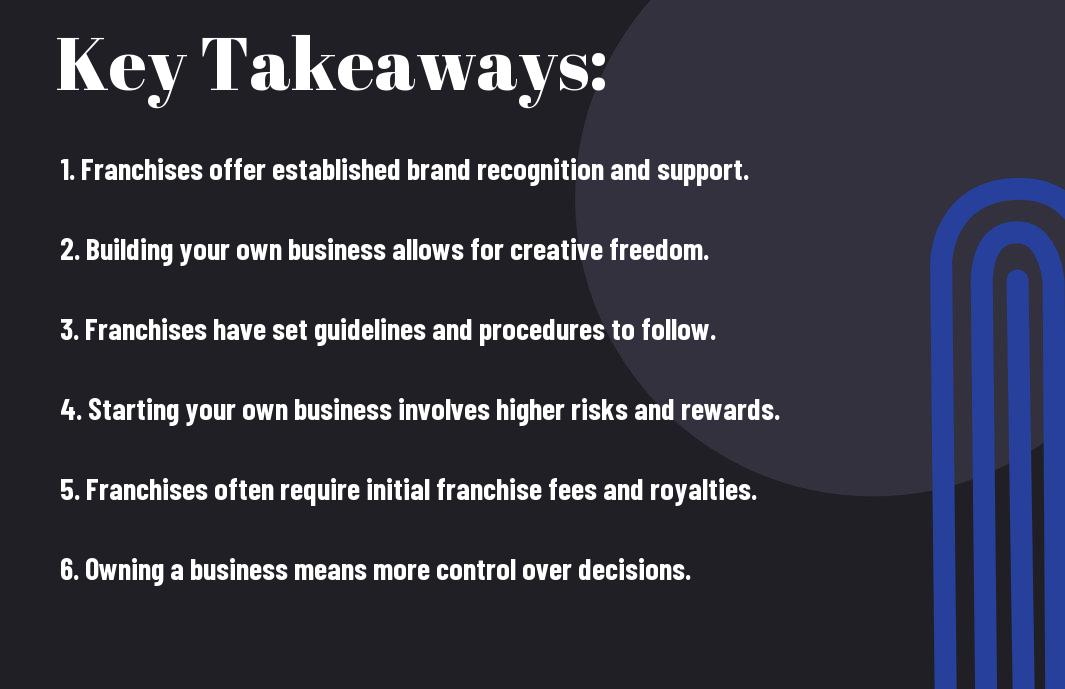
Key Takeaways:
- Starting a franchise provides a ready-made business model and brand recognition, while building your own business allows for complete creative control but requires more effort to develop.
- Franchise owners benefit from ongoing support and training from the franchisor, whereas independent business owners must rely on their own research and skills to navigate challenges.
- Investment costs and fees for franchises can be higher due to royalties and marketing fees, while starting your own business may offer more flexibility in terms of budget and funding sources.
Understanding Franchising
Before entering into business options, it’s helpful to understand franchising. In franchising, you can leverage an established brand while operating under a proven business model. This means you benefit from existing marketing strategies and support systems. For more details, check out Buying a Franchise vs Building Your Own Business – Fibrenew.
What is a Franchise?
Behind every franchise is a business system that allows you to sell products or services under a recognizable brand. You pay initial fees and ongoing royalties to the parent company. In return, you gain access to branding, training, and support throughout your journey.
Benefits of Franchising
After considering your business options, it’s clear that franchising offers some unique advantages. You receive training and ongoing support, which boosts your chances of success. Additionally, you benefit from a recognized brand, making it easier to attract customers.
But franchising is not just about brand recognition and support. The established systems help you navigate challenges, often leading to a higher success rate compared to starting from scratch. Many franchises also provide exclusive territories, reducing competition. When you start a franchise, you tap into a network of fellow franchisees for advice and support, enhancing your experience.

Building Your Own Business
The journey of building your own business can be exciting and rewarding. You have the freedom to create something unique that reflects your vision. Unlike a franchise, you are not limited by guidelines or pre-set rules. This means you can innovate and adapt your strategies as you grow. However, this path also comes with its own set of challenges, requiring dedication and resilience to succeed.
Defining Your Business Vision
The first step in building your own business is defining your vision. This involves thinking about what you want to achieve and how you plan to get there. Your vision will guide your decisions and help you stay focused on your goals. Take time to outline what makes your business special and how it can address the needs of your target audience.
Benefits of Starting from Scratch
Your decision to start from scratch offers several significant benefits. You have complete control over every aspect of your business. This means you can choose the products or services you want to offer, the branding, and the business model. Additionally, starting your own venture allows you to build a brand identity from the ground up, creating a lasting impression on customers.
It also encourages you to shape your company culture and values directly, ensuring they align with your vision. You can foster an environment where creativity thrives and employees feel valued. Over time, this can lead to stronger customer loyalty and greater satisfaction. Furthermore, building your brand from scratch allows you to fully reap the rewards of your hard work, potentially leading to greater profits and personal fulfillment in your entrepreneurial journey.
Investment and Costs
All entrepreneurs face financial decisions when starting a business. However, the investment and cost structures differ significantly between franchising and building your own business. Franchises typically require initial fees and ongoing royalties, while creating your own business often involves unique startup costs like equipment and real estate. Understanding these differences can help you make informed choices about your entrepreneurial journey.
Initial Costs in Franchising
An initial franchise fee can range from $20,000 to $50,000 or more, depending on the brand you choose. This fee grants you access to a proven business model, brand name, and support. In addition to the franchise fee, you might also need to budget for equipment, inventory, and marketing, which can add thousands to your initial investment.
Cost Considerations for Your Own Business
One of the first things you should consider when starting your own business is the range of costs you will face. Unlike franchising, where costs are somewhat predetermined, launching your own venture involves more uncertainty. You will need to account for expenses such as permits, licenses, equipment, and possibly hiring staff. This could mean you spend anywhere from a few thousand to several hundred thousand dollars, depending on your business plan.
Another important factor to think about is ongoing expenses. These include rent, utilities, marketing, and operating costs. You may also want to set aside funds for unexpected challenges. Unlike a franchise, you have the freedom to adjust your budget, but it requires careful planning and management. Overall, starting your own business might feel riskier, so ensure you conduct thorough market research to understand all potential costs.

Support and Resources
Unlike building your own business from scratch, starting a franchise brings a wealth of support and resources. Franchisors typically offer comprehensive training and ongoing assistance. This can help you navigate the challenges of running a business more easily. Having a support system can make a significant difference in your success rate.
Franchise Support Systems
The franchise support system usually includes training programs, marketing resources, and operational guidance. As a franchisee, you gain access to established systems that increase your chances of success. This support helps you learn from experts while allowing you to focus on running your business effectively.
Resources for Independent Entrepreneurs
On the other hand, if you choose to build your own business, you’ll need to find resources independently. This can include business plans, funding options, and networking opportunities. You may also need to seek mentorship and advice from experienced entrepreneurs.
Also, there are many online platforms and local organizations that provide resources specifically for independent entrepreneurs. Websites like SCORE offer free business mentoring, while local chambers of commerce can connect you with others in your industry. Additionally, numerous books and podcasts focus on entrepreneurship, giving you valuable insights to help you on your journey.
Control and Flexibility
After weighing your options between starting a franchise and building your own business, control and flexibility become key factors. This section helps you see how each choice impacts your ability to steer your venture in the direction you desire.
Control in a Franchise
Across franchises, you must follow a set framework. This includes strict guidelines on branding, operations, and marketing. While this can limit your creative choices, it also means you get support from a well-established brand. You can rely on the proven systems that have worked for others.
Flexibility in Starting Your Own Business
For those who choose to start their own business, flexibility is a major advantage. You can set your own rules, make decisions without restrictions, and pivot when needed. This freedom allows you to create a unique identity and respond quickly to changes in the market.
Indeed, having control over your own business means you can explore new ideas and opportunities. You can experiment with products, adjust your pricing strategy, or even change your target audience without asking for permission. This level of adaptability is beneficial, especially in today’s fast-paced market, where trends can shift rapidly. With careful planning and research, you can build a brand that truly reflects your vision and goals.
Risk and Reward
To understand the differences between starting a franchise and building your own business, you must consider the potential risks and rewards involved in each option. While both pathways offer unique opportunities, they come with different challenges that can impact your success and financial stability. Evaluating these risks can help you make an informed choice for your entrepreneurial journey.
Risks of Franchising
With franchising, you face specific risks that can affect your overall profitability. One significant risk is the reliance on the franchisor’s brand reputation. If the brand faces negative publicity, your franchise could suffer too. Additionally, franchisors may impose strict rules and fees, limiting your ability to make decisions about your business.
Risks of Building Your Own Business
With building your own business, the risks can be even more pronounced. You will need to invest time and money into establishing your brand, marketing it, and getting customers. This independence can lead to potential financial loss if the business does not perform well. You must also navigate legal requirements, which can change over time and affect your operations.
Also, starting your own business often involves uncertainty. You may deal with fluctuations in customer demand, economic conditions, and competition. These factors can create stress, especially if your initial investment is substantial. It’s important to have a solid business plan and adjust your strategies based on feedback and market trends to minimize these risks.
Final Words
With these considerations, you can better understand the key differences between starting a franchise and building your own business. A franchise offers a proven model and support, while starting your own business gives you more freedom and creativity. Each option has its own risks and rewards. Choose what fits your goals and resources best. For more insights, check out this article on Franchise vs. Startup: Which Way To Go.
FAQ
Q: What is a franchise?
A: A franchise is a business model where a person (franchisee) buys the rights to sell products or services from an established company (franchisor). The franchisee gets to use the franchisor’s brand name and business system. This includes getting support and training from the franchisor to help run the business successfully.
Q: What does it mean to build your own business?
A: Building your own business means starting a company from scratch. You come up with your own ideas, brand, products, or services. You are fully responsible for every aspect of the business, from creating a business plan to marketing and operations.
Q: What are the main differences in investment costs between franchises and starting a business?
A: Franchises often require an initial fee to cover brand use and training. This fee can range from a few thousand to millions of dollars. On the other hand, starting a business from scratch can have varied costs. You may spend more on marketing and product development initially without the support of an established brand, but some expenses can be lower than a franchise.
Q: How does support differ for franchises and independent businesses?
A: Franchises usually provide ongoing support, including training, marketing, and operational guidance. This support can make starting the business easier. In contrast, if you create your own business, you may have to find your own resources and support. This means being resourceful and figuring things out as you go.
Q: Which option is better for new entrepreneurs?
A: The choice between a franchise and building your own business depends on your goals and preferences. If you want to follow a proven system and have support, a franchise may be the right choice. If you prefer creative freedom and are willing to take on more risks, building your own business might suit you better. Evaluate your strengths and weaknesses before deciding.


