Most companies today understand that their actions impact society and the environment. Corporate Social Responsibility (CSR) is not just a trend; it’s becoming a vital part of how businesses operate and succeed. By adopting CSR practices, you can enhance your company’s reputation, attract investors, and build customer loyalty. For more insights, check out The Future of Corporate Social Responsibility: A Purpose …. In this blog post, you will learn about the importance of CSR in modern finance and how it shapes the business landscape.

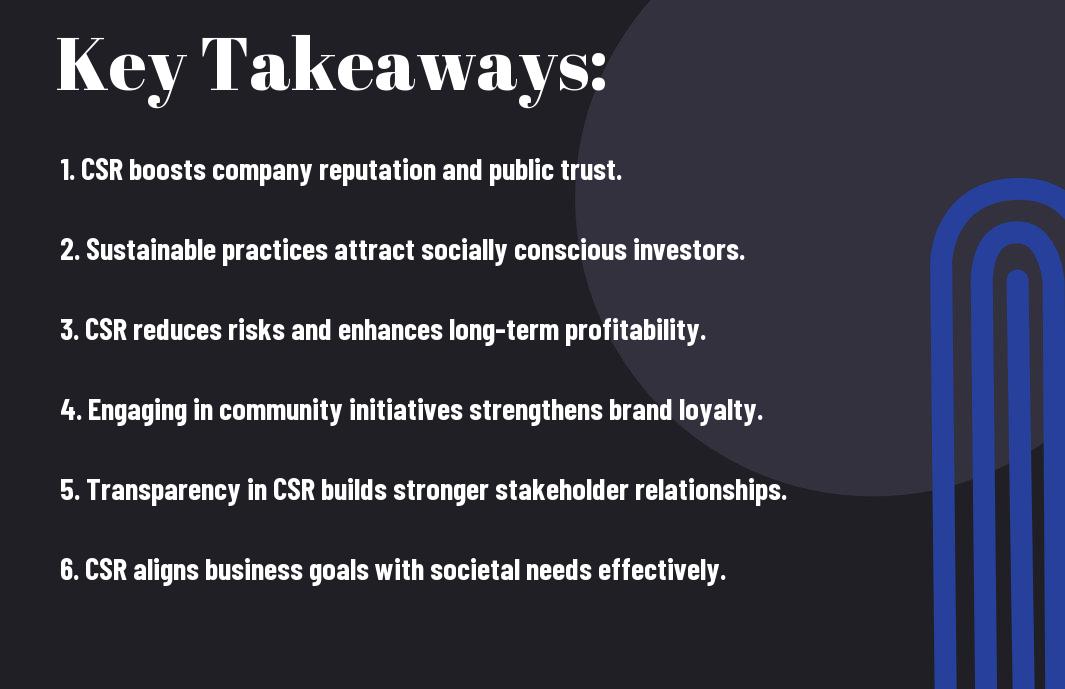
Key Takeaways:
- Corporate Social Responsibility (CSR) helps finance companies improve their public image by showing they care about social issues.
- Investing in CSR initiatives can lead to long-term profits as customers often prefer to support companies that are socially responsible.
- Transparency in CSR practices builds trust with consumers and investors, fostering a more loyal customer base and attracting new investors.

Understanding Corporate Social Responsibility (CSR)
Your understanding of Corporate Social Responsibility (CSR) can greatly influence how businesses operate today. CSR is a way for companies to give back to society while improving their own practices. This concept plays a significant role in connecting businesses with their communities and the environment, showing that success can go hand in hand with positive social impact.
Definition of CSR
Above all, CSR refers to the ethical approach businesses take to include social and environmental concerns in their operations. It encourages companies to make decisions that benefit not only their profits but also society at large. This means being accountable for their impact on people and the planet.
Importance of CSR in Today’s Business
Behind the scenes, CSR is more important than ever in today’s business landscape. Companies that prioritize CSR often enjoy stronger brand loyalty, as consumers increasingly prefer to support businesses that have a positive impact on society. A study found that 88% of consumers want brands to help them make a difference in the world. By embracing CSR, you can build trust with your customers and improve your company’s reputation.
And while you may not see the benefits of CSR immediately, the long-term rewards are significant. Businesses engaged in CSR initiatives tend to attract top talent. Employees are more likely to stay with a company that shares their values. Additionally, investing in sustainable practices can lead to cost savings and a more efficient business model. As concerns about climate change and social issues grow, your commitment to CSR can help you stand out in a crowded market, offering a competitive advantage.
The Evolution of CSR in Finance
Any discussion about Corporate Social Responsibility (CSR) in finance reflects significant changes over recent years. You can explore how CSR practices have become vital in today’s economy by reading this informative article on Corporate Social Responsibility: A Strategic Imperative For Modern Businesses. This evolution highlights how businesses now prioritize not just profit, but also their impact on society and the environment.
Historical Perspective
Any examination of CSR in finance must consider its roots. Initially, companies focused mainly on profit-making. Over the decades, social and environmental concerns began to gain attention. In the 1960s and 70s, movements for civil rights and environmental regulations pushed businesses to adopt more socially responsible practices. This marked the beginning of CSR as a legitimate focus for companies.
Recent Trends and Developments
The role of CSR in finance has dramatically evolved in recent years. Businesses are now integrating CSR into their core strategies. You’ll find that many financial institutions explore sustainable investing and create green bonds. The focus on transparency and ethical practices has heightened. According to recent studies, 70% of consumers prefer supporting companies that contribute to society. This trend shows that you can attract customers simply by committing to social responsibility.
Evolution in technology has also impacted CSR practices. Companies are using digital platforms to share their CSR efforts more effectively. Social media allows you to connect with your audience and illustrate your initiatives. Additionally, the rise of ESG (Environmental, Social, Governance) criteria shows that investors increasingly seek out companies with strong CSR commitments. You, as a consumer, can make informed choices based on these developments.
CSR’s Impact on Financial Performance
Keep in mind that Corporate Social Responsibility (CSR) plays a significant role in enhancing a company’s financial performance. Businesses that adopt CSR initiatives often see increased customer loyalty and trust. These factors can lead to higher sales and better market positioning. Companies not only contribute to society but also enjoy improved financial outcomes, creating a win-win situation for both the community and the business.
Positive Correlation with Profitability
By committing to CSR, companies often experience a positive correlation with profitability. Research shows that businesses engaged in responsible practices see an uptick in their profit margins. Engaging in CSR can differentiate your brand in a competitive market, attracting customers who value social responsibility.
Risk Management and Sustainability
For businesses, managing risks related to environmental and social factors is becoming increasingly important. Implementing CSR strategies not only reduces potential risks but also enhances brand reputation. Companies that prioritize sustainable practices often enjoy lower costs related to regulatory fines and public backlash.
Indeed, focusing on risk management through CSR can provide significant benefits for your business. By taking proactive steps to address environmental issues, you can mitigate potential disruptions. This approach also prepares you for future regulations and shifts in consumer preferences. Adopting sustainable practices not only ensures compliance but also creates long-term stability, thereby safeguarding your financial performance.
Stakeholder Perspectives on CSR
After exploring Corporate Social Responsibility (CSR), you can see how different stakeholders view its importance. Stakeholders include investors, employees, customers, and the community. Each group has unique perspectives and expectations. Understanding these views is vital for implementing effective CSR strategies. By considering various stakeholder opinions, you can enhance your company’s reputation and build stronger relationships.
Investors and Shareholders
To investors and shareholders, CSR represents an opportunity for better returns. They are increasingly interested in companies that practice ethical business. Research shows that companies with strong CSR programs often outperform their rivals. This focus on responsibility can lead to long-term growth and stability.
Employees and Community Engagement
Engagement in CSR activities helps employees feel valued and connected. When your company invests in community projects, it not only boosts morale but also attracts top talent. A positive workplace culture often leads to higher productivity and loyalty among employees.
But engaging with employees and the community is about more than just feel-good initiatives. It’s necessary to create programs that align with your company’s values and goals. For example, if your business supports environmental sustainability, encourage employees to participate in local clean-up efforts. This alignment fosters a sense of belonging and inspires teamwork. Ultimately, these efforts can help your company stand out in a competitive market.

Legal and Ethical Considerations
Despite the growing importance of Corporate Social Responsibility (CSR), navigating its legal and ethical landscape can be complex. You must understand the laws that govern corporate behavior while also considering the ethical implications of your decisions. To learn more, check out The Significance of Corporate Social Responsibility in Finance. Balancing legal obligations with ethical responsibilities can help you build a trustworthy brand.
Regulatory Frameworks
Legal frameworks play a vital role in shaping CSR practices. You should be aware of both national and international regulations that impact your organization’s CSR efforts. These laws often require transparency and accountability, ensuring that businesses operate ethically and contribute positively to society.
Ethical Implications of CSR Practices
Legal guidelines set the stage, but ethical implications truly define your CSR practices. With increasing pressure from consumers and stakeholders, your company’s reputation hinges on responsible behavior. Implementing CSR programs that genuinely reflect your values fosters trust and loyalty. When you prioritize ethics, you can create a positive impact while enhancing your brand image.
With CSR becoming a standard practice, you should consider how your company’s actions affect people and the planet. Maintaining ethical standards not only helps you avoid legal issues but also builds a loyal customer base. Aim for transparency in your CSR initiatives and engage with your community. This proactive approach not only strengthens your brand but also enhances overall business performance.
Case Studies in CSR Implementation
Unlike many areas of business, corporate social responsibility (CSR) boasts a variety of practical implementations and outcomes. These real-world case studies highlight how companies integrate CSR into their operations and the impact it has on their reputation and bottom line:
- Unilever: Achieved a 50% reduction in greenhouse gas emissions in its factories between 2008 and 2020.
- Starbucks: Invested over $100 million in community programs, improving local economies and enhancing brand loyalty.
- Patagonia: Donated $10 million to environmental causes in 2020, helping to reinforce their commitment to the planet.
- Dell: Recycled 1.8 million products in 2020, demonstrating leadership in sustainable practices.
Successful Examples
Successful CSR initiatives often lead to positive outcomes for both communities and businesses. For instance, companies like Unilever and Starbucks have shown that by investing in sustainable practices and community support, they not only boost their public image but also see increased customer loyalty and sales. These businesses understand that CSR is not just a trend, but a strategy that enhances their brand and connects with conscious consumers.
Lessons Learned from Failed Initiatives
After several companies pushed for CSR strategies without thorough planning, they faced criticism and backlash. A notable example is when a well-known fast-food chain attempted to promote wellness through a modified menu but kept its unhealthy options, causing confusion and resentment among consumers. You can see that inconsistency can damage your brand’s reputation.
Initiatives that lack genuine commitment often fail. It’s important for you to remember that consumers value authenticity. If your CSR efforts appear superficial or merely a marketing tactic, you risk losing trust. Learning from these failures can guide you in implementing CSR policies that are truly impactful and resonate with your audience. Always strive for transparency and align your initiatives with your core values for lasting success.
Conclusion
So, as you explore the world of modern finance, understanding the role of Corporate Social Responsibility (CSR) can greatly benefit you. CSR helps companies operate ethically and sustainably, aligning their goals with society’s needs. By supporting businesses that prioritize social and environmental well-being, you can invest in a future that reflects your values. Embracing CSR in your financial decisions not only improves your portfolio but also contributes to positive change in the world around you.
Frequently Asked Questions about the Role of Corporate Social Responsibility (CSR) in Modern Finance
Q: What is Corporate Social Responsibility (CSR)?
A: Corporate Social Responsibility (CSR) refers to the efforts made by companies to take responsibility for their effects on society. This includes how they impact the environment, employees, customers, and communities. CSR initiatives can range from sustainable business practices to charitable contributions and ethical labor policies.
Q: How does CSR affect a company’s financial performance?
A: Many studies show that companies with strong CSR practices often perform better financially. This is because consumers prefer brands that demonstrate social responsibility. Improved brand reputation can lead to increased sales and customer loyalty. Additionally, CSR can lower expenses by promoting energy efficiency or reducing waste.
Q: Why is CSR important in modern finance?
A: CSR is important in modern finance because it reflects a company’s values and ethics. Investors are increasingly looking for businesses that prioritize social and environmental responsibility. Companies that adopt CSR practices tend to attract more investments and can lead to sustainable growth over time.
Q: How can companies implement effective CSR strategies?
A: Companies can implement effective CSR strategies by first assessing their current impact on society. Then, they should set clear goals and create programs that support those goals. Engaging employees, investing in the community, and being transparent about their practices are all important steps. Finally, measuring the results helps to see the impact of their efforts.
Q: What are some examples of CSR activities that companies can engage in?
A: Companies can engage in various CSR activities, such as:
- Reducing their carbon footprint through energy-efficient practices
- Support for local charities and educational programs
- Fair treatment of employees with equitable wages and benefits
- Promoting diversity and inclusion within their workforce
- Engaging with customers through ethical sourcing and sustainable products