Most people wait until an economic crisis is upon them to think about their finances. However, evaluating your financial position now can help you make smart decisions to protect yourself later. This guide will walk you through simple steps to understand your financial health, enabling you to prepare effectively for any potential downturns. By taking early action, you can secure your financial future and build resilience against economic challenges.

Key Takeaways:
- Evaluate your income and expenses to understand where your money goes.
- Build an emergency fund that can cover at least three to six months of crucial expenses.
- Consider diversifying your investments to reduce risks during an economic downturn.
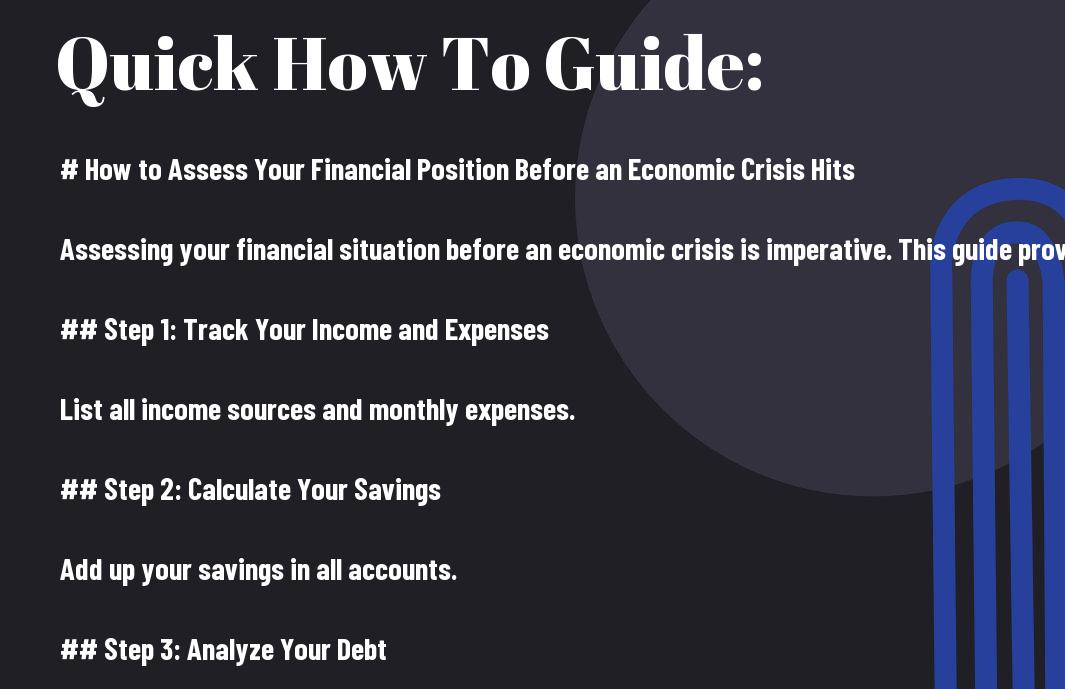
Understanding Your Current Financial Situation
Before you prepare for an economic downturn, it’s imperative to understand your current financial situation. This includes knowing your assets, debts, and savings. Take the time to create a clear picture of your finances. You can find helpful tips to manage your money effectively in this guide on How To Prepare Your Finances For A Recession. Knowing where you stand will help you make informed decisions later.
Evaluating Your Income Sources
Any reliable income can help you weather tough times. Start by listing all your income sources, including your job, freelance work, investment returns, or any additional side hustles. This gives you a clearer idea of how much money is coming in each month. Diversifying your income can also provide extra security during economic uncertainty.
Analyzing Your Expenses
With every dollar you earn, it’s important to know where it goes. Analyzing your expenses helps you identify what is imperative and what can be cut. Track your spending for a month to see patterns and unnecessary costs. This insight is valuable for preparing a lean budget that can adapt to tough times.
Understanding your expenses means categorizing them into fixed and variable costs. Fixed costs include rent and utilities, while variable costs might cover groceries and entertainment. By recognizing these categories, you can easily spot areas where you can trim spending. This understanding can free up funds to boost your savings, providing you with more financial flexibility in case of an economic crisis.
Identifying Key Factors to Prepare For
Now is the time to identify key factors that can help you prepare for an economic crisis. Consider the following:
- Your income stability
- Your necessary expenses
- Your savings and reserves
- The health of your investments
Knowing these factors can help you make informed decisions. For more insights, check out How to prepare for a recession.
Economic Indicators to Watch
For effective preparation, keep an eye on key economic indicators. These include unemployment rates, inflation, and GDP growth. Understanding these signs can help you gauge the overall health of the economy. By staying informed, you can adjust your financial strategies as needed.
Potential Impact on Your Investments
Clearly, an economic crisis can significantly affect your investments. Market instability can lead to declines in stock prices, increasing the risk of losses. You may need to adjust your portfolio to protect your assets during tough times.
Your investment strategy should be proactive. Diversifying your assets can help reduce risk. Consider allocating funds to safer options, like bonds or necessary goods. Regularly review your investment choices to ensure they align with your financial goals. Adjust as necessary to help safeguard your future.
How to Create a Financial Safety Net
Keep your finances secure by building a safety net before economic troubles arrive. A financial safety net gives you peace of mind and helps you manage unexpected expenses. This involves creating an emergency fund and reducing your debt. With careful planning, you can protect yourself and your loved ones during challenging times.
Building an Emergency Fund
If you haven’t started an emergency fund yet, now is the time to begin. Aim to save at least three to six months’ worth of living expenses. This fund will cover important costs like rent, food, and utilities if you face unexpected financial challenges. Set aside a small amount from each paycheck to build this fund gradually.
Reducing Debt Effectively
Reducing your debt can significantly improve your financial position. Start by listing all your debts and the interest rates associated with them. Focus on paying off high-interest debts first. This strategy saves you money in interest payments over time and helps boost your credit score.
Plus, consider using methods like the snowball or avalanche approach to tackle your debts. The snowball method encourages you to pay off the smallest debts first, giving you quick wins and motivation. The avalanche method focuses on the highest interest rates, saving you money in the long run. Evaluate both methods to decide which works best for you and stick to a monthly budget to ensure consistent payments.

Tips for Diversifying Your Investments
Despite having a few investments, it’s wise to diversify them to reduce risk. Here are some tips to consider:
- Invest in different asset classes like stocks, bonds, and real estate.
- Look for opportunities in various sectors, such as technology, healthcare, and energy.
- Consider geographical diversity by investing in international markets.
- Explore index funds or ETFs that track a broad range of securities.
Assume that you spread your investments wisely; this can help protect your portfolio from market downturns.
Importance of Asset Allocation
Your asset allocation strategy is vital for building wealth over time. It involves deciding how to divide your investments among different asset categories. A balanced approach can help balance risk and reward. By adjusting your allocation based on your goals and market conditions, you stand a better chance of achieving financial stability.
Exploring Alternative Investments
You may want to consider alternative investments beyond stocks and bonds. These investments can offer different benefits and risks. They might include things like real estate, commodities, or private equity. Each alternative has unique characteristics that can add value to your portfolio.
Diversifying into alternative investments can provide additional growth opportunities. For example, real estate can be a stable income source, while commodities might hedge against inflation. You can also explore peer-to-peer lending or investing in startups. By incorporating alternatives, you enhance your portfolio’s potential, making it more resilient against economic changes.
Strategies for Budgeting During Uncertain Times
Not knowing how to budget wisely can hurt your financial health, especially during uncertain times. To maintain control over your finances, you need to create a strategy that fits your current needs and future goals. Developing a reliable budget will help you track your spending, save more, and prepare for unexpected events. This way, you can stay ahead of the curve, even in a challenging economy.
Creating a Flexible Budget
Strategies for creating a flexible budget involve assessing your income and expenses regularly. Start by listing your fixed expenses, like rent or utilities, and your variable costs, such as dining out or entertainment. Use a budgeting app or a simple spreadsheet to keep track of your spending each month. Flexibility means adjusting your budget as your situation changes, allowing you to allocate resources where they are most needed.
Cutting Non-Essential Expenses
Clearly, cutting non-imperative expenses is vital when tightening your budget. Look for areas where you can reduce spending without affecting your quality of life. This could include canceling subscription services, dining out less, or delaying non-urgent purchases. Identifying these areas will free up more money to save or invest.
Another effective way to cut non-imperative expenses is to evaluate your daily habits. For example, consider making coffee at home instead of buying it daily. Even small changes can lead to significant savings over time. Additionally, try to find free or low-cost activities for entertainment. By being mindful of your spending, you can create a more robust financial position and navigate uncertain economic times more comfortably.

Staying Informed About Economic Changes
Once again, being aware of the economic landscape is important to protecting your finances. Economic changes can occur rapidly and impact your savings, investments, and overall financial health. By staying informed, you can adjust your strategies and prepare for potential economic downturns. Regularly follow trusted news sources and economic reports. This will help you track trends that may affect your financial position, enabling you to make timely decisions to safeguard your assets.
Resources for Real-Time Updates
Assuming you want to keep up with economic news, there are many resources available. Websites like Bloomberg, CNBC, and the Wall Street Journal provide up-to-date information on financial markets and economic changes. Additionally, subscribing to newsletters or using financial apps can give you instant access to the latest updates. Social media platforms can also be valuable, as many economists and financial experts share insights and predictions regularly.
Connecting with Financial Advisors
Financial advisors are professionals who can offer personalized guidance based on current economic conditions. They can help you create a financial plan that aligns with your goals and prepares you for challenges. A financial advisor can also suggest investment strategies while considering market fluctuations. Their expertise allows you to navigate complex financial decisions and make informed choices, especially during uncertain times. By building a relationship with a financial advisor, you can gain confidence in your financial decisions.
To wrap up
Drawing together your financial knowledge, it’s important to regularly assess your financial position before an economic crisis hits. Start by reviewing your income, expenses, and savings. Make sure you have an emergency fund that can cover at least three to six months of living costs. Evaluate your debts and aim to pay down high-interest obligations. By staying organized and proactive, you can better protect your financial well-being and make informed decisions when unexpected challenges arise.
FAQ: How to Assess Your Financial Position Before an Economic Crisis Hits
Q1: Why is it important to assess my financial position before an economic crisis?
A: Assessing your financial position helps you understand where you stand. It can show you how much money you have, what you owe, and how much your expenses are. Knowing this can help you make better decisions in tough times and prepare for any unexpected events.
Q2: What key areas should I review when assessing my financial position?
A: Focus on three main areas:
- Income: Look at your monthly earnings and any side jobs.
- Expenses: Track all your monthly expenses, including fixed bills and variable costs.
- Debt: List all your debts, such as loans and credit cards, along with their interest rates.
Q3: How can I calculate my net worth?
A: To calculate your net worth, follow these simple steps:
- Add up all your assets. This includes cash, savings, investments, and personal property.
- Add up all your liabilities. This includes debts like loans and credit card balances.
- Subtract your liabilities from your assets. The result is your net worth.
Q4: What steps can I take to improve my financial position before a crisis?
A: Here are some actions you can take:
- Create a budget: Track your spending to find areas where you can save.
- Build an emergency fund: Aim to save three to six months’ worth of living expenses.
- Reduce debt: Focus on paying off high-interest debts first.
- Diversify income: Consider taking on side gigs or freelance work for extra income.
Q5: When should I start assessing my financial position?
A: It’s best to assess your financial position regularly, not just during tough times. Aim to review your finances at least once a year. Checking more often can help you spot problems early and make adjustments as needed.
Key Takeaways
- Understanding your financial position is important for making informed choices.
- Focus on income, expenses, and debt to get a clear view.
- Calculating your net worth is a simple way to assess overall financial health.
- Take steps now to improve your financial situation for potential future challenges.
- Regular assessments can help you stay on track and ready for anything.