Just as you prepare for a storm, you should also prepare your finances for unexpected events. In this guide, you will learn how to secure your money and make smart choices during tough times. With practical tips and strategies, you can build a financial safety net that helps you navigate chaos with confidence. For more in-depth information, check out The Ultimate Guide to Surviving an Economic Collapse.

Key Takeaways:
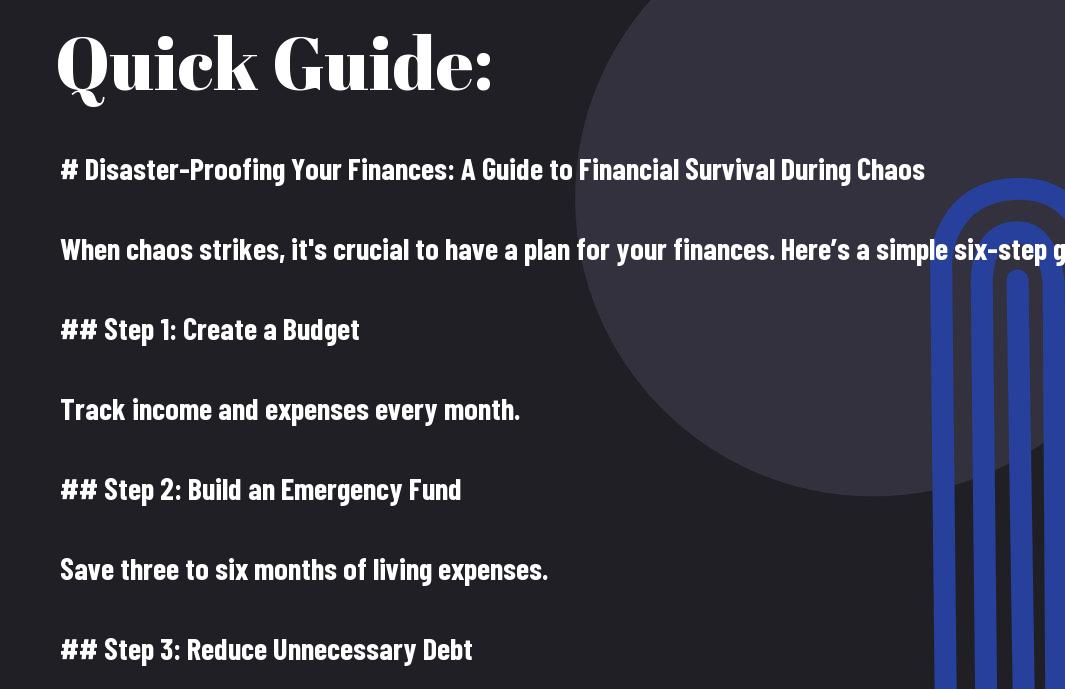
- Build an emergency fund: Save enough money to cover 3 to 6 months of living expenses. This fund can help you handle unexpected financial challenges.
- Diversify your income: Explore side jobs or passive income sources. This strategy can provide additional financial support during tough times.
- Stay informed and prepared: Keep track of financial news and create a budget. Being proactive helps you make better decisions and navigate through chaos more effectively.
Understanding Types of Financial Risks
For effective disaster-proofing, it’s necessary to understand the types of financial risks you may face. Risks can arise from unexpected events or conditions that affect your finances. Below are some common types of financial risks:
| Type of Risk | Description |
|---|---|
| Natural Disasters | Events like floods, earthquakes, or hurricanes that can damage property and disrupt income. |
| Economic Crises | Situations like recessions that can lead to job losses and decreased income. |
| Health Emergencies | Medical crises that can result in high medical bills and loss of income. |
| Market Fluctuations | Changes in market conditions that can affect investments and savings. |
| Employment Risks | Losing a job or facing reduced hours that can strain financial resources. |
Any of these risks can impact your financial stability. To learn more, check out this Guide to Emergency-Proofing Your Finances.
Natural Disasters
Clearly, natural disasters can cause significant disruption to your finances. Events like hurricanes, earthquakes, or floods can damage your home and property. This leads to costly repairs and interruptions in your daily life. You may also find it challenging to maintain your job stability during these times. It’s important to have an emergency fund to help you recover faster from these disasters.
Economic Crises
For many, economic crises are a major source of financial stress. Situations like a recession can lead to job losses and a decrease in income. During these times, you may find it hard to make ends meet. Without proper financial planning, unexpected expenses can spiral into larger problems.
With economic crises, it’s vital to stay informed about market trends and economic indicators. You should consider diversifying your income sources. Think about side jobs or passive income opportunities. Regular savings can also help create a buffer against potential job loss or salary cuts. Planning ahead can offer you greater stability in uncertain times.

Key Factors in Disaster-Proofing Your Finances
If you want to protect your finances during chaos, there are key factors to consider. A solid plan can help you weather any storm. Here are necessary elements to focus on:
- Emergency savings
- Insurance coverage
- Debt management
- Income diversification
Thou should focus on building a financial safety net that can support you in unexpected times.
Emergency Savings
To build a strong financial foundation, start with an emergency savings fund. Aim to save three to six months of living expenses. This buffer can cover basic needs if you lose your job or face unexpected expenses. It gives you peace of mind knowing you have money set aside.
Investment Diversification
Finances shouldn’t be put into one basket. Diversifying your investments is key to protecting your money in uncertain times. By spreading your investments across different assets, such as stocks, bonds, and real estate, you lower the risk of losing everything. Markets can be unpredictable, so having a mix helps balance potential losses with gains.
Your investment strategy should reflect your goals and risk tolerance. For example, if you prefer safety, consider more bonds and stable assets. If you’re open to risk, stocks may offer higher returns. Diversification not only balances risks but also maximizes your potential for growth. Staying informed about market trends and adjusting your portfolio as needed will keep your investments healthy. Always seek reliable advice if you’re unsure.
Step-by-Step Guide to Creating a Financial Plan
Despite the chaos that can arise during tough times, having a solid financial plan can make a big difference. This step-by-step guide will help you create a financial plan that can offer you stability and peace of mind. Follow these steps to disaster-proof your finances and ensure you’re ready for anything life throws at you.
| Step | Description |
|---|---|
| 1 | Assess Your Current Financial Situation |
| 2 | Set Financial Goals |
| 3 | Develop a Budget |
| 4 | Build an Emergency Fund |
| 5 | Review and Adjust Regularly |
Assessing Your Current Financial Situation
Even in times of uncertainty, understanding where you stand financially is the first step. Take stock of your income, expenses, debts, and savings. Write it all down. This will give you a clear picture of your situation. You may find areas to improve and prepare better for unexpected events.
Setting Financial Goals
Plan your financial future by setting clear goals. Decide what you want to achieve in both the short and long term. This could include saving for emergencies, paying off debt, or investing for retirement. Having specific goals helps you stay focused and motivated.
Current financial goals should be realistic and achievable. For example, aim to save a specific amount each month or reduce your debt by a certain percentage in a year. Break larger goals into smaller, actionable steps. This way, you can track your progress and celebrate small victories along the way. Focus on what matters most to you and adjust your goals as needed to keep moving forward.
Practical Tips for Financial Survival
Not every financial situation is the same, but there are general strategies that can help you stay afloat during tough times. Here are some practical tips:
- Track your expenses
- Create a budget
- Reduce unnecessary subscriptions
- Build an emergency fund
- Stay informed about financial assistance programs
Recognizing these tips can help you take control of your finances during chaos.
Reducing Unnecessary Expenses
You can improve your situation by cutting out expenses that you don’t really need. Think about items like streaming services or that daily coffee run. Start by listing your monthly expenses to see where you might save money. Every little bit adds up, so reconsidering these small purchases can make a big difference.
Building a Support Network
Assuming you have a support network is key during financial struggles. This network can include friends, family, and community members who can offer help, advice, or even financial resources. Sharing your experiences with others can lighten the emotional load and provide you with fresh ideas for saving money or income opportunities.
Another great way to strengthen your support network is by joining local groups or online forums focused on financial literacy or budgeting. These resources can connect you with people who share similar challenges. They can offer practical tips and emotional support. Having a good network can motivate you to stay committed to your financial goals.
Pros and Cons of Different Financial Strategies
Unlike a one-size-fits-all mindset, financial strategies have their own benefits and drawbacks. Understanding these can help you choose what works best for your situation.
| Financial Strategy | Pros | Cons |
|---|---|---|
| Emergency Savings | Easy access to cash | Interest rates are usually low |
| Investment | Potential for growth | Risk of loss |
| Insurance Policies | Provides financial protection | Can be costly |
| Debt Management | Improves credit score | Can take time to see results |
| Budgeting | Helps control spending | Can feel limiting |
| Retirement Accounts | Tax benefits | Withdrawal penalties |
| Diversification | Reduces risk | Can be more complex |
| Self-Insurance | Cost savings | High risk for big expenses |
| Financial Education | Informed decisions | Time-consuming |
| Emergency Loans | Quick access to funds | High-interest rates |
Insurance Policies
An insurance policy is a safety net for unexpected events. It can protect you from financial loss caused by accidents, disasters, or health issues. Different types of insurance, like health, car, and home insurance, provide peace of mind and security when chaos strikes.
Debt Management
To manage debt effectively, it’s important to have a clear plan. Start by tracking all your debts, including credit cards, loans, and any other obligations. Focus on paying off high-interest debts first to reduce your overall cost. You might also choose to consolidate debts or negotiate payment plans with creditors for better terms.
Policies related to debt management offer various methods to enhance your financial health. You can use tactics like the snowball method or debt avalanche to keep you motivated. Setting budgets and sticking to them will help you avoid accumulating more debt. By actively managing your debts, you will build a more secure financial future, preparing yourself for unexpected bumps in the road.

Maintaining Financial Resilience
Keep a close eye on your finances to build resilience. Financial resilience means being ready for unexpected challenges. You can achieve this by managing your expenses, saving regularly, and staying flexible in your financial decisions. Create a budget, track your spending, and boost your savings to help you withstand economic shocks. Small steps now can lead to greater stability in the future.
Regularly Reviewing Your Plan
You should review your financial plan at least once a year. This ensures your goals align with your current situation. Life changes, such as a new job or family addition, can impact your finances. Adjust your spending and saving strategies based on these changes to stay on track towards your financial goals.
Staying Informed on Financial Trends
One way to maintain financial resilience is by staying informed about financial trends. Knowing what is happening in the economy can help you make better decisions for your money. Read financial news, listen to expert podcasts, or follow reputable blogs. This knowledge gives you a clearer view of potential risks and opportunities that could affect your financial plan.
Another effective strategy is to subscribe to financial newsletters or attend local workshops. These resources often provide insights into market trends and emerging economic challenges. Understanding inflation rates or changes in interest rates can help you adjust your financial strategies accordingly. By being proactive and informed, you can safeguard your finances against uncertainty.
To wrap up
With this in mind, disaster-proofing your finances is imperative for enduring tough times. You can start by creating an emergency fund, budgeting wisely, and learning about investment options. Equip yourself with knowledge by exploring helpful resources like Books – Financial Literacy in Public Libraries: A Guide for …. By taking these steps, you enhance your financial stability and ensure you are ready for any unexpected events that come your way.
FAQ
Q: What does “disaster-proofing your finances” mean?
A: Disaster-proofing your finances means preparing your financial situation to handle unexpected events, like natural disasters or economic downturns. This involves having a budget, saving money, and planning for emergencies to ensure you can meet your needs during tough times.
Q: How can I create an emergency fund?
A: To create an emergency fund, start by setting a savings goal. Aim for at least three to six months’ worth of living expenses. Open a separate savings account, if possible, to keep this fund separate from your everyday spending. Begin saving a small amount each month until you reach your goal.
Q: What are some effective budgeting tips for disaster preparedness?
A: Here are some budgeting tips to prepare for disasters:
- Track your income and expenses for one month to see where your money goes.
- Identify areas where you can cut back, such as dining out or subscriptions.
- Allocate a portion of your budget each month to savings and emergency funds.
- Review and adjust your budget regularly based on your needs.
Q: How can I protect important documents in case of a disaster?
A: It’s important to keep your documents safe. Make digital copies of important papers, like your ID, insurance, and financial documents. Store these copies in a secure cloud service or on a USB drive. Also, keep a physical copy in a waterproof and fireproof container at home.
Q: What resources are available to help me learn more about financial preparation?
A: Many resources can help you with financial preparation. Consider visiting websites like the Federal Emergency Management Agency (FEMA) or the American Red Cross, which offer tips and guides on personal finance and emergency planning. You can also find books and online courses dedicated to financial literacy and disaster preparedness.