Most people may not realize that financial abuse is a real and dangerous issue affecting many individuals today. It involves controlling a person’s finances in harmful ways, often within relationships. In this post, you will learn how financial abuse happens and discover effective strategies to prevent it. For more information, consider visiting Stopping financial abuse for helpful resources.

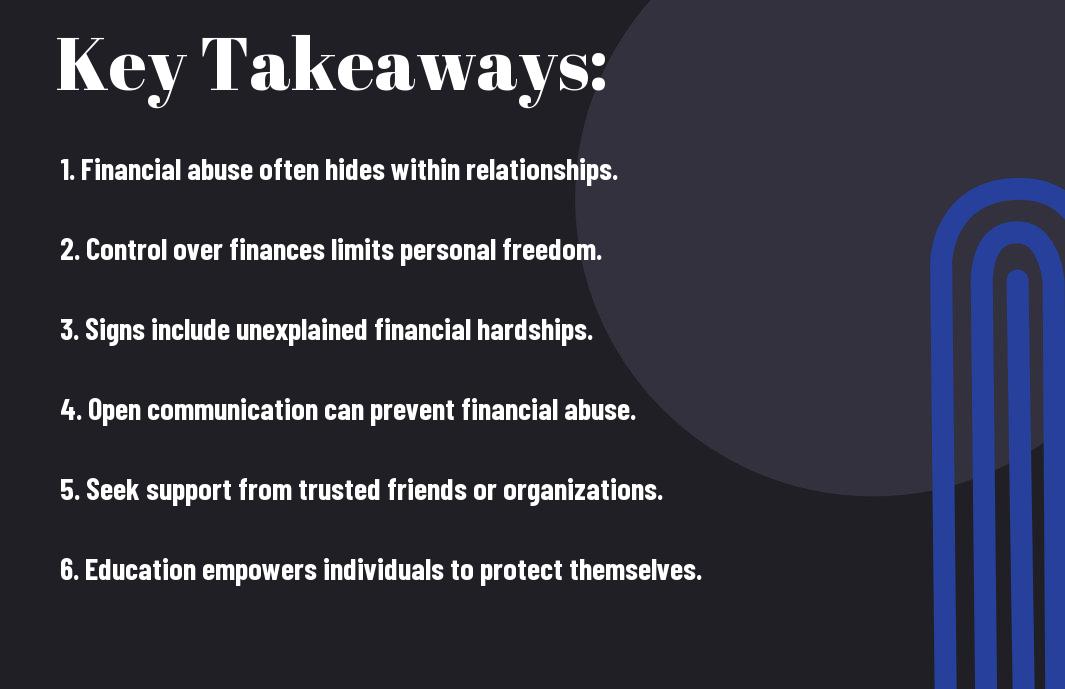
Key Takeaways:
- Financial abuse can happen in many forms. It often involves controlling someone’s money or resources without their consent.
- Signs of financial abuse include keeping someone from accessing their money, stealing, or using someone else’s funds without permission.
- To prevent financial abuse, communicate openly about finances, set clear boundaries, and educate yourself about your rights.

Understanding Financial Abuse
For many, financial abuse is a hidden issue that can deeply affect lives. It often occurs in relationships where one partner tries to control the other’s financial decisions and resources. You can learn more about this serious topic by visiting About Financial Abuse – NNEDV.
Definition of Financial Abuse
To put it simply, financial abuse is when someone uses money or financial resources to control another person. This can include restricting access to funds, preventing someone from working, or stealing money. It’s often about power and control, not just about money itself.
Common Forms of Financial Abuse
By understanding common forms of financial abuse, you can better recognize it in your relationships. This may include denying access to bank accounts, forcing you to account for every penny, or even sabotaging your job opportunities. In many cases, the abuser may use threats or intimidation to keep you from seeking help.
The most common forms of financial abuse are often subtle but harmful. For example, an abuser might prevent you from accessing your own bank account or taking control of your paycheck. They may also make financial decisions without consulting you or require you to account for your spending. Over time, these actions can leave you feeling trapped and powerless. It’s important to be aware of these behaviors, as they can affect your overall well-being.
How Financial Abuse Happens
While many people think financial abuse is straightforward, it often occurs in subtle ways. Abusers can manipulate their victims’ financial situation by controlling access to money or resources. They may use guilt, threats, or even love to convince you that you are not capable of managing your finances. Over time, this manipulation can create a power imbalance where you feel trapped and dependent on your abuser.
Warning Signs of Financial Abuse
Among the key signs of financial abuse are sudden changes in your financial situation and lack of access to funds. You might notice that your partner monitors your spending closely, discourages you from having your own bank account, or insists that you take out loans in your name without your consent. Other signs may include being denied access to the family finances or forced to account for every expense.
Examples of Financial Abuse Scenarios
Abuse can take many forms when it comes to finances. It may involve withholding money or using your financial insecurity to control you. For instance, your partner may give you a limited allowance, leaving you anxious about day-to-day expenses. They may also take out debt in your name, putting you at risk of financial ruin without your knowledge.
Considering the various ways financial abuse manifests, it’s important to stay vigilant. Some common scenarios include controlling a partner’s income or pressuring them into signing joint loans. In some cases, abusers may even isolate you from your support network by claiming that your friends and family are trying to take advantage of you financially. By understanding these scenarios, you can better protect yourself and others from financial abuse.
The Psychological Impact of Financial Abuse
Keep in mind that financial abuse can deeply affect your mental and emotional well-being. It often strips away your sense of autonomy and security. Victims frequently feel trapped, anxious, and ashamed. This form of abuse can leave scars far beyond the financial realm, impacting your self-esteem and relationships.
Effects on Victims
An overwhelming sense of fear and helplessness often defines the experience of those affected by financial abuse. Many victims report feelings of isolation due to their circumstances. As a result, your ability to trust others may diminish, leading to strained relationships with family and friends.
Long-term Consequences
Around 30% of financial abuse victims experience long-lasting mental health issues. These can include anxiety, depression, and post-traumatic stress disorder (PTSD). This enduring impact can make it challenging for you to rebuild your life and achieve financial independence after experiencing abuse. Many struggle with recurring feelings of inadequacy and fear even after leaving the abusive situation.
This ongoing struggle can hinder your personal growth and recovery. The emotional toll can manifest in various ways, such as difficulty in maintaining stable employment or forming healthy relationships. Additionally, you may find it hard to trust your financial decisions, which can perpetuate a cycle of vulnerability. Prioritizing your mental health and seeking support from professionals or support groups can help in overcoming these challenges.
Prevention Strategies
Many strategies can help prevent financial abuse. Start by increasing your knowledge about financial rights and recognizing the signs of abuse. This knowledge empowers you and those around you. Communicate openly about money matters with your partner, family, and friends. Establishing a supportive network can also provide early warnings if something feels wrong. Lastly, ensure that financial decisions involve both partners, creating a sense of shared responsibility and transparency.
Educating Yourself and Others
Beside studying financial abuse, you can teach others. Sharing what you learn helps build a strong community. You might consider hosting a workshop or discussing these topics in group settings. The more people know about financial abuse, the better equipped they are to spot it and prevent it. Your efforts can make a significant difference in someone’s life.
Setting Boundaries and Seeking Support
Above all, setting boundaries is a key aspect of financial safety. Establish clear limits about money and financial decisions early in any relationship. Don’t hesitate to reach out for support from trustworthy friends or professionals if you feel uncomfortable. Financial abuse can often thrive in silence, so creating a network of trusted individuals can help you maintain your financial independence.
Setting your boundaries is important in any relationship. Clearly communicate your financial expectations and needs to your partner. This might include how you manage shared expenses or saving goals. If you notice warning signs of financial abuse, seek support immediately. This can include talking to friends, family, or financial advisors who understand your situation. By building strong personal boundaries and a solid support system, you can protect yourself from potential abuse.
Resources for Victims
To effectively address financial abuse, it is imperative to know where to find support. Many organizations provide resources for victims, offering help in the form of counseling, legal assistance, and financial education. These services can guide you in regaining control of your financial situation and ensure you can thrive without fear of manipulation. Reaching out for help is a brave step toward a healthier future.
Helplines and Support Groups
Helplines are a valuable resource for anyone facing financial abuse. They offer a safe space where you can discuss your situation and receive immediate support. Many local and national organizations have trained advocates ready to listen and provide guidance. Support groups allow you to connect with others who share similar experiences, helping you feel less isolated and more empowered.
Legal Assistance and Advocacy
For legal challenges related to financial abuse, seeking assistance is vital. Legal experts can help you understand your rights and the options available to you. They can assist with obtaining protective orders or filing legal claims against the abuser. Many organizations even offer free or low-cost legal services for those in need. Your journey to recovery can include strong legal backing.
To strengthen your case, gather all financial documentation and evidence of abuse. This can include bank statements, emails, or text messages that demonstrate manipulation or coercion. By being prepared, you can better advocate for yourself. Additionally, local advocacy groups can provide information on your rights and guide you through the legal process. Always know you deserve support and assistance as you navigate these challenges.

Moving Forward After Financial Abuse
Despite the challenges you may face after experiencing financial abuse, there is hope for a brighter future. Healing takes time, but taking the first steps towards recovery is necessary. You can regain control of your finances and life by seeking support, setting goals, and building a trusted network. Educating yourself on financial matters will also empower you to make informed decisions, paving the way for a more secure future.
Recovery Steps for Victims
Against all odds, the journey to recovery begins with taking action. Start by reaching out to support groups or therapy for guidance. Document your experiences, which can help you understand the severity of your situation. Creating a structured recovery plan will give you a roadmap to follow. Note, you are not alone, and your well-being is the priority.
Rebuilding Financial Independence
Across various stages of your recovery, rebuilding financial independence becomes a significant focus. Start by assessing your current financial situation, gaining clarity on your income and expenses. Take small steps, like creating a budget or exploring job opportunities that align with your skills. As you build your financial knowledge, make informed choices about saving and investing. This exercise will boost your confidence and help you regain control of your life.
This process of rebuilding financial independence requires patience and determination. Consider seeking out financial education resources, such as workshops or online courses, tailored for those recovering from financial abuse. Engaging with a financial advisor can also provide personalized guidance. Set realistic financial goals, and track your progress regularly. By taking these actions, you will not only recover but also pave the way for a stable and independent life.
Conclusion
Following this guide on financial abuse, you can better recognize the signs and take steps to protect yourself. Awareness is key to prevention, so stay informed about your finances and be vigilant about any unusual behavior from partners or family members. Empower yourself by learning about your rights and seeking help when needed. By supporting one another and sharing knowledge, you can create a safer environment for yourself and those around you.
FAQ: Financial Abuse 101 – How It Happens and Ways to Prevent It
Q: What is financial abuse?
A: Financial abuse occurs when one person controls or exploits another’s financial resources. This can include stealing money, restricting access to funds, or manipulating someone’s financial situation for personal gain. It often happens in close relationships, such as between family members or partners.
Q: How can I identify signs of financial abuse?
A: Look for red flags such as:
- Being isolated from friends and family.
- Having limited access to money or bank accounts.
- Frequent arguments over money.
- Being forced to account for every penny spent.
- Not being allowed to make financial decisions.
If you notice these signs in yourself or someone you know, it’s time to seek help.
Q: What are the main ways financial abuse happens?
A: Financial abuse can happen in various ways, including:
- Withholding access to money or credit cards.
- Using someone’s personal information to take out loans or credit.
- Forcing someone to take out loans they cannot afford.
- Misusing joint accounts or assets without consent.
Understanding these methods is vital in recognizing and preventing financial abuse.
Q: How can someone protect themselves from financial abuse?
A: Here are some steps to consider:
- Maintain your own bank accounts separate from others.
- Monitor your credit regularly for any unauthorized activity.
- Keep important financial documents in a safe place.
- Educate yourself about your financial rights.
- Seek advice from trusted friends or professionals if you feel concerned.
Protection starts with awareness and action.
Q: What should I do if I suspect I am a victim of financial abuse?
A: If you suspect financial abuse, here are steps to take:
- Talk to someone you trust about your situation.
- Document any incidents of abuse.
- Consider reaching out to a lawyer or a support group for guidance.
- Contact local authorities if you feel safe doing so.
It’s important to take action to ensure your financial security and well-being.
Key Takeaways
Financial abuse can happen to anyone, and recognizing the signs is important to preventing it. If you notice any signs in yourself or someone you care about, take action immediately. Always maintain your financial independence whenever possible. Stay informed and seek help when needed, as there are resources available to support you.