Over the past few years, you may have noticed a growing interest in sustainable investing, particularly in Environmental, Social, and Governance (ESG) criteria. However, as new challenges and opportunities emerge, it’s crucial to look beyond ESG. This blog will explore what lies ahead in sustainable investing, guiding you through innovative opportunities and strategies that can enhance your investment approach while making a positive impact on the world.
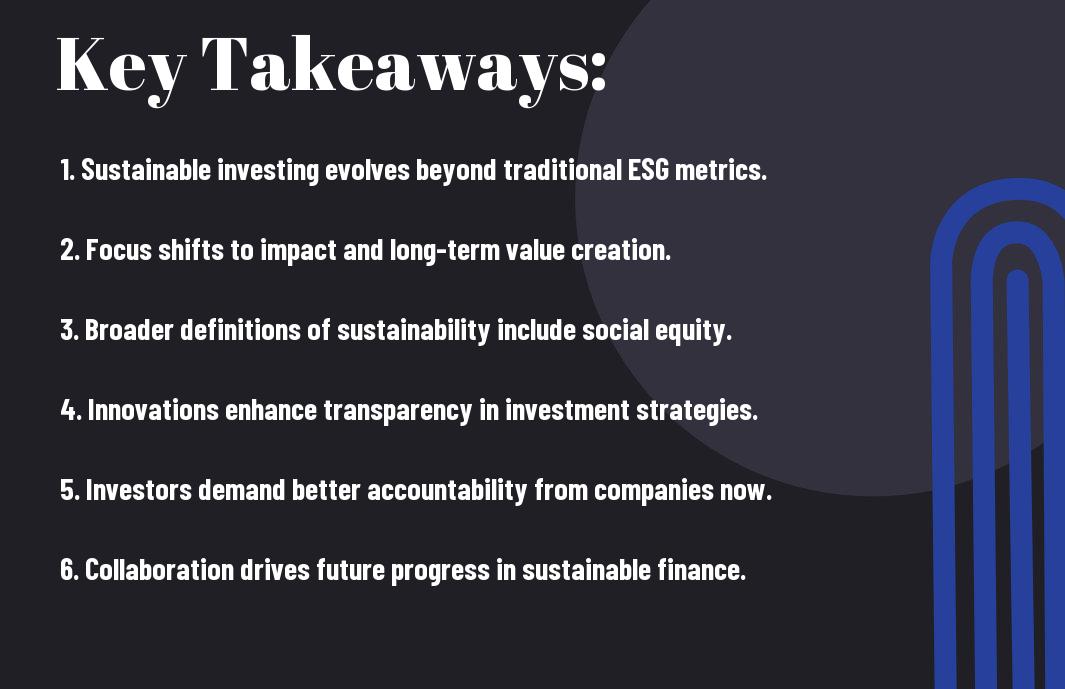
Key Takeaways:
- Sustainable investing goes beyond traditional ESG (Environmental, Social, and Governance) criteria by incorporating new factors like impact investing, which focuses on generating positive social and environmental effects alongside financial returns.
- The next wave of sustainable investing emphasizes transparency and engagement, encouraging investors to seek out companies that not only report their ESG efforts but also actively involve stakeholders in decision-making processes.
- As consumers become more environmentally conscious, investing in companies that prioritize sustainability can lead to long-term benefits, both financially and socially, which reinforces the importance of aligning investments with personal values.
Understanding ESG
Your interest in sustainable investing shines a spotlight on ESG—an important framework that addresses environmental, social, and governance factors. These factors guide investors in evaluating companies not just by their financial performance but also by their impact on society and the planet. As you explore ESG, you’ll find that it helps you align your investment choices with your values, fostering a more sustainable and responsible future.
What is ESG?
Across the globe, ESG stands for Environmental, Social, and Governance. These three elements represent key areas that companies should focus on to create long-term value. The environmental aspect looks at how a company performs as a steward of nature. The social aspect focuses on how it manages relationships with employees, suppliers, customers, and communities. Lastly, governance involves a company’s leadership, internal controls, and shareholder rights. Understanding these components can enhance your investment decisions.
The Current State of ESG Investing
Understanding the current landscape of ESG investing is crucial for making informed choices. The popularity of ESG investing has grown significantly in recent years, with inflows into ESG funds reaching over $50 billion in 2021 alone. This growth illustrates a shift in investor preferences, as many now prioritize sustainable practices. However, despite its rise, challenges remain, such as inconsistent standards and greenwashing concerns, where companies may exaggerate their sustainability claims.
But navigating the current state of ESG investing means being aware of both the potential and the pitfalls. You should research companies’ actual practices and look for transparency in their reports. By doing so, you not only make better investment choices but also advocate for genuine sustainability in the business world. Exploring peer-reviewed studies and credible sources can also help you stay informed on evolving ESG criteria.
Shortcomings of ESG
Any discussion about sustainable investing must address the shortcomings of ESG. Although Environmental, Social, and Governance (ESG) criteria aim to guide investors toward responsible companies, these metrics can be inconsistent and sometimes misleading. Flaws in measurement and reporting can obscure the true impact of a company’s practices. For deeper insights, check out The next frontier in sustainability.
Common Criticisms
At its core, ESG faces criticism for being subjective and inconsistent. Different organizations use varying methods to assess companies, leading to confusion for investors. Your investments may not align with your values if the evaluations don’t consider aspects important to you.
Limitations in Data and Reporting
An important limitation of ESG is the lack of standardized data and reporting. Companies may present information in a way that highlights their strengths while downplaying weaknesses. This can mislead you, making it hard to truly gauge a company’s sustainability efforts.
Common issues include varying definitions of what constitutes good practices and whom to trust for accurate information. Inconsistent reporting requirements mean that some companies may not disclose all relevant data. As a result, you may find it difficult to compare investments fairly. It’s crucial to seek out companies that provide clear and comprehensive sustainability reports.
Beyond ESG: The Next Frontier
All investors are now looking to broaden their perspective on sustainable investing. While ESG (Environmental, Social, and Governance) criteria have become popular, many believe that a new frontier is forming. This shift goes beyond just ESG, focusing on more complex factors that impact long-term sustainability. You have the chance to look into innovative solutions that can make your investment portfolio both ethical and profitable.
What Comes Next?
Any forward-thinking investor understands that next-generation strategies are crucial. As more people prioritize sustainability, you need to be aware of new approaches that can enhance your investment decisions. This means looking beyond traditional ESG metrics and considering other indicators of sustainability that can drive future growth.
New Investment Strategies
Behind this new wave of sustainable investing are fresh strategies that aim to deliver stronger results. You should explore areas like impact investing, thematic investing, and regenerative finance. These methods focus on generating measurable positive effects while still aiming for financial returns. By adopting these new strategies, you can align your investments with your values and seek better performance.
Indeed, the landscape of sustainable investing is evolving rapidly. For example, impact investing allows you to support companies making a significant difference in their communities. Thematic investing focuses on trends like renewable energy or social justice, targeting sectors projected to grow robustly. Regenerative finance seeks to restore and replenish environmental resources, which makes it a powerful addition to your portfolio. By considering these innovative strategies, you can diversify your investments and contribute to a more sustainable future.

The Role of Impact Investing
To understand the next steps in sustainable investing, you need to explore the role of impact investing. This practice goes beyond just avoiding harmful investments. Instead, it focuses on generating positive social and environmental outcomes while also earning a financial return. Many investors are looking for ways to align their values with their investment choices, making impact investing an exciting option for those who want to make a difference.
Defining Impact Investing
With impact investing, you are actively seeking investments that generate measurable social and environmental benefits. This means putting your money into opportunities that help solve pressing issues like climate change, poverty, and inequality. Unlike traditional investing, impact investing prioritizes both returns and positive change, allowing you to contribute to a better world while growing your wealth.
Case Studies of Successful Impact Investments
Impact investing has proven effective with several successful examples. Here are some notable case studies that showcase its potential:
- The Acumen Fund invested $100 million in companies that provide crucial services to the poor, resulting in over 100 million people gaining access to healthcare, education, and clean energy.
- Blue Horizon invested $30 million in a sustainable food company, leading to a 50% increase in their revenue and creating thousands of jobs in the organic farming sector.
- WaterEquity funded water-related projects in Asian countries with a $25 million investment, positively impacting over 4 million people by improving water access and sanitation.
- The Green Climate Fund facilitated a $1 billion investment in renewable energy projects, reducing carbon emissions by 1 million tons annually.
Further, these case studies highlight the real-world impact you can make through your investments. By choosing to invest in projects that deliver social or environmental benefits, you help drive change while potentially achieving strong financial returns. As more investors turn to impact investing, the sector continues to grow, creating more opportunities for sustainable growth and positive outcomes.

The Rise of Sustainable Development Goals (SDGs)
Not all investments contribute equally to a sustainable future. As you explore the world of sustainable investing, consider the growing importance of the United Nations’ Sustainable Development Goals (SDGs). These 17 goals aim to address social, economic, and environmental challenges. You can learn more about this exciting shift in investing through the Sustainable Investing: The Next Frontier video series.
Aligning Investments with Global Goals
Global investors now seek to align their portfolios with the SDGs. This means selecting investments that support issues like clean water, climate action, and gender equality. By doing this, you not only contribute to a better world but also tap into new growth opportunities.
Measuring Success and Impact
Behind every successful sustainable investment is a strong framework for measuring impact. You need to assess how your investments perform against the SDGs to ensure they create positive change.
Considering the vast landscape of sustainable investing, it is important to know how to measure your investments’ impacts effectively. You can use various tools and metrics to track progress. Look for companies that disclose their environmental, social, and governance (ESG) data. This transparency helps you understand the real effects of your investments on the SDGs, ensuring they truly support sustainable progress.

Future Trends in Sustainable Investing
Many experts believe that the future of sustainable investing will go beyond traditional ESG measures. You can expect innovative approaches that focus on social impact and environmental justice. This means investors like you will have access to more diverse options, allowing for a broader assessment of a company’s overall sustainability. Moreover, you’ll likely see an increase in transparency, better reporting, and more ways to engage with businesses that align with your values.
Technology in Sustainable Investing
Trends in technology are reshaping the way you engage with sustainable investing. New platforms are emerging that use artificial intelligence to analyze and rank companies based on their sustainability practices. This tech-driven approach makes it easier for you to find investments that meet your ethical criteria. Also, mobile apps allow you to track your investments in real-time, ensuring that your money aligns with your values.
Regulatory Changes Affecting Investors
Affecting both you and the market, regulatory changes are shifting the landscape of sustainable investing. Governments around the world are implementing stricter regulations requiring companies to disclose their sustainability practices. This increased scrutiny provides you with more information to make informed decisions about your investments.
Future regulations are expected to enhance your confidence in sustainable investing. Policies promoting transparency will help you understand how companies operate. For example, the European Union is rolling out legislation requiring firms to report on their environmental impact. With these changes, you’ll gain more insight into how your investments contribute to sustainability goals, ultimately making it easier to support businesses that share your values.
Conclusion
On the whole, it’s clear that the future of sustainable investing goes beyond traditional ESG measures. You can position yourself at the forefront of this movement by staying informed about new strategies and practices. This helps you make more impactful investment choices. Explore resources like Harnessing Investor Interest in Sustainability: The Next … to enhance your knowledge. By doing so, you’ll contribute to a more sustainable and responsible investment landscape.
FAQ: The Next Frontier in Sustainable Investing – What Lies Beyond ESG
Q1: What does ESG stand for?
A: ESG stands for Environmental, Social, and Governance. It refers to three key factors that help investors evaluate the sustainability and ethical impact of a company. The Environmental aspect considers how a company performs as a steward of nature. The Social aspect looks at how it manages relationships with stakeholders. Finally, the Governance aspect examines the company’s leadership, audits, and shareholder rights.
Q2: Why is ESG important in investing?
A: ESG is important because it helps investors make informed decisions. Companies with strong ESG practices often show better long-term performance. They are seen as less risky and more sustainable. This can lead to higher returns and a positive impact on society and the planet.
Q3: What comes after ESG in sustainable investing?
A: After ESG, some investors are exploring impactful investing or purpose-driven investing. This means investing not just to make money but to create positive social and environmental outcomes. Trends like “Sustainable Development Goals” or SDGs focus on specific global challenges, like poverty and climate change, which investors may support.
Q4: How can I start investing sustainably?
A: To start investing sustainably, first, educate yourself about ESG criteria and impact investing. Then, consider companies or funds that align with your values. You can look for mutual funds or ETFs that focus on sustainable practices. Finally, follow the performance of your investments regularly to see if they meet your goals.
Q5: Are there risks involved in sustainable investing?
A: Yes, there are risks in sustainable investing. While many ESG-focused companies are doing well, the market can be volatile. Sometimes, these companies may face challenges. It is important to research thoroughly and diversify your investments to manage potential risks while staying committed to your values.
Key Takeaways
– ESG stands for Environmental, Social, and Governance, important factors in sustainable investing.
– Investing with ESG criteria can lead to better long-term performance and less risk.
– Impactful and purpose-driven investing are new trends beyond ESG.
– Start by educating yourself and considering funds that match your values.
– Be aware that there are risks, so do your research and diversify your investments.