Just because you can afford a monthly mortgage payment doesn’t mean you’re ready to buy a home. The true cost of homeownership goes far beyond your mortgage. There are property taxes, maintenance, and unexpected repairs to consider. It’s important to fully understand these costs before making such a big decision. This blog will guide you through the hidden expenses of homeownership, helping you determine if you are truly ready to take this step in your life.
Key Takeaways:
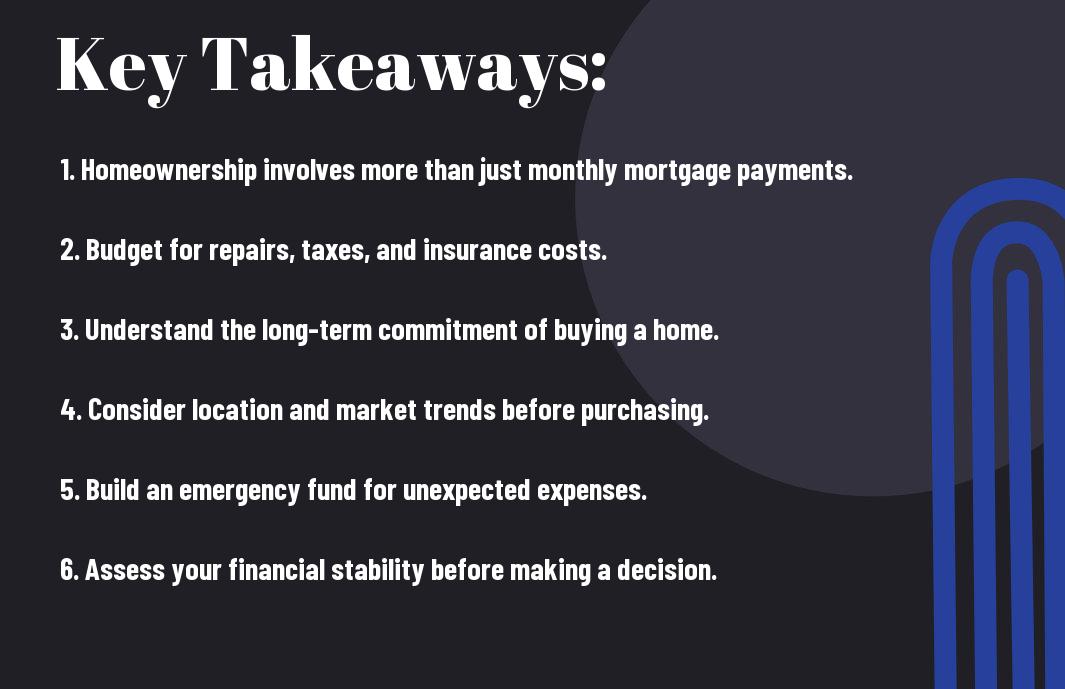
- Homeownership involves more than just the mortgage payment; consider additional costs like property taxes, insurance, and maintenance.
- Assess your financial readiness by analyzing your savings, credit score, and monthly budget to ensure you can handle homeownership expenses.
- Research the housing market in your area to make an informed decision about buying a home, ensuring it fits your lifestyle and long-term goals.
Understanding Homeownership Costs
To make an informed decision about homeownership, you must understand the various costs involved. Buying a home isn’t just about the purchase price. It includes ongoing expenses that can add up quickly. By budgeting for these costs, you can better prepare yourself for the financial responsibilities of owning a home.
Mortgage Payments
Among the largest expenses you will face as a homeowner are your mortgage payments. This monthly cost includes both principal and interest on the loan you take to buy the home. Generally, your mortgage payment depends on the home’s price, the loan amount, and the mortgage interest rate. Being aware of these factors will help you calculate your monthly budget.
Property Taxes
Costs like property taxes also play a big role in homeownership. These are taxes local governments charge based on your home’s value. Typically, property taxes are paid annually or semi-annually. The rates vary by location, so be sure to research your area.
And don’t forget that property taxes can change over time. They often increase when the local government needs more funding for schools or public services. This means your budget needs to be flexible. Keeping a close eye on property tax updates in your area can help you avoid surprises down the line.
Additional Expenses to Consider
It’s important to know that buying a home comes with costs beyond just your mortgage. These costs can sneak up on you, impacting your budget and financial plans. Don’t forget about property taxes, closing costs, and other fees. To learn more, check out The True Cost Of Homeownership Beyond The Mortgage.
Home Insurance
Between your mortgage and other expenses, you should factor in home insurance. This coverage protects your investment from risks like damage or loss due to theft, fire, or natural disasters. Often, lenders require insurance, and costs vary based on where you live and your home’s value.
Maintenance and Repairs
After you move in, your responsibilities don’t end. Regular maintenance and unexpected repairs can add up quickly. It’s wise to set aside funds for things like roof repairs, plumbing issues, and HVAC system servicing. Many experts recommend budgeting about 1% of your home’s value each year for maintenance. This ensures you’re prepared for any issues that may arise.
It’s crucial to stay proactive about maintenance and repairs. Regular upkeep can prevent larger problems down the road. For instance, a small leak, if ignored, can lead to significant water damage. Keeping a well-documented schedule for maintenance tasks can help you stay on track. By budgeting properly and planning your maintenance wisely, you can protect your investment and avoid unexpected expenses.
Upfront Costs of Buying a Home
After deciding to buy a home, you need to consider the upfront costs involved. These costs are not just limited to the price of the house itself but also include various fees and expenses. Understanding these initial costs will help you prepare financially and set realistic expectations. It’s important to get a clear picture of what you’ll need so you can plan your budget effectively.
Down Payment
Buying a home requires a down payment, which is a percentage of the home’s price. Typically, this can range from 3% to 20%. For a $300,000 home, your down payment could be anywhere from $9,000 to $60,000. Saving for this amount is important, and some programs may help first-time buyers with lower down payment options. By planning ahead, you can make this important step easier.
Closing Costs
Among the many expenses of buying a home, closing costs can often come as a surprise. These costs typically range from 2% to 5% of the home’s purchase price. They include fees for things like appraisal, inspection, and loan origination, along with title insurance. You should budget for these additional expenses as they can significantly impact your overall costs when closing the deal.
In addition to the fees mentioned, closing costs may also include prepaid items such as property taxes and homeowners insurance. It’s wise to ask your lender for a detailed estimate of these costs before you buy. Understanding these expenses can help you avoid unexpected financial burdens and make the process smoother. Always review your closing statement carefully to ensure everything aligns with your expectations.
Long-Term Financial Implications
All potential homeowners should understand the long-term financial implications of buying a home. While the initial costs often attract you, ongoing expenses can add up quickly. These include mortgage payments, property taxes, insurance, maintenance, and repairs. Over time, these costs can impact your budget and savings, making it crucial to assess whether you are truly ready for the commitment of homeownership.
Home Equity
Along your journey as a homeowner, you will build home equity over time. Home equity is the difference between your home’s market value and what you owe on your mortgage. As you make monthly payments and your property value increases, your equity grows. This can provide you with future financial benefits, like borrowing against it for major expenses or investing in another property.
Market Trends
On the other hand, understanding market trends is vital for making informed decisions about buying a home. The housing market can fluctuate based on various factors, such as supply and demand, interest rates, and economic conditions. Staying updated on these trends helps you anticipate the right time to buy and ensures you invest wisely in your future.
The current housing market tends to see both upward and downward trends. For example, according to recent data, while home prices have generally risen over the years, they can also decline during economic downturns. Therefore, researching your local market and tracking its performance can assist you in predicting how your investment will fare. This knowledge empowers you to make decisions that align with your financial goals and lifestyle.
Alternatives to Buying a Home
Your journey toward homeownership doesn’t have to start with buying a home. There are various alternatives to consider, such as renting or exploring other housing options. You can learn more about these aspects by visiting Preparing to Buy a Home: True Cost of Home Ownership. These alternatives can help you make the best decision based on your current situation and financial goals.
Renting vs. Buying
To make the right choice between renting and buying, you should evaluate your needs and finances. Renting offers flexibility, as you can move more easily. It also allows you to avoid maintenance costs. On the other hand, buying a home can build equity over time but requires a larger upfront investment. Think about your long-term plans before making a decision.
Other Housing Options
With many people seeking cost-effective solutions, other housing options might work better for you. Consider co-housing, tiny homes, or even living with family. Each of these alternatives can offer unique benefits, from shared expenses to a supportive community.
Options like co-housing let you share living spaces with others, reducing costs and fostering connections. Tiny homes offer a more sustainable lifestyle and lower expenses while still giving you the feeling of homeownership. Living with family can lower financial pressure and provide support. These alternatives may even open up new opportunities you hadn’t considered before.
Are You Financially Prepared?
Keep in mind that buying a home requires more than just the down payment. You need to consider other costs, such as property taxes, insurance, and maintenance. Assessing your financial readiness involves looking at your savings, monthly expenses, and income. It’s necessary to have a clear picture of your finances before taking such a big step.
Budgeting for Homeownership
Above all, creating a detailed budget is vital for homeownership. Start by listing your income and necessary expenses. Then, include additional costs associated with owning a home, like utilities and repairs. This will help you understand how much you can comfortably spend each month on your mortgage.
Assessing Your Financial Situation
At this point, you should evaluate your overall financial picture. Take a close look at your savings, debts, and credit score. These factors will help you determine how much you can afford to borrow. Aim for a credit score above 620, as this can lead to better loan terms and interest rates.
Financially assessing your situation is necessary to determine what you can afford. Gather your bank statements, pay stubs, and debt information. Calculate your debt-to-income ratio by dividing your monthly debt payments by your monthly income. Ideally, this ratio should be below 30%. This information will guide your home search and ensure you stay within your financial limits.
Conclusion
Now that you understand the true cost of homeownership, it’s important to evaluate your financial readiness. Consider not just the mortgage payment, but also property taxes, maintenance costs, and insurance. These factors can significantly impact your budget. Take the time to assess your current situation and long-term goals. By doing so, you can make a more informed decision about buying a home that suits your needs and lifestyle.
FAQ
Q: What are the main costs of owning a home?
A: When you own a home, you will face several costs. These include:
- Mortgage Payments: This is the monthly payment for the loan you took to buy the home.
- Property Taxes: These are taxes paid to the local government based on the property’s value.
- Home Insurance: Insurance protects your home against damages or losses.
- Maintenance Costs: Regular upkeep such as lawn care, roof repairs, and plumbing issues.
- Utilities: Costs for electricity, water, gas, and other necessary services.
Q: How do I know if I can afford to buy a house?
A: To see if you can afford a home, you should:
- Calculate your monthly income and expenses.
- Determine how much you can spend on a mortgage based on your savings and debts.
- Use a mortgage calculator to estimate monthly payments.
- Consider additional costs like taxes, insurance, and maintenance.
Q: What is the difference between a fixed-rate and an adjustable-rate mortgage?
A: A fixed-rate mortgage has a constant interest rate throughout the loan term. This means your monthly payments stay the same. An adjustable-rate mortgage (ARM) starts with a lower rate, which can change after a set period. This might mean your payments could go up later.
Q: How much should I set aside for home maintenance?
A: A good rule of thumb is to set aside about 1% of your home’s value each year for maintenance. For example, if your home is worth $200,000, you might save around $2,000 each year for repairs and upkeep. This helps ensure you have funds available whenever something needs fixing.
Q: What are some risks of homeownership I should be aware of?
A: Some risks include:
- Market Fluctuations: The value of your home can go up or down based on market conditions.
- Unexpected Costs: Major repairs can arise when you least expect them.
- Long-term Commitment: Owning a home typically requires staying in one place for several years.
- Financial Strain: If your income decreases, making mortgage payments can become difficult.