Uncertainty can often feel overwhelming, especially during a career transition. You may be facing changes in income or unexpected expenses. Effective budgeting can help you navigate this challenging time. By planning your finances wisely, you can reduce stress and focus on your next steps. This post will guide you on how to manage your money during these uncertain moments, ensuring you feel more secure and prepared.

Key Takeaways:
- Build a flexible budget that can adapt to changes, allowing you to manage your expenses during unpredictable times.
- Keep track of your expenses and savings regularly to ensure you are staying on target and can make adjustments if needed.
- Prioritize vital expenses and reduce non-vital spending to create a safety net for your finances during your career transition.
Understanding Career Transitions
A career transition is a significant change in your job path. You might be moving to a new role, industry, or even starting your own business. This can bring both challenges and opportunities. If you are changing your career, here is how to manage your finances during this time.
Common Types of Career Transitions
About various career transitions, here are some common types:
| Type of Transition | Description |
|---|---|
| Promotions | Moving up within your current company |
| Job Change | Leaving your job for another position |
| Industry Change | Switching to a different field or sector |
| Starting a Business | Launching your own company or venture |
| Returning to School | Pursuing further education or training |
- Promotions
- Job Changes
- Industry Changes
- Starting a Business
- Returning to School
After exploring these types, you may find a transition that suits your goals.
Emotional and Financial Impact
Career transitions can have both emotional and financial effects on you. It’s important to recognize that changes can lead to stress but also to new opportunities. Preparing for this shift can help manage both your feelings and your finances.
With each transition, you might face uncertainty about job security and income. This can make it hard to keep up with bills and savings. To navigate this, consider creating a budget that accounts for potential changes in your earnings. Planning can relieve some financial pressure during this time.

The Importance of Budgeting
There’s no denying that budgeting plays a vital role in managing your finances, especially during uncertain times like a career transition. When you keep track of your income and expenses, it helps you make informed decisions about where to spend and save. A solid budget allows you to prepare for unexpected costs and helps you stay on top of your financial goals. In essence, budgeting ensures you have control over your money, no matter your circumstances.
Why a Budget is Essential
Against the backdrop of income changes and potential job instability, a budget acts like a safety net. It gives you clear visibility into your financial situation, allowing you to identify areas where you can cut back or allocate more resources. A budget helps you prioritize your spending, enabling you to focus on the vitals while still enjoying some of life’s little pleasures.
Key Elements of a Budget
Below are the main components that make up an effective budget: income, fixed expenses, variable expenses, and savings. Knowing how much money you earn and where it goes each month is the first step in financial planning. It’s important to track both your necessary costs and discretionary spending to form a complete picture of your financial health.
Essential elements of a budget include understanding your total income and categorizing your expenses. Start by listing all your sources of income, such as your salary and any side gigs. Next, break down your expenses into fixed costs, like rent and utilities, and variable costs, such as groceries and entertainment. By keeping an accurate record of these categories, you will see where your money is going and can make necessary adjustments. This detailed approach enables you to allocate funds more effectively and prepare for unexpected financial situations.
Assessing Your Current Financial Situation
To effectively manage your money during a career transition, start by assessing your current financial situation. Take a close look at your income, savings, and expenses. Understanding where you stand financially will help you make informed decisions moving forward. This clarity is crucial to budget wisely and prepare for unexpected changes in your career.
Tracking Income and Expenses
With a clear picture of your finances, the next step is to track your income and expenses. Create a detailed record of all your earnings and spending. You can use apps or simple spreadsheets to make this process easier. Over time, you will notice patterns that can help you adjust your budget accordingly.
Identifying Fixed and Variable Costs
Expenses can be categorized into fixed and variable costs. Fixed costs, such as rent or insurance, remain the same each month. Variable costs, like groceries or entertainment, can fluctuate. Understanding these categories allows you to prioritize your spending and identify areas where you can cut back.
Tracking your fixed and variable costs is an important step in managing your budget effectively. By knowing which expenses are non-negotiable and which can vary, you can create a more flexible budgeting plan. This strategy helps you navigate unexpected financial challenges during your career transition while keeping crucial expenses covered. By focusing on reducing variable costs, you can enhance your financial comfort during uncertain times.
Creating a Contingency Fund
Unlike the stability of a steady paycheck, career transitions often bring unexpected financial challenges. That’s why having a contingency fund is necessary. This fund acts as a financial safety net to help you manage expenses during uncertain times. For more guidance, check out Budgeting in Uncertain Times – FINRED – USALearning.
What is a Contingency Fund?
Fund your peace of mind with a contingency fund. This savings account is designed specifically for emergencies and unexpected expenses. It helps you cover costs like bills, medical emergencies, or even job-related expenses without going into debt. Having one can significantly reduce your stress during a career change.
How to Build One
Contingency funds are built over time, and anyone can start one. Begin by setting a small, manageable savings goal, like saving $20 a week. You can increase this amount as your financial situation improves. Aim to have at least three to six months’ worth of living expenses saved, which can provide a buffer during job transitions.
In fact, you can set up automatic transfers to your contingency fund to make saving easier. This way, you won’t have to think about it, and your savings will grow. Look for extra funds in your budget; cutting unnecessary expenses can help you build your fund faster. Also, consider bonuses or extra income as good opportunities to boost your savings. Every little bit helps in securing a more stable financial future.

Adjusting Your Budget During Transitions
Not every change in your career means an immediate boost in income. When you’re navigating a career transition, it’s vital to adjust your budget to fit your new situation. This can help you stay financially stable during uncertain times. For helpful insights, check out these Financial Planning Tips for a Successful Career Change.
Making Temporary Cuts
On your journey through a career change, you may need to make temporary cuts to your spending. This means looking at your current expenses and deciding what isn’t necessary right now. Consider postponing vacations, dining out, or subscription services. Focus on maintaining a budget that supports your basic needs while you search for new job opportunities.
Prioritizing Essential Expenses
Along with making cuts, it’s important to prioritize important expenses. This includes housing, utilities, groceries, and transportation. These are the items you need to keep your life running smoothly during this time of change. By focusing on these important costs, you can create a buffer that allows you to invest time in finding the right job without the stress of unpaid bills.
With a clear focus on your important expenses, you can better manage your finances. Start by listing all your monthly payments. Next, identify which are must-haves versus nice-to-haves. By keeping your spending aligned with your priorities, you’ll find peace of mind while navigating potential job challenges. Balancing your budget allows you to create space for your career transition without compromising your living standards.
Resources for Career Transition Support
Now, as you navigate your career transition, it’s important to seek support. Various resources are available to help you manage your finances and make informed decisions. These resources include financial advisors, counselors, and online tools designed specifically for people in your situation. Utilizing these resources can make your transition smoother and help you stay financially stable during uncertain times.
Financial Advisors and Counselors
With professional guidance, financial advisors and counselors can help you create a budget tailored to your transition. They understand the challenges you face and can provide valuable insights into managing money effectively. Working with a qualified expert can help you feel more secure as you move forward in your career.
Online Tools and Apps
After choosing to explore online options, you will find numerous tools and apps designed for budgeting. These digital solutions can simplify tracking your expenses and income, giving you a clear overview of your financial situation. Many programs offer user-friendly interfaces and tips to help you save more money during your career change.
This can be an effective way to stay organized and maintain control over your finances. For instance, apps like Mint or YNAB (You Need A Budget) allow you to set specific financial goals and track your spending habits instantly. By creating budgets and monitoring your progress, you empower yourself to make better financial choices as you transition into a new career. Embracing digital tools will help you adapt and thrive during this challenging period.
To wrap up
Drawing together your financial plans during a career transition is vital for stability. You should actively track your expenses and prioritize your needs over wants. Consider creating an emergency fund to handle unexpected costs. This financial cushion will give you peace of mind as you explore new opportunities. Stay flexible and adjust your budget as needed. By managing your money wisely, you can navigate this uncertain time with confidence and clarity.
Frequently Asked Questions (FAQ): Budgeting for Uncertainty – Managing Money During a Career Transition
Q: What is budgeting for uncertainty?
A: Budgeting for uncertainty means planning your finances in a way that prepares you for unexpected events, especially when changing jobs. It helps you understand your income and expenses and ensures you have a safety net during your career transition.
Q: How can I create a budget during a career change?
A: Start by listing your current income and expenses. Identify any non-important costs you can cut. Next, consider your potential new income. Make sure to create a budget that includes these new figures. This will help you see where you stand financially during the transition.
Q: What should I include in my budget for a career transition?
A: Include the following in your budget:
- Your current income.
- All monthly expenses like rent, food, utilities, and transportation.
- Possible new income based on job offers or research.
- Emergency savings for unexpected expenses.
- Job search costs, such as resume writing, travel, or interview clothes.
Q: How can I save money while job searching?
A: Here are some effective ways to save money during your job search:
- Limit unnecessary expenses, like dining out or shopping.
- Utilize free resources for job searching, such as online job boards and networking events.
- Consider freelance or part-time work to earn extra income.
- Take advantage of free public services, like libraries or community centers, for internet access and resume help.
Q: Why is it important to have an emergency fund during a career transition?
A: Having an emergency fund is important during a career transition because it provides a financial cushion. This money can help cover expenses if you face delays in finding a new job. It reduces stress and allows you to focus on your job search without worrying about money.
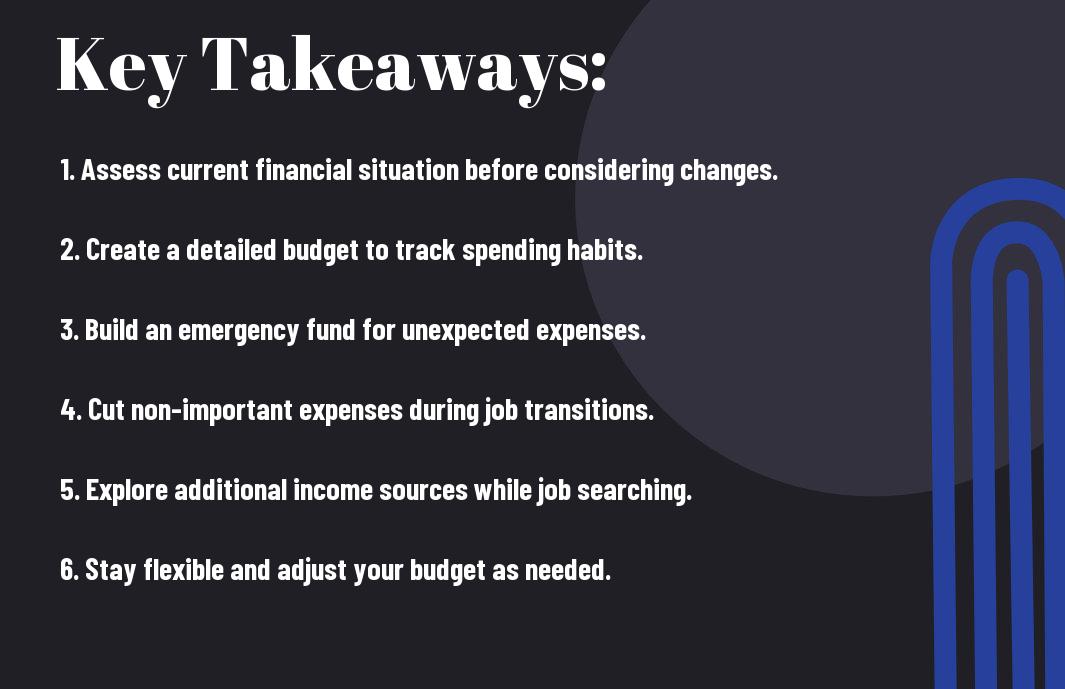
Key Takeaways
Managing your finances during a career transition can be challenging, but with careful budgeting, you can navigate the uncertainty. Focus on tracking your income and expenses, cutting unnecessary costs, and building an emergency fund. Plan ahead, and you can make this transition smoother and less stressful.